Loading…
Loading…
Montsame News Agency
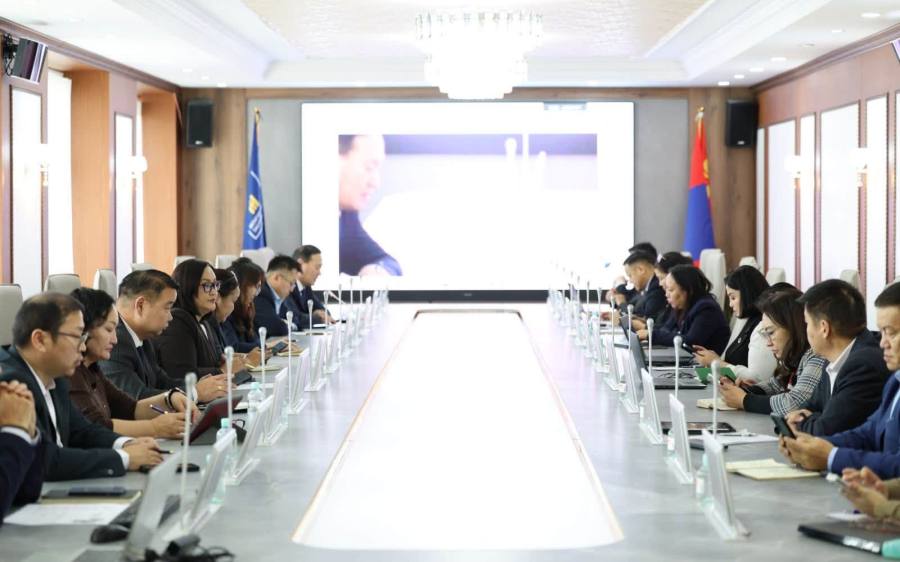
Ulaanbaatar, November 16, 2026 /MONTSAME/. Heads of policy departments at the Ministry of Education met with heads of education departments in the capital city and aimags to present planned activities for the 2026–2027 academic year, policy directions and reforms for 2027, and provide recommendations.
The meeting addressed education policy issues, including structural reforms in general education schools, the development of specialised upper secondary schools, the quality of higher and vocational education, improvements to learning environments, digital transformation, and decision-making based on big data.
Participants emphasised that changes to school structures should be studied and planned based on indicators such as local population growth, migration, student enrolment, teaching workforce availability, and school capacity. Nationwide, 76.6% of general education schools operate under an integrated system covering grades 1–12. This raises questions about the structure of schools with low enrolment in sparsely populated areas. Education officials were therefore advised to consider access, quality, and efficiency together when replanning school structures.
The meeting also highlighted the need to consider regional characteristics, students’ interests and career aspirations, teacher availability, learning environments, and facilities when developing specialised upper secondary schools. Currently, 30 such schools operate nationwide.
Improving the quality and outcomes of teaching and learning at all levels of education will be one of the main objectives for the 2026–2027 academic year. In higher education, plans include revising the status, classification, ranking, and rating of universities and colleges and assessing them against established requirements and criteria. Institutions meeting quality standards will operate without unnecessary government intervention, while those failing to meet requirements or found to have violations and shortcomings will undergo scheduled and unscheduled inspections and be required to address the issues identified.
Attention will also be given to introducing the “ENKHAUS” concept of healthy, green, accessible, safe, and smart schools in vocational and higher education institutions, alongside general education schools. Institutions will work to create healthy, safe, accessible, and environmentally friendly environments based on their learning facilities, infrastructure, and available resources.
As part of digital transformation, efforts to compile, consolidate, process, and analyse education sector big data and use it in policymaking and planning will be accelerated in 2027. This will enable assessments and decisions on each school’s teaching quality, operational performance, and challenges to be based on factual information.
Preschool education institutions have also begun piloting an artificial intelligence-based teaching assistant. The solution aims to reduce teachers’ workload associated with daily planning, paperwork, and report preparation, allowing them more time to work with children and focus on their development. The AI teaching assistant is a tool to support teachers’ professional activities rather than replace them. Its phased introduction in general education schools is planned based on the pilot results and identified needs.
Education policy for 2027 will therefore focus on school structural reforms, teaching and learning quality, accessible learning environments, and digital transformation.
According to the Ministry of Education, the meeting emphasised the importance of the participation and leadership of heads of education departments in the capital city and aimags in aligning these policies with local needs, conditions, research, and available resources, and ensuring that their benefits reach every learner.