Loading…
Loading…

MONTSAME
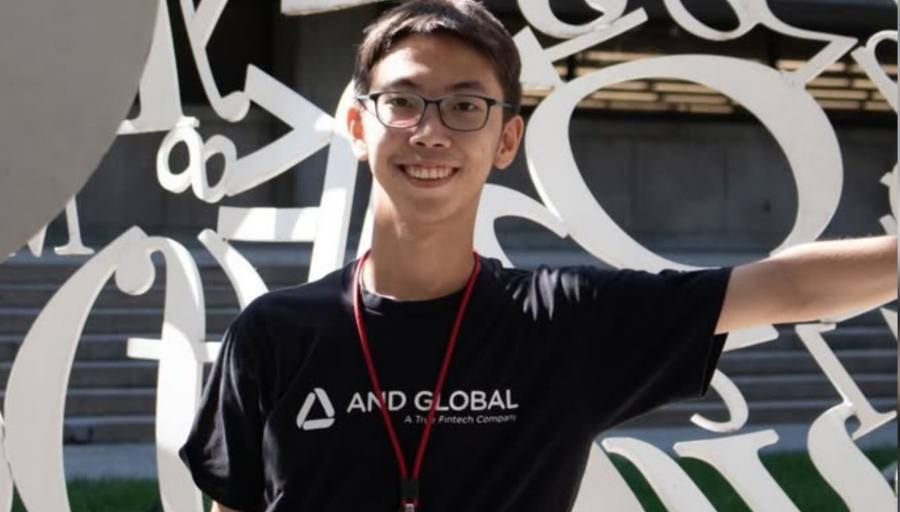
Ulaanbaatar, May 10, 2026 /MONTSAME/. There are nations that produce mathematical champions by the machinery of wealth — well-funded academies, private coaches, entire governmental infrastructures erected in service of the olympiad dream. And then there is Mongolia. A landlocked nation of three million souls, hemmed between two giants, where the winters bite at minus forty degrees and the steppes stretch to the edge of the visible world. A country with no mathematical tradition borrowed from colonial Europe, no Ivy League feeder pipeline, no centuries-old university culture. And yet, on the 22nd of September 2020, a student from Shine Mongol School in Ulaanbaatar sat before an online competition screen — the pandemic had grounded every physical olympiad in the world — and solved his way to Mongolia's fourth-ever IMO gold medal.
His name is Misheel Otgonbayar. And what he proved that day was not merely mathematical. It was civilisational.
The steppe does not ask whether you are ready for its winters. It simply arrives. The mathematician who survives it has already been trained.
ULAANBAATAR AND THE CULTURE OF RIGOURS
Misheel grew up in a Mongolia that had, quietly and without international fanfare, built one of the world's most remarkable olympiad cultures. Through a system of broad talent identification, free training open to all students regardless of economic background, and a coaching lineage anchored by former medalists who returned to give back what the competition had given them, Mongolia had cultivated something the richest nations could not simply purchase: a belief, held at the level of culture, that mathematics was not an elite sport but a national inheritance.
Into this inheritance Misheel was born. He trained not merely in mathematics but in physics — participating in multiple olympiad disciplines with the dual-track ferocity of someone who understood that the disciplines were, at their roots, the same conversation conducted in different registers. His coaches — B. Batbayasgalan and U. Batzorig — shaped a team of six students who would carry the Mongolian flag into the 61st IMO. Among them, Misheel was the edge.
Being young in a competition arena that demanded the maturity of veterans did not occasion any particular crisis of confidence for him. The steppe people of Mongolia have a long cultural memory of those who lead, endure, and prevail. Misheel simply extended that memory into mathematics.
THE GOLD THAT MADE HISTORY
The 61st International Mathematical Olympiad, held online in September 2020 amid the strange silence of a world in pandemic, gathered the finest pre-university mathematical minds across the globe. The physical theatres were closed. The competition was not. The problems remained merciless, the marking remained exacting, and the stakes — for a nation that had produced only three gold medals in its entire IMO history — were extraordinary.
Misheel solved. Problem by careful problem, with the composed precision of a student who had prepared not merely to participate but to prevail. When the results were confirmed, he had won gold — Mongolia's fourth in history, and a moment that the Mongolian national news agency MONTSAME reported with the reverence usually reserved for state occasions.
He was not the loudest name in that competition. He did not need to be. The gold spoke.
History does not always announce itself. Sometimes it arrives quietly, as a score on a screen, in a country where three million people are watching.
FROM ULAANBAATAR TO MIT
What separates the olympiad champion who becomes a mathematician from the one who becomes a footnote is what happens after the medal. For Misheel Otgonbayar, what happened after was MIT.
He arrived at the Massachusetts Institute of Technology majoring in Mathematics and Computer Science, minoring in Physics — a triple-discipline commitment that reflected the same intellectual hunger that had driven him through two olympiad streams simultaneously in secondary school. In the summer of 2022, he participated in the Research Experience for Undergraduates programme at the University of Virginia, producing two papers on partition statistics. One of those papers was published in the Journal of Number Theory — a peer-reviewed journal of international standing. He was an undergraduate.
In 2023, he joined MIT's Summer Programme for Undergraduate Research, diving into algebraic number theory — specifically the S-unit equation over the Zp extensions of the rational numbers. His research profile spans algebraic geometry, algebraic number theory, representation theory, and cohomology theory. He has been cited twelve times in the literature. He is still, by most institutional definitions, a student.
The gold medal is the door. What you find behind it depends entirely on how hungrily you walk through.
INSPIRATION AND LESSONS FOR THE YOUNG MATHEMATICIAN
Mongolia in 2029 will host the International Mathematical Olympiad — a decision that amounts to a declaration. A nation of three million, landlocked and resource-constrained, will welcome the world's finest young mathematical minds to its capital. It will do so because it earned the right, one student at a time, one training camp at a time, one gold medal at a time.
Misheel Otgonbayar is the face of that earning. He teaches us that the size of a nation's economy does not determine the size of its mathematical ambition. He teaches us that a student from Ulaanbaatar, trained free of charge in a state system that believed in him before he believed in himself, can publish in international journals before he graduates. He teaches us that olympiad excellence and research excellence are not separate lives — they are the same life, lived at increasing depth.
He teaches us, most urgently, that Africa is Mongolia. Talent-rich. Resource-constrained. Underestimated. And entirely capable of producing the next gold.
The world has always had the minds. ERC exists to give them the problems.
Source: Education Reform Centre