Loading…
Loading…

Ooluun Batbayar

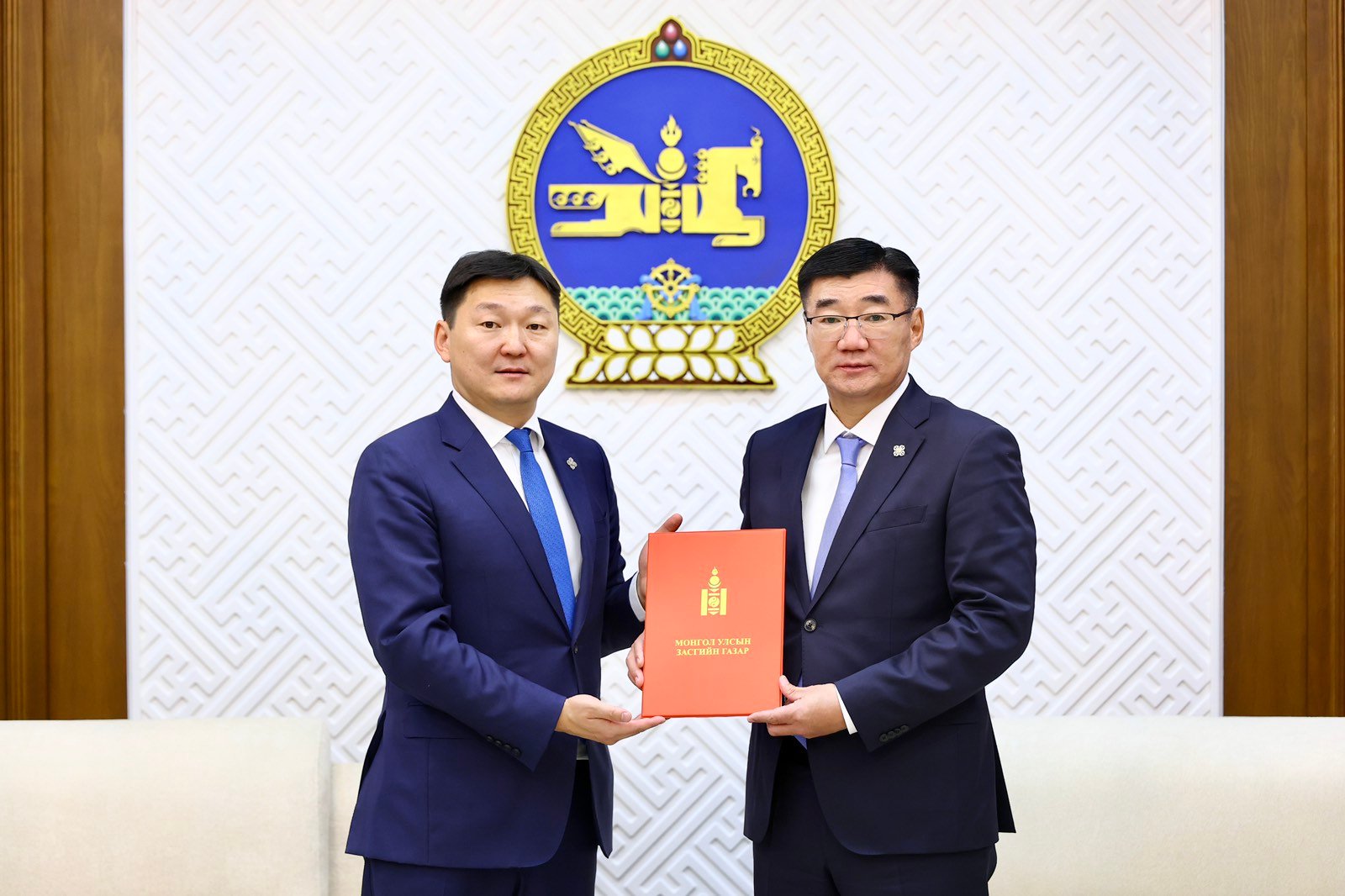
Ulaanbaatar, November 20, 2026 /MONTSAME/. Minister of Justice and Internal Affairs Temuulen Ganzorig today submitted to Speaker of the State Great Khural Byambatsogt Sandag a draft law on Amendments to the Law on Notaries.
The bill aims to make notarial services more accessible and convenient for the public by introducing new digital services. Under the proposed amendments, people would be able to access notarial services remotely, regardless of whether they are in Mongolia or abroad, using digital technologies. These services would include the certification of contracts and agreements, powers of attorney, and the authenticity of signatures, the minister said.
He also noted that the bill includes provisions to strengthen social responsibility and implement government policies supporting vulnerable groups.
Under the proposed amendments, persons with disabilities and senior citizens would receive reduced fees for notarial services, except for transactions involving wills, inheritance and real estate.
The bill also proposes full exemptions from notarial service fees and related expenses for certain groups when they require notarization to obtain legal assistance. These groups include people who have completely lost their ability to work, single parents with many children, children in at-risk situations, witnesses and victims, victims of certain serious crimes, and people unable to afford the costs. The exemptions would apply to the notarization of powers of attorney and copies of documents.
Speaker Byambatsogt noted that it was important for citizens to be able to access notarial services from their homes using their mobile phones, rather than having to visit notary offices in person. He emphasized the need to establish a legal framework for technology-enabled services, particularly for people living in remote bags and soums.
According to the bill’s initiators, the proposed amendments would bring notarial services—through which the state exercises its certification functions—closer to citizens and legal entities, improve accessibility and efficiency, and expand access for vulnerable groups, thereby strengthening the protection of citizens’ legitimate rights and interests.