Loading…
Loading…

MONTSAME
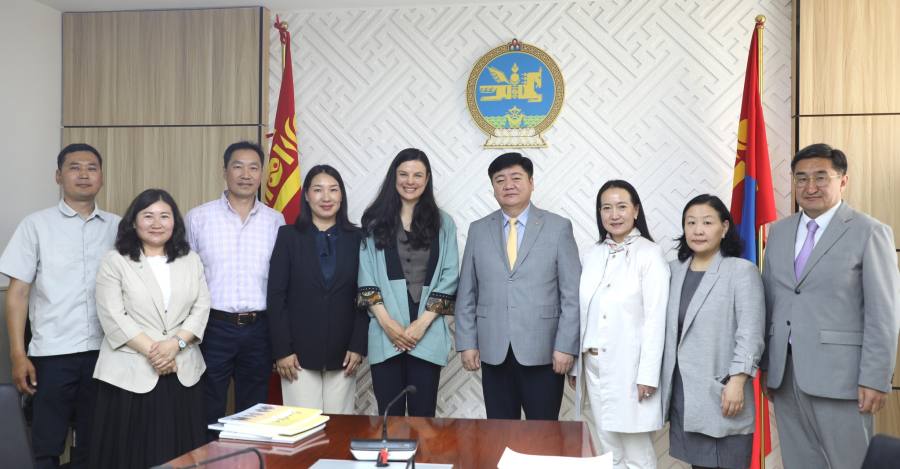
Ulaanbaatar, May 13, 2026 /MONTSAME/. Wildlife Conservation Society and the Ministry of Environment and Climate Change will collaborate to identify and protect wildlife migration routes and ecological corridors in protected areas near the capital, as well as develop wildlife-friendly railway and road crossings.
According to the ministry, the two sides agreed to collaborate to ensure wild animals can move freely across existing road and railway infrastructure, establish ecological corridors, strengthen community-based conservation efforts, and incorporate related measures into legislation and regulations.
These issues were discussed during a meeting between Sandag-Ochir Tsend, Minister of Environment and Climate Change, and researchers and scientists led by Justine Shanti Alexander, Country Director for the WCS Mongolia Program. They exchanged views on wildlife protection, identifying and studying ecological corridors, conservation measures, possible amendments to related legislation, and preparations for the UNCCD 17th session of the Conference of the Parties.
Justine Alexander introduced WCS’s research activities on the spread and migration of wildlife species across Mongolia’s Gobi, steppe, forest-steppe, and western regions, as well as broader environmental studies. She also highlighted the organization’s support for community-based conservation initiatives in protected areas in cooperation with local authorities and professional organizations.
Minister Sandag-Ochir expressed appreciation for WCS’s valuable contribution to elevating wildlife conservation to international standards, emphasizing that such efforts are essential not only for preserving biodiversity but also for safeguarding a valuable natural heritage for future generations.
The ministry is also aiming to implement a project titled “Rehabilitating and Conserving Mountain Landscapes in Khangai Region of Mongolia for Improved Ecosystem Services and Community Livelihoods” in cooperation with the Food and Agriculture Organization of the United Nations (FAO), WCS, and with funding from the Global Environment Facility (GEF).
The project is expected to be presented to the international community as an innovative “model project” for ecosystem rehabilitation during the UNCCD 17th session of the Conference of the Parties, which will take place on August 17-28 this year. The minister also expressed confidence that WCS would contribute its expertise and experience to the conference.

