Loading…
Loading…

Anand Tumurtogoo
t.anand@montsame.gov.mn
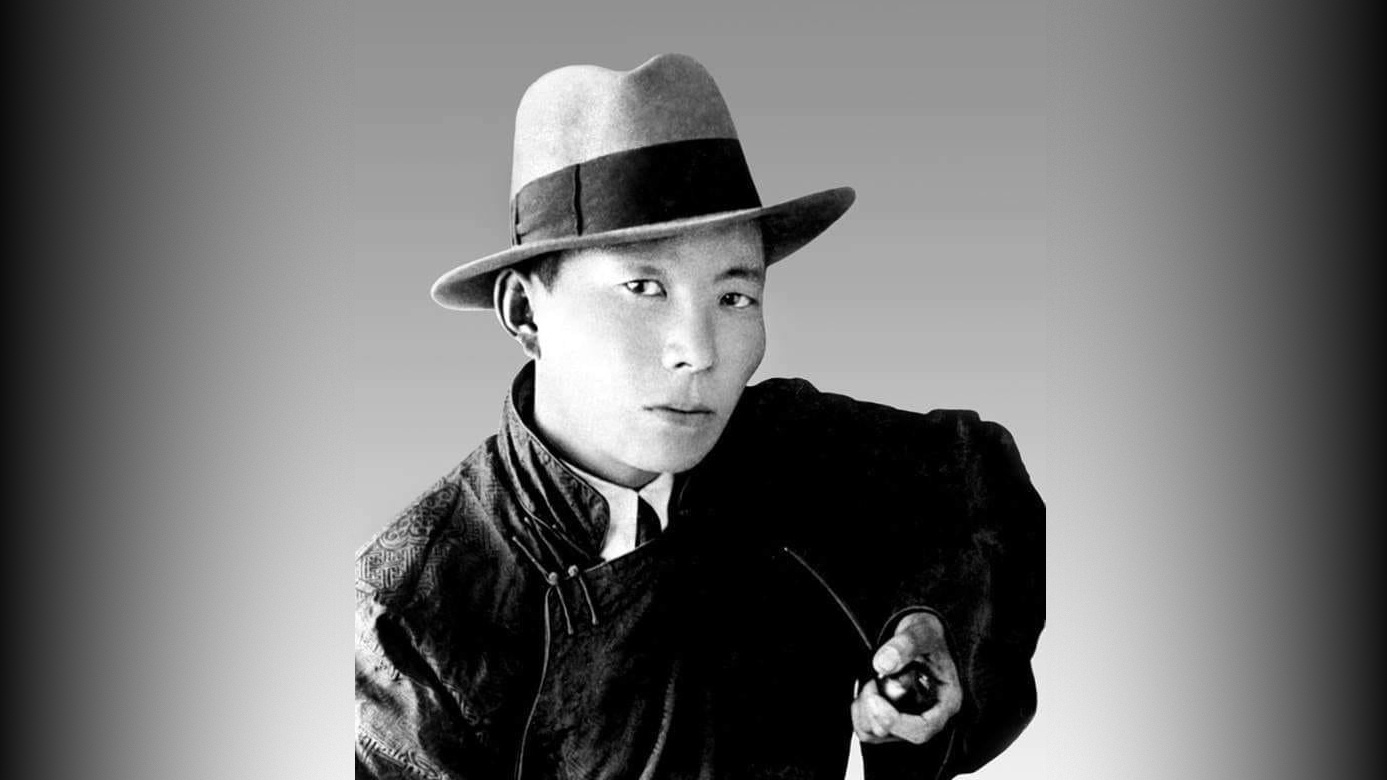
ULAANBAATAR, November 17, 2026 /MONTSAME/. Today marks the 120th anniversary of the birth of Natsagdorj Dashdorj, regarded as one of the founders of modern Mongolian literature. He was born into a noble (taiji) family at Melzei in Gun Galuut, in the former Darkhan Chin Van banner of Tusheet Khan aimag, in what is now Bayandelger soum, Tuv aimag.
Natsagdorj grew up in turbulent times. As a sickly child, it is said, he found solace in books. When the Qing dynasty fell in 1911 and Mongolia restored its independence, Mongolians began reforming their arts, culture, script and much else, as befitted an independent nation. Natsagdorj would come to play an important part in this transformation.
He entered government service around 1918, first as a junior clerk and then as a clerk at the Ministry of Military Affairs. After the victory of the People’s Revolution in 1921, he became personal secretary to General Sukhbaatar Damdin, who co-founded the Mongolian People’s Party and led the partisan army that took Khuree. From August 1922, Natsagdorj served as assistant secretary and then secretary of the Party Central Committee, going on to hold many important posts in the party and the state.
He studied at the Military-Political Academy in Leningrad in 1925–1926, and from 1926 to 1929 in Berlin and Leipzig, at what he described as a “general school of languages, newspapers, journalism and oriental studies” attached to the universities there. Besides his mastery of the Mongolian language and script, he learned Manchu, Chinese, Russian, German and English to a high level.
Yet his life was not an easy one. Though he was caught up in the turbulence of his times and often lost his way, he accomplished a great deal in his short life of just 31 years, and his works continue to enrich Mongolian art and literature.
The following is one Natsagdorj's short story "The son of old world". Retells the story of young Mongol herder before Mongolia's liberation and it depicts how the independence is going to open up the world to the old boy and bring to the new frontiers of progress at the time. Even though story depicts Mongolia's transition to communism it is also analogues to Mongolia's transition from Communism to democracy and adopting the free market.
This translation is by Dr. Henry G. Schwarz, then director of the Center for East Asian Studies at Western Washington University. In 2006, the President of Mongolia awarded him the Order of the Polar Star, the country’s highest honor for foreign nationals, for 30 years of promoting Mongolian studies.
SON OF THE OLD WORLD
by D. Natsagdorj
Life in the steppe is monotonous. The days drag on, one being very much like the next. In the tussocky, marshy steppe near a well, the smoke can sometimes be seen curling from a faded ger. The endless white mist all around saddens the heart. Scorching the felt ger, the sultry summer heat deadens the cattle-breeder’s thoughts. The earth surrounding the nomad ger is spotted with the flat cakes of cow manure. Here and there some little calves frolic.
From their very childhood to old age people dwelt close to a single river and roamed up and down its banks. Their entire life centered around one well. Gavji Jambal squatted forever in a front corner, babbling about God and the scriptures. Zaisan Namjil would arrive and talk about all sorts of things concerning the laws. Listening to them the Mongols thought that there were no villages beyond the mountains and that the horizon was the end of the earth. They knew nothing of what was going on in the world. Living in their remote corner day after day, the Mongols prayed to God in the mornings and in the evenings bowed to the sky. They lived this way until they died.
The son of the old world drove up to the ger at a trot. Tied around his head was a white cotton kerchief, and a few hairs broken loose from his tousled black pigtail hung across his cheek. His torn, threadbare sleeves revealed two rough, gray elbows.
Jumping down lightly to the ground, the rider firmly tethered his horse, wiped the perspiration off his sunburned face with the flap of his deel and walked into the ger. He had hardly stepped inside when he began telling that the Baldans were fulling felt, that the Tsendas were grazing sheep at the saltmarsh, that Damba had gone to look for his horses, and that Gombo had returned from his trip to Khangay. Then, having told other bits of news about people they all knew, he walked over to the hearth. He now cast a meek glance at the gavji and zaisan and gave them a low bow. Having been given a bowl of sour milk and a hunk of khusam, he squatted down near the open fire and began to eat.
After finishing his meal, he walked out of the ger and directed his steps to the house of the rich man Baljir where he would look after the foals while the mares were being milked. For this he got some mare’s milk which he drank up on the spot. Half a day passed in this way. In the afternoon he helped shear somebody else’s sheep and was fed some offal. And now the afternoon was drawing to a close.
By nature the son of the old world was not a dull-witted person; his life, however, passed within the confines of but three or four ortoo. He had never had occasion to go as far as the border of the eastern khoshuun nor had he been on the bank of the western river. How much could he therefore see or hear?
He was young and strong but, having remained a poor orphan in his childhood, he was compelled to hire himself out to his neighbors and so lost the road to a more worthwhile life.
In the cold winters he guarded horses at night, and in the hot summers he herded sheep. The life he led in the steppes day in and day out was a dull and monotonous existence without a glimmer of light. It was like living in an overturned cauldron and seeing no more of the world than the marmot who hibernates in the winter and crawls out of his burrow only in the spring. He could not imagine any other life than the roaming from one pasture to another spring, summer, fall and winter. He knew of no other truth except the words of his ancestors and his elders. What a blighted and ignorant life! How his young years had been wasted! Why then did he not seek a new world?
But how could the son of the old world by himself grasp the sad conditions of his existence, how could he see the injustice of the rule of the feudal lords and lamas? Living according to their ancient customs, mistaking suffering for happiness, gloom and ignorance for prosperity, a whole people most of whom, like the son of the old world, closing their eyes and ears, were unaware of the world and had nearly forever remained cut off in their desolated steppe.
However, ever since the day the marvelous man had made a revolution in the north, rays of light penetrated beneath the overturned cauldron. The Mongolian people were awakened from their slumber. Everybody now learned that there was more land beyond the horizon, that there were five oceans and five continents. The road to a new world was opened to the people, the road to development. The son of the old world became the son of the new world. Happiness and rejoicing were now the lot of the people!