Loading…
Loading…

MONTSAME
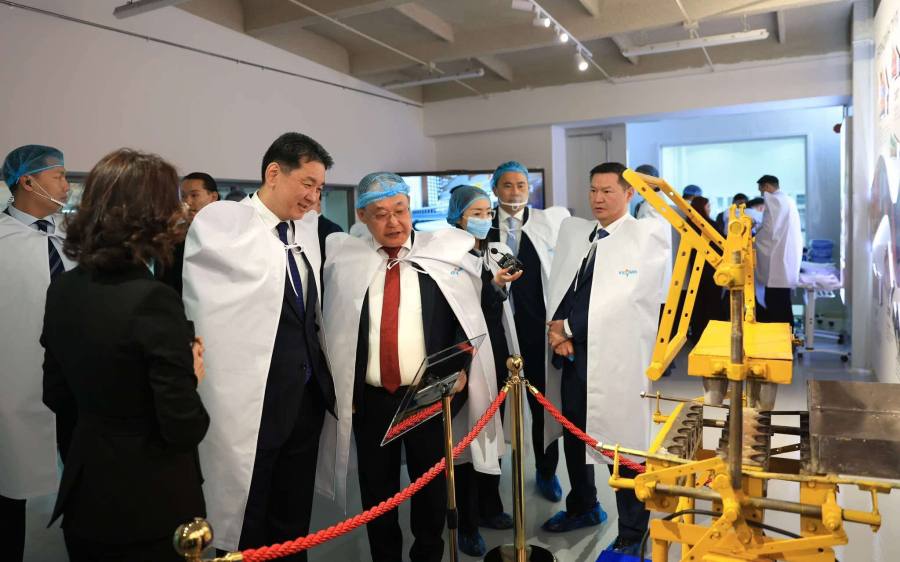
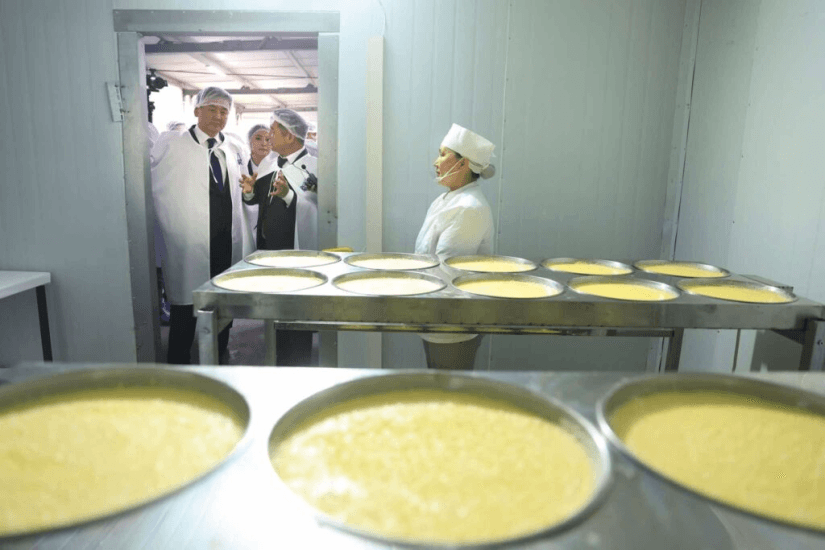
Ulaanbaatar, June 4, 2026 /MONTSAME/. President Khurelsukh Ukhnaa visited the production facilities of Teso Group, including the Teso Foods Park complex and its subsidiary companies — Milko, Icemark, and Eco Cluster — as well as the wastewater treatment plant and the operations of Suun Zairmag LLC as part of the national “Food Revolution” movement.
The president thanked Teso Group, its subsidiaries, and Suun Zairmag LLC for expanding domestic production, creating hundreds of jobs, and contributing to the economy through tax payments under the Food Revolution initiative. He said he was confident that the companies would continue to build on their achievements, help supply citizens with healthy and safe food products, and contribute to Mongolia's goal of becoming a food-exporting country.
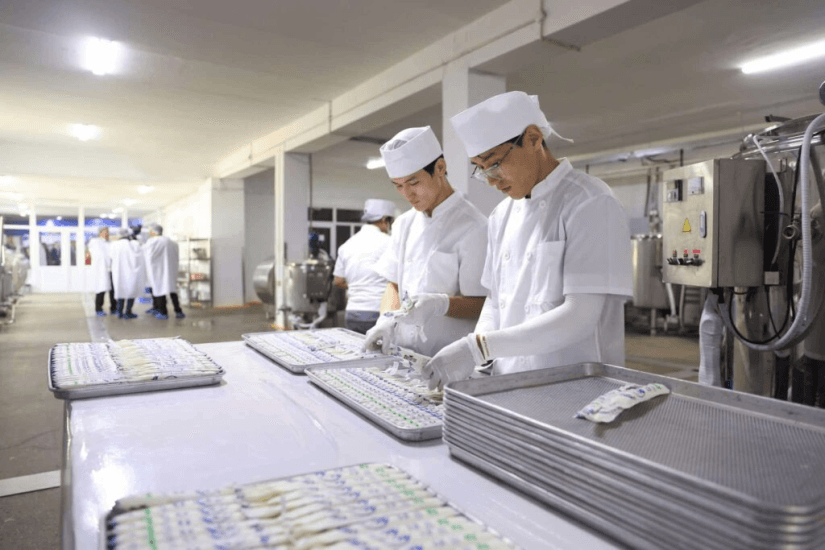
Teso Group began operations in 1996 by manufacturing equipment for ice cream cone and cup production. Today, the group operates more than 30 subsidiary companies across four business sectors and employs over 2,500 people. Following the commissioning of the Teso Foods Park complex last year, the company tripled its production capacity while reducing energy consumption per unit of output by half. The complex also includes a kindergarten for 150 children and a wastewater treatment facility capable of processing up to 1,000 cubic meters of wastewater per day.
Company executives noted that Teso Group’s 30 years of experience, combined with domestic manufacturing capacity, innovation, and advanced technology, have enabled its products to strengthen their competitiveness and value not only in Mongolia but also in international markets.
Suun Zairmag Provides Employment for 80–120 People
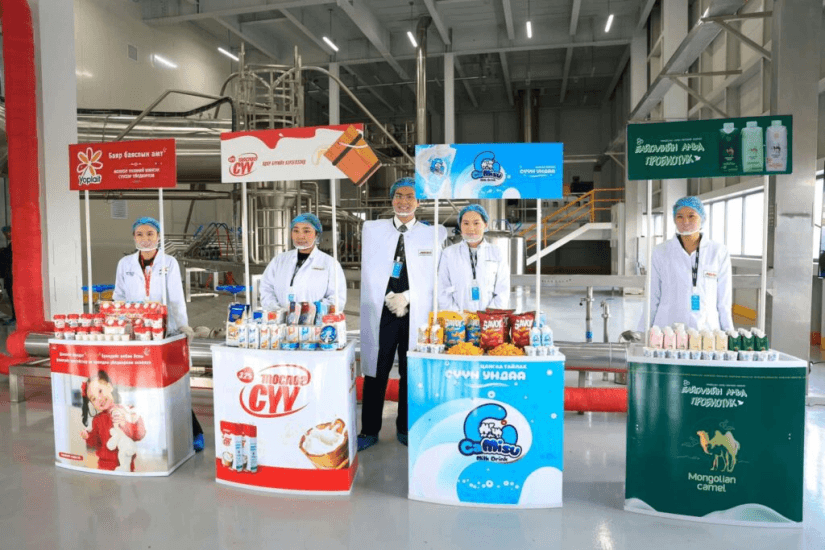
During his visit to Suun Zairmag LLC, President Khurelsukh was briefed on the company’s operations. The company distributes products including clotted cream, ice cream, cream yogurt, and flavored dairy beverages through 126 branches nationwide and approximately 2,500 stores and retail chains in Ulaanbaatar.
Although its operations were disrupted during the COVID-19 pandemic, the company has recovered through the Food Revolution initiative and now works in a cluster model with dairy farmers, packaging manufacturers, and other businesses. It plans to make major investments in a new production facility equipped with fully automated machinery.
Under the Food Revolution national movement, concessional loans provided to dairy producers have supported the opening of 10 new dairy plants and processing facilities in Ulaanbaatar and Arkhangai, Tuv, and Dornod aimags. Three enterprises have expanded their production facilities, while eight others have upgraded their equipment.
Mongolia processed 61,000 tonnes of milk industrially and produced 156,000 tonnes of dairy products last year. Domestic production currently meets 100% of demand for drinking milk and around 60% of demand for dairy products, with the remaining 40% supplied through imports. More than 260,000 tonnes of raw milk were collected nationwide in 2025, an increase of 15% compared with 2024.
Since 2020, the government has provided a subsidy of MNT 1,000 per liter of raw milk supplied to factories and processing plants during the cold season. As a result, milk supply has increased by an average of 6.6 million liters over the past five years, contributing to steady annual growth in dairy production. The relevant ministry plans to continue the subsidy program while implementing broader measures, including livestock breed improvement.
According to the Office of the President, approximately 160 dairy processing plants and facilities with a combined daily processing capacity exceeding 1,000 tonnes operate across 26 soums in 18 aimags. In addition, 86 refrigerated milk collection centers are in operation nationwide. These facilities currently utilize just over 50% of their capacity and provide employment for more than 2,000 people.