Loading…

MONTSAME
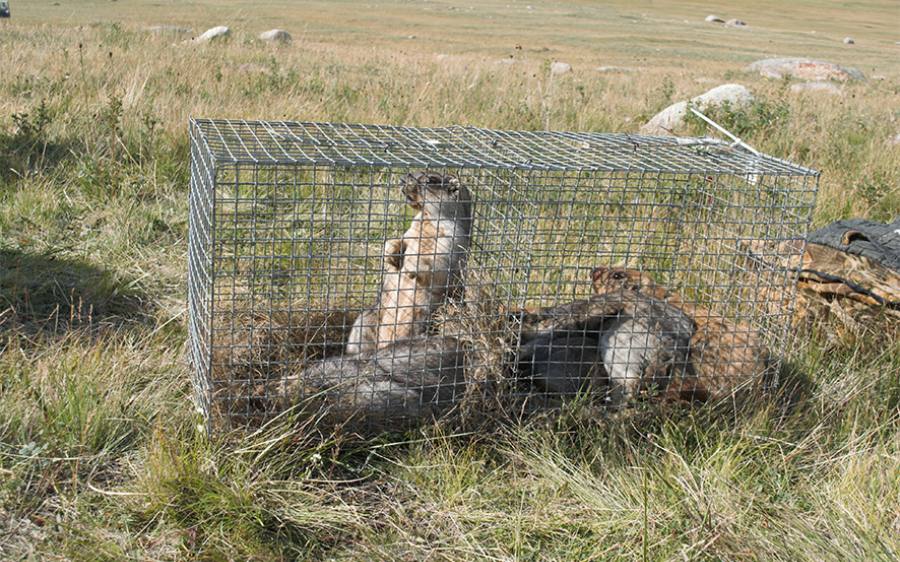
Ulaanbaatar, August 6, 2026 /MONTSAME/. In recent years, to increase the marmot population, 500-700 marmots have been relocated annually to Arkhangai, Gobi-Altai, Dornod, Orkhon, Tuv, Sukhbaatar, Zavkhan, Khuvsgul, and Khentii aimags.
As a result, marmots are repopulating and multiplying in areas where they were locally extinct or their numbers had severely dwindled. However, illegal hunting and trade continue to negatively impact these conservation efforts. Therefore, the Ministry of Environment and Climate Change, the Environmental Department, the Ecological Police Department, and other relevant organizations have reported that they are intensifying nationwide inspections to crack down on the illegal hunting, transportation, and trade of marmots.
Under the Law of Mongolia on Animals, marmot hunting is prohibited from October 16 of each year to August 20 of the following year, with hunting permitted only during the legally specified period and with a special license. Furthermore, the law explicitly bans practices such as smoking marmots out of their burrows, flooding their dens with water, using traps and snares, or intentionally using dogs to catch them. Bringing marmots, ground squirrels, their raw meat, and wet or undisinfected pelts into cities and towns is also strictly prohibited.
According to unofficial estimates, Mongolia's marmot population peaked at over 20 million in the 1970s but plummeted to approximately 5 million by the year 2000. This drastic reduction is widely attributed to illegal overhunting for meat and pelts, habitat degradation, diseases, and climate change.

