Loading…
Loading…

MONTSAME
Erdenebulgan, July 3, 2026 /MONTSAME/. Arkhangai aimag is expanding its efforts to combat desertification and land degradation by restoring degraded rangelands and desertified areas through nature-based solutions. The local government has allocated budget funding to restore 50 hectares of land.
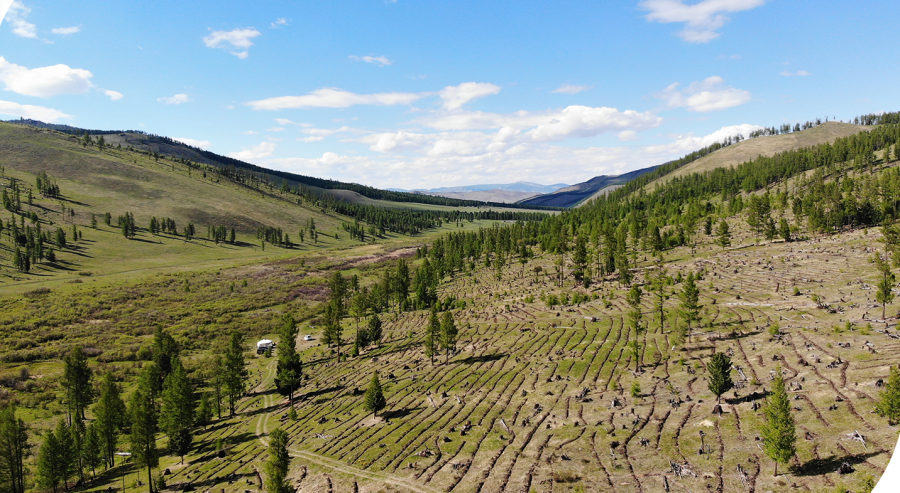
As part of these efforts, during the first half of 2026, financing from the Billion Tree Fund was used to launch reforestation projects covering 200 hectares. Under four-party agreements, reforestation was carried out on 100 hectares in Olon Nuurtiin, Bayanbulag bag of Bulgan soum, and another 100 hectares in Khankhad, Azarga bag of Undur-Ulaan soum, using 500,000 two- to three-year-old Siberian larch seedlings.
The planting was conducted by Tegsh Duuren Mmod LLC and Otgon Bayan Uul LLC, which began work on May 10 in forest areas degraded by logging and pest infestations and have now completed the project.
The Forest Division of the Environment Department of the aimag, the inter-soum forest unit, and forest rangers monitored the reforestation work to ensure compliance with technical standards and provided professional guidance throughout the project.
Separately, with funding from the state budget, Khavchgiin Nogoon Mod LLC completed a reforestation project in Tsetserleg soum, planting 225,000 container-grown conifer seedlings across 90 hectares to restore degraded forest ecosystems.
To align with the seventh objective of the "Billions of Trees" National Movement, the aimag is also working to protect water resources by establishing protective forest belts along riverbanks, springs and headwaters. In 2024 and 2025, a shelterbelt covering 8 hectares was established along the Urd Tamir River. This year, the forest belt was expanded by an additional 3 hectares, bringing the total area to 11 hectares, with 3,200 willow and poplar trees planted.
As of the first half of 2026, a total of 750,000 two- to three-year-old Siberian larch seedlings have been planted across 300 hectares in Arkhangai aimag. In addition, protective forest belts have been established on 5 hectares using 5,000 poplar and willow saplings.