Loading…
Loading…

MONTSAME
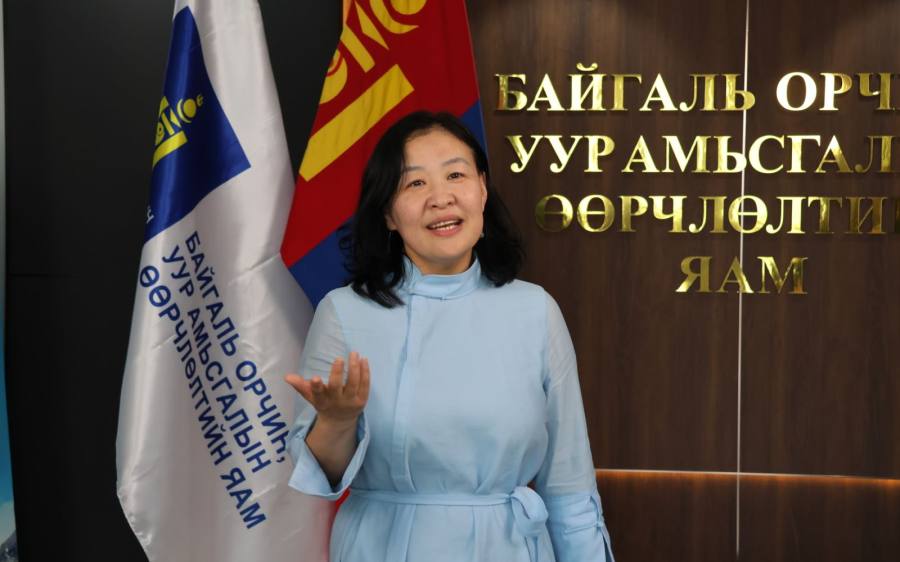
Ulaanbaatar, July 27, 2026 /MONTSAME/. As Mongolia prepares to host the 17th Conference of the Parties (COP17) to the United Nations Convention to Combat Desertification (UNCCD), we spoke with Ariuntuya Dorjsuren, Head of the International Cooperation Division at the Ministry of Environment and Climate Change, about the country’s priorities, initiatives, and expectations for the landmark event.
What experience and initiatives will Mongolia present to the international community on desertification, land degradation, and drought?
Hosting COP17 is far more than welcoming a major international conference. It is a historic opportunity for Mongolia to lead one of the world's three most important environmental conventions.
With a purpose to jointly address the world's most pressing environmental challenges, UN member states adopted three landmark environmental treaties in 1992: the Convention on Biological Diversity, the UN Framework Convention on Climate Change, and the UN Convention to Combat Desertification. Together, they form the foundation of global environmental governance, and the Conferences of the Parties review implementation and shape future policy directions.
The year 2026 is particularly significant. Countries are assessing progress toward the Sustainable Development Goals and beginning discussions on the global development agenda beyond 2030. At the same time, at Mongolia's initiative, the United Nations has declared 2026 the International Year of Rangelands and Pastoralists, giving additional significance to COP17.
Mongolia will not simply present the fact that 76.8% of its territory is affected by desertification and land degradation. Instead, we want to focus on solutions, our policies, partnerships, and ways to strengthen international cooperation. Within this scope, the Government of Mongolia is introducing the Steppe Action Agenda, built around three strategic priorities.
The first is to elevate global recognition of the value of rangeland ecosystems, which make up a significant share of the world's drylands.
Second, as a landlocked country, Mongolia will promote integrated water resources management as a new avenue for international cooperation by linking it to efforts to combat desertification and land degradation. Mongolia believes effective water management is fundamental to the sustainable development of dryland regions, and we hope to demonstrate this through our own experience.
What international expertise, investment, and technologies does Mongolia hope to attract? How are you working with development partners?
The third strategy priority of the Steppe Action Agenda focuses on sustainable infrastructure. All sectors, including roads, railways, urban development, mining, and agriculture, are directly linked to land use. Therefore, infrastructure should no longer be viewed solely through the lens of economic growth. It must also take into account land degradation, soil health, and environmental impacts. Accordingly, Mongolia is proposing to the international community an integrated policy approach that aligns development with nature-based solutions by bringing together rangeland ecosystem conservation, integrated water resources management, and sustainable infrastructure. This is why the initiative is called the Steppe Action Agenda. Mongolia is globally recognized for its vast steppe landscapes, and we intend to use that identity to bring these issues to a new level of international attention.
Within the framework of the UNCCD, there is a dedicated mechanism for sharing best practices in land restoration and sustainable land management. Mongolia plans to use this platform to showcase its successful experiences and science-based solutions to the international community.
How are herders, citizens, young people, researchers, civil society, and the private sector being involved?
Mongolia sees itself not only as the host of COP17 but also as an active Party to the Convention. Our primary objective is to transform opportunities for knowledge exchange, partnership building, and investment into tangible long-term outcomes.
Our focus is not merely on organizing a successful conference for thousands of delegates but on creating lasting cooperation that will continue well after the event concludes.
At the same time, Mongolia is expanding both South-South and North-South cooperation with countries facing similar challenges while working closely with development partners to attract new technologies, investments, and financing.
What will be the focus of the bilateral and multilateral meetings during COP17? How much potential does Mongolia have to attract investment for environmental conservation projects?
COP is fundamentally an intergovernmental negotiation platform. However, in recent years, it has evolved into a global forum that actively engages herders, farmers, scientists, youth, indigenous peoples, civil society organizations, and the private sector. COP17 in Mongolia will follow the same inclusive approach. One of its defining features will be ensuring that the voices of those most affected by drought, desertification, and land degradation are heard directly by policymakers.
The conference will be organized into two zones. The Blue Zone will host official intergovernmental negotiations and dialogues, while the Green Zone will provide space for civil society, businesses, research institutions, youth organizations, and development partners to organize discussions, exhibitions, and side events that contribute to the official dialogue.
Currently, around 60% of registered participants represent researchers, youth, indigenous peoples, and the private sector, demonstrating the conference's strong commitment to broad stakeholder participation.
Bilateral meetings will involve ministries, including the Ministry of Environment and Climate Change, the Ministry of Foreign Affairs, the Ministry of Finance, and the Ministry of Economy and Development, focusing on investment, policy, and cooperation with partner countries.
Multilateral meetings will bring together UN agencies, international financial institutions, development partners, and leaders of international organizations.
What opportunities does Mongolia have to attract investment in environmental conservation projects?
This year’s COP has attracted unprecedented international interest. The Blue Zone alone has received 745 requests for side events, reflecting the high expectations of development partners and international organizations for the conference in Mongolia. This exceptional level of engagement creates an important opportunity not only to exchange experience but also to launch new partnerships and attract investment in land restoration, sustainable land management, and nature-based solutions.
If Mongolia successfully organizes its bilateral and multilateral meetings, it has the potential to become a new international hub for cooperation in this field.
In your view, what should Mongolians learn from COP17, and what changes should we begin making?
Everyone has a role in determining the success of COP17. The first step is changing our daily habits. We should stop viewing waste simply as garbage and instead recognize it as a valuable resource that can be reused. Clean cities, waste separation, and planting and caring for trees are all practices that should become part of our everyday lives, not only before COP17 but long afterward.
The traditional hospitality of the Mongols and their courteous manner will be among the conference’s greatest assets. From taxi drivers and service workers to ordinary citizens, everyone can help ensure that visitors leave with positive memories of Mongolia.
Ultimately, I believe the greatest legacy of COP17 will not be the agreements signed during the conference. It will be the lasting change in the environmental awareness and everyday green practices of the Mongol people.
Interview by Tseveenkherlen Tseveendolgor, Environmental Journalist