Loading…
Loading…

MONTSAME
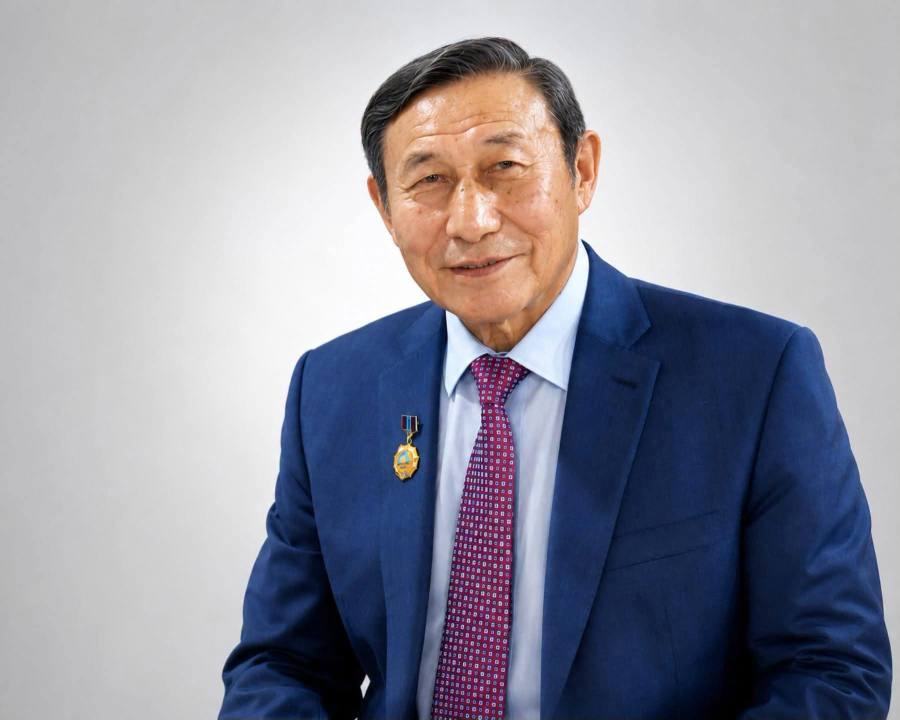
Ulaanbaatar, August 10, 2026 /MONTSAME/. Batjargal Zamba was a statesman, former member of the Government of Mongolia and Minister of Environment, Honored Environmental Worker of Mongolia, and State Prize laureate passed away suddenly on August 6, 2026, an irreplaceable and profound loss to the environmental community, to his colleagues and to his family.
Batjargal was born on February 25, 1945, in Sagil soum of Uvs aimag. From 1954 to 1964, he studied at the Sagil soum primary school and at secondary school in Ulaangom, Uvs aimag. From 1964 to 1969, he studied at the Leningrad Hydrometeorological Institute (Saint Petersberg), Russia, qualifying as a meteorological engineer. He later pursued postgraduate study in Russia from 1975 to 1978, earning a doctorate (PhD) in mathematical physics.
Batjargal began his career in 1969 as a technician at Institute of Meteorology, Hydrology, and Environmental Research. He rose through the ranks: started as a specialist, division head, center director, and lastly deputy director of the institute. From 1982 to 1987, he served as deputy head and then first deputy head of the Hydrometeorological Service Administration; from 1987 to 1988 as director of the Information and Computing Center of the Ministry of Nature Protection; and from 1988 to 1990 as an environmental expert at the Council for Mutual Economic Assistance in Moscow. From 1980 to 1984, he served as an elected deputy of the People's Great Khural of the Mongolian People's Republic.
From 1990 to 1992, Batjargal served as Chairman of the State Committee for Environmental Control and Minister of State; from 1992 to 1996 as a member of the Government and Minister of Environment; and from 1996 to 2001 in the demanding post of Director of the National Agency of Meteorology and Environmental Monitoring. During this period, he made a valuable contribution to shaping state policy for Mongolia's environmental sector — including hydrology and meteorology — during the transition to a market economy, building a new legal framework, expanding international cooperation, and laying and strengthening the foundations of the sector's management and oversight systems.
From 2001 to 2005, Batjargal served as Ambassador Extraordinary and Plenipotentiary of Mongolia to Japan, working to broaden the friendly relations and cooperation between the two countries.
Batjargal was elected Vice-President of the Regional Association for Asia of the World Meteorological Organization (WMO) from 1994 to 1996, and its President from 1996 to 1998. In recognition of his experience in the environmental, hydrological, and meteorological fields, in public service, and in international organizations, he served from 2005 to 2011 as the WMO's representative to the United Nations and international organizations in North America and as adviser at the WMO's New York office, as well as a member of the WMO Executive Council. In 2000, he served as President of the Conference of the Parties to the UN Convention to Combat Desertification, and from 2000 to 2002 as a member of its Bureau, contributing to international cooperation on hydrology, meteorology, climate, desertification, and the environment.
In recent years, he served as a visiting professor at the Research Institute for Humanity and Nature in Kyoto, Japan; as an adviser to the Environmental Information Center of the Ministry of Environment and Green Development; as a member of the advisory team to the Mongolian-elected President of the UN Environment Assembly; as Mongolia's Special Envoy for Climate Change; and as Mongolia's national coordinator for the UN Framework Convention on Climate Change. In these roles, he made a valuable contribution to articulating Mongolia's policy and positions on climate change on the international stage and to defending his country's interests. Until his passing, he remained actively involved in environmental affairs and in preparations for the 17th session of the Conference of the Parties to the UN Convention to Combat Desertification (COP17), passing on his many years of knowledge and experience to the younger generation of the sector.
In high recognition of his many years of labor and achievement in service of his country, its people, the environment, and scientific development, he was awarded the title of Honored Environmental Worker of Mongolia by decree of the President of Mongolia.
From 1990 to 1996, he served as Chairman of the National Commission for the Reintroduction of the Takhi (the wild horses also known as the Przewalski horse), leading and organizing the effort to restore the takhi to its native homeland in Mongolia. He expanded the commission's work into a National Commission for the Protection of Rare Animals, which he chaired until 1996. In recognition of his work reintroducing and rewilding the takhi horse, the collaborative work titled "The Reintroduction and Rewilding of the Takhi Horse" was awarded the State Prize of Mongolia by presidential decree.
Batjargal was a distinguished individual who devoted his knowledge, experience, and energy to developing and implementing state policy and legislation for the protection and restoration of Mongolia's environment, to advancing science, and to representing and defending his country's reputation and interests on the international stage — leaving behind a valuable legacy.
His dedication to state and people, his valuable contribution to protecting his homeland's environment, and his humane, hardworking, and modest character will remain forever in our hearts.
We extend our deepest condolences to the deceased's family, children, relatives, colleagues, students, and all those close to him.
MINISTRY OF ENVIRONMENT AND CLIMATE CHANGE OF MONGOLIA
COUNCIL OF ELDERS