Loading…
Loading…

MONTSAME
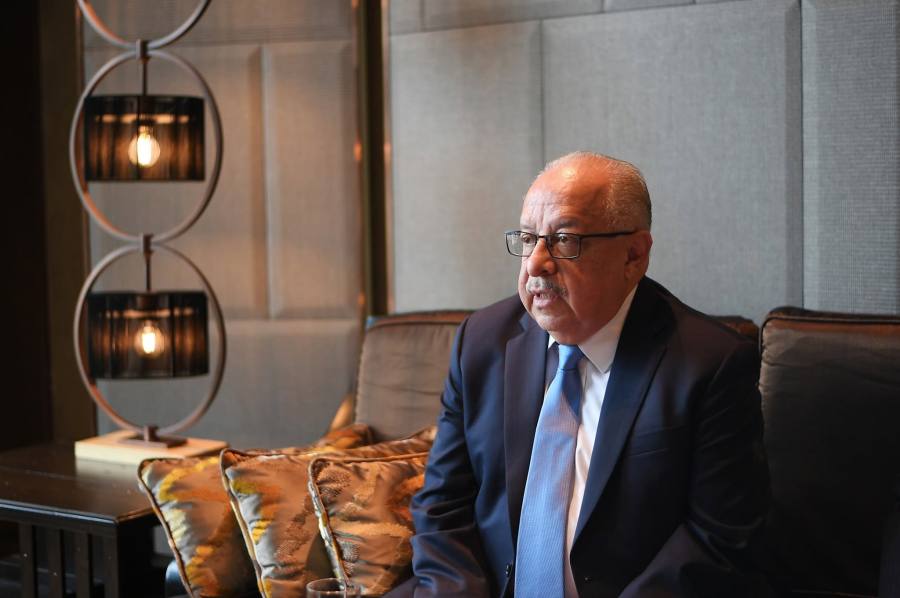
Ulaanbaatar, July 6, 2026 /MONTSAME/ – At the invitation of Foreign Affairs Minister Battsetseg Batmunkh, Carlos Ramiro Martínez Alvarado, Minister of Foreign Affairs of the Republic of Guatemala, visited Mongolia from July 2 to 5, 2026. During his visit, he spoke with MONTSAME about his visit and the potential cooperation to come out from his visit.
-Good day Minister. Tell us, what is the main purpose of your visit to Mongolia?
-This visit coincides with the 20th anniversary of the establishment of diplomatic relations between our two countries. I am pleased to mark this special occasion by visiting Mongolia at the invitation of your Foreign Affairs Minister, Battsetseg Batmunkh.
-How much of an influence did last year's Forum for East Asia-Latin America Cooperation [FEALAC] have on this visit?
-This visit is not directly related to FEALAC. Rather, it stems from a meeting I had personally with Minister Battsetseg on the sidelines of the UN General Assembly in September 2025. The signing of an initial memorandum of understanding to establish political consultative meetings is what has made this visit possible today. And just today, on July 3, we held our first consultative meeting.
-Are there any agreements or partnership arrangements expected to be signed during this visit?
-We discussed how to make the areas of cooperation we had previously talked about more concrete. First, we signed a cooperation agreement in the field of education. We also intend to develop trade more broadly. Previously, there was no direct trade between our two countries. We had a fairly detailed discussion about how to begin and develop that trade.
From what I understood, there seems to be considerable interest in bringing coffee directly from Guatemala into Mongolia to start. Beyond that, subsequent discussions will likely focus on other products and on intensifying trade activity more broadly.
-Will the current talks touch on negotiating a free trade agreement?
-No, we have not yet reached that level of discussion. That may be something for a future round of talks. For now, the priority is to get trade started in the first place and reaching that next level will likely involve several intermediate steps — including things like drawing up a list of what products could realistically be exported and imported under the current discussions.
-Could you tell us more about the cooperation being discussed during this visit?
-Cooperation between universities and higher education institutions is another major part of what is being discussed during this visit. The preparatory work for a cooperation agreement between the National University of Mongolia and Guatemala's Rafael Landívar University will essentially be completed, and the agreement is expected to be signed in the coming days.
Our two countries also share a similar history of preserving cultural heritage that stretches back a thousand years. In that spirit, we exchanged views on sharing experience in protecting, promoting, and raising awareness of that heritage. Discussions are also underway on developing the tourism sector.
-What should our two countries do now to ensure this visit is more effective?
-Beyond actively continuing the work that has begun in this short period, we also need to pay closer attention to mechanisms that can be expanded and developed beyond the FEALAC framework you mentioned. There has also been discussion around exempting diplomatic and tourist visas, which I believe will also be resolved.
-You mentioned exporting coffee into Mongolia, but what could Mongolia supply to your country?
-Mongolia's mining sector is, of course, is rapidly developing and a significant industry. However, given the distance of our two countries, transporting valuable mineral resources would be difficult. And although our country does not get as cold as Mongolia, exporting wool and cashmere products from Mongolia could be a possibility.
-How can our two countries support one another at the international level?
-Our two countries' positions are well aligned when it comes to the measures taken in the field of UN peacekeeping. We support each other considerably in this regard. When peacekeepers are deployed to Haiti, our country, Guatemala, is often the first point of entry, with onward travel departing from our territory. On this point, Minister Battsetseg spoke highly of our country, and I was very pleased to hear that.
Thank you for taking the time to speak with us Minister Martinez.