Loading…
Loading…

MONTSAME
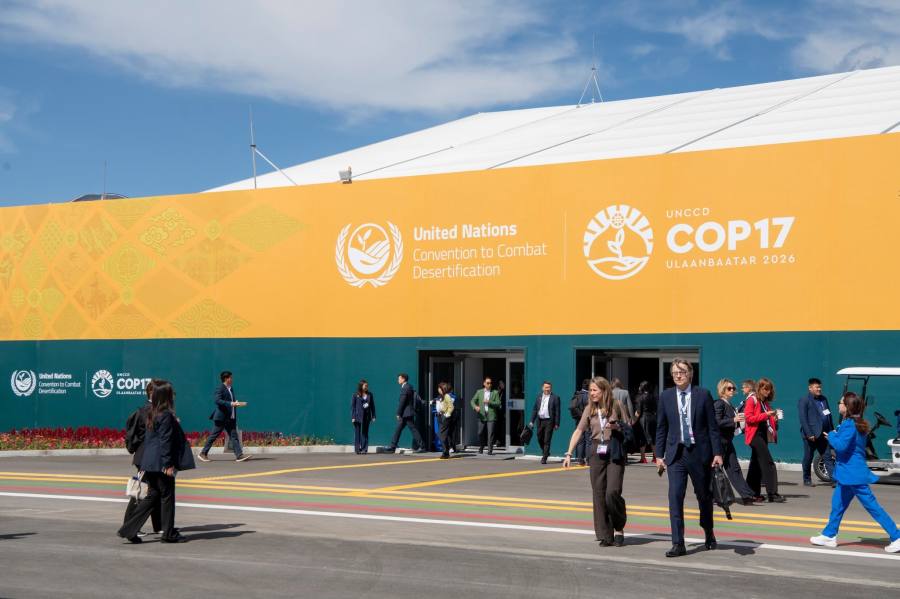
ULAANBAATAR, August 26 /MONTSAME/. Civil society organizations at COP17 have warned that objections from two countries, which forced four substantive items off the conference's working agenda at its opening, threaten the integrity of the negotiations and decades of international consensus.
As the 17th Conference of the Parties to the UN Convention to Combat Desertification opened in Ulaanbaatar, the Parties provisionally adopted the agenda but deferred four items after unilateral objections. The Convention's Civil Society Organizations (CSO) Panel, which represents civil society groups, Indigenous peoples, local communities, pastoralists, smallholders, women, and youth in the UNCCD process have said the deferrals risk undermining the multilateral system that governs global environmental cooperation.
According to the Panel, the COP17 Presidency placed four core items "pending consultation" after two parties raised objections. The United States opposed Item 4 on synergies across the Rio Conventions, Item 5 on gender-responsive approaches, and Item 8(a) on the engagement of civil society and Indigenous peoples. In a separate written opening statement, the US delegation signaled its intent to oppose the terms "gender," "climate change," and "Indigenous Peoples" throughout the agenda, language established across seven previous COP decisions dating back to 2011. The Russian Federation opposed Item 3, on the future strategic framework of the UNCCD, citing the exclusion of experts from Central Asian nations.
The CSO Panel argued that the disputes are not a technical or procedural matter. Restricting civic participation, removing gender equality, and blocking science-based cooperation between conventions, it said, strikes at the international rules-based order. Allowing Parties to strip human rights, Indigenous leadership, and cross-convention cooperation from the agenda of one UN body, the Panel warned, would set a precedent that could carry over into future climate and biodiversity negotiations under the UNFCCC and the Convention on Biological Diversity.
The panel stressed the role of Indigenous peoples as custodians of more than half the world's land surface, describing them not as stakeholders to be consulted after decisions are made but as communities already restoring degraded land, adapting food systems, and building resilience through traditional knowledge and collective action. Sidelining their participation, along with that of local communities, women, and youth, it said, treats grassroots knowledge as optional in meeting Land Degradation Neutrality targets.
The Panel called on the COP17 Presidency and supportive parties to restore the four deferred items to the official agenda; to publicly reaffirm that gender-responsive approaches, human rights, and the engagement of civil society, Indigenous peoples, and local communities are preconditions for legitimate implementation; to guarantee these groups real and continuous participation in contact groups, drafting sessions, and final decision-making rather than only inside events; and to maintain cooperation across the conventions on land, climate, and biodiversity as a core part of the Convention's work.