Loading…
Loading…

MONTSAME
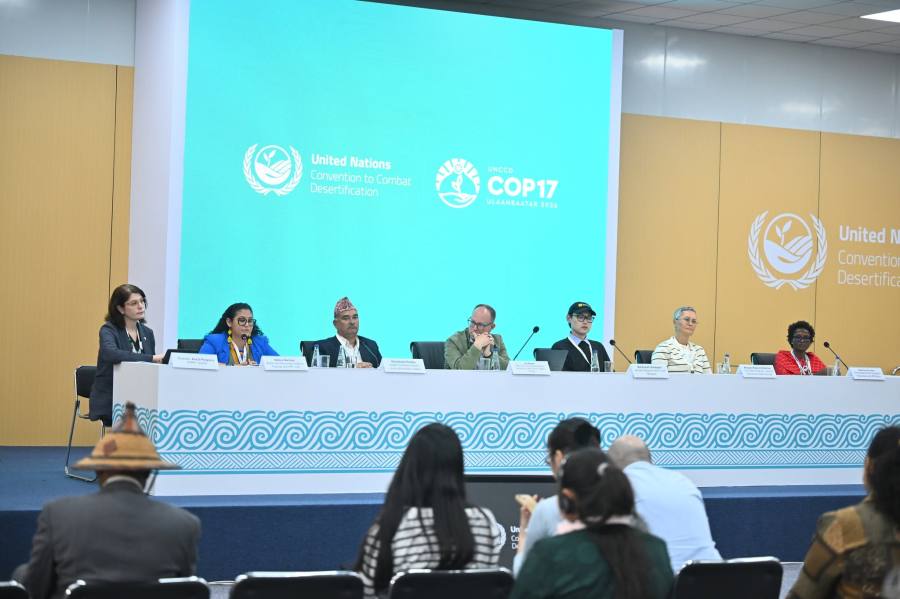
ULAANBAATAR, August 26, 2026 /MONTSAME/. Representatives of Indigenous peoples, local communities, women, youth, and pastoralists at COP17 warned on Thursday that a single party's objections had stripped core issues, which are gender, civil society participation, and cooperation with other conventions, from the conference agenda, and appealed to the Mongolian Presidency to help find a way forward.
Speaking at a press conference, members of the Convention's Civil Society Organizations (CSO) Panel said the disputed items were not peripheral. They go, the panel said, "to the heart of who participates, whose knowledge counts, and whose rights are recognized." Multilateralism, one representative noted, requires parties to engage and seek common ground—and there can be no effective convention, they argued, if the very people who do the work of restoring land remain at the margins of decision-making.
"We Belong to the Land"
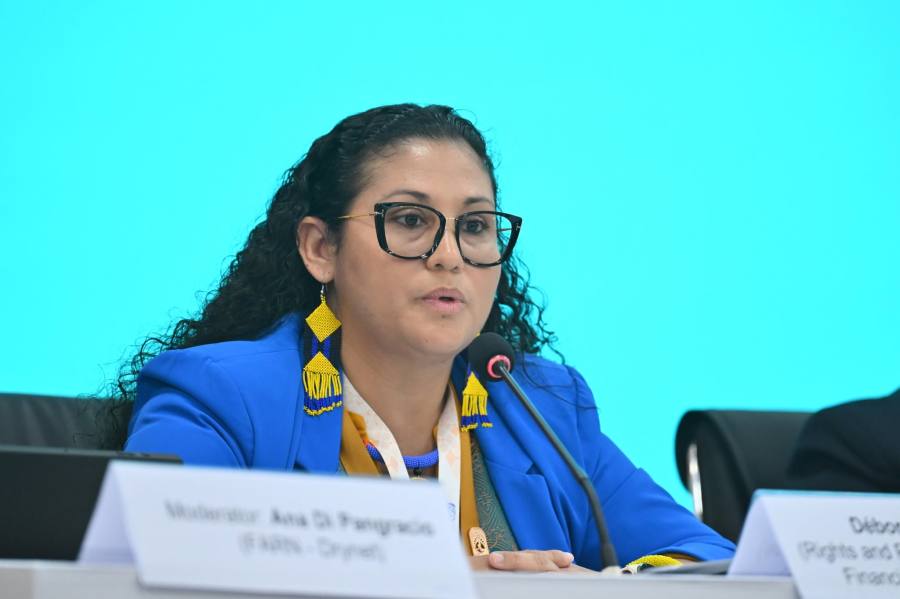
Deborah Sanchez of the Rights and Resources Initiative, representing Indigenous peoples of the Latin America and Caribbean region, opened with a greeting in the language of her people, the Miskito. Indigenous peoples must have a seat at the table, she said—but it must be a meaningful one, with real influence over decisions.
"We demand this because we belong to the land, and we know what is needed to restore both land and hope," she said. She called for secure land tenure and mobility rights for Indigenous peoples, pastoralists, and mobile communities; for the recognition of customary institutions as genuine actors in meeting land degradation neutrality targets; and for flexible, direct funding that reaches communities rather than stopping at national or institutional levels. Implementation, she argued, requires direct funding, political will, and secure rights "for the very people who have been delivering solutions on the ground."
A second speaker described the scale of what community-led restoration has already achieved—work spanning dozens of countries and, the speaker said, more than a million hectares of land—accomplished largely without a formal seat in the negotiations or reliable access to climate finance. "We cannot achieve land degradation neutrality without Indigenous peoples, without local communities, without youth, without women," the speaker said.
A model from Nepal
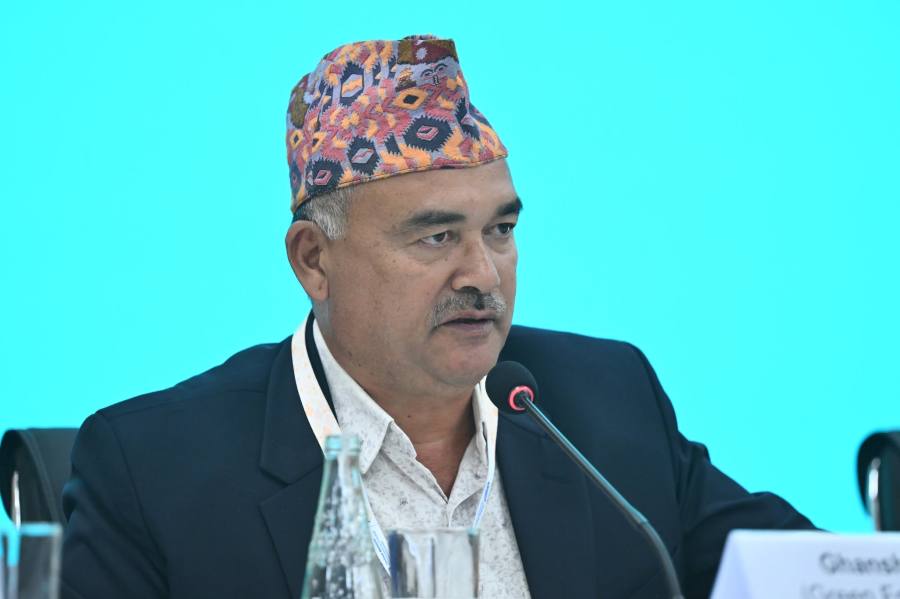
Ghanshyam Pandey of the Green Foundation Nepal offered his country as evidence of what community stewardship can accomplish. In the 1970s, he said, Nepal's mountains had been stripped bare of trees. After the government recognized the role of local communities through community forestry, more than two million hectares were restored. "Our land changed from gray to green," he said.
Having demonstrated that value, Pandey asked, "Why are you not hearing our voice?" He pressed the conference to formally recognize local communities, farmers, and pastoralists; to dedicate financing that reaches them directly; and to strengthen cooperation among the three Rio Conventions on climate change, biodiversity, and desertification. Nepal had lost a great deal to climate-driven disaster this year, he noted, and the three crises cannot be addressed in isolation. He also thanked the COP17 Presidency for giving civil society a platform to be heard.
Pastoralists and the carbon question
Throughout the session, speakers pushed back on the perception that those who live off the land are its degraders. Pastoralists and herders, they argued, are not driving land degradation—and their carbon footprint is smaller than that of people living in urban settings. Far from being a problem to manage, they said, communities that live on and from the land are its most effective stewards, and their traditional knowledge is essential to any credible restoration effort.
A warning about fragile progress
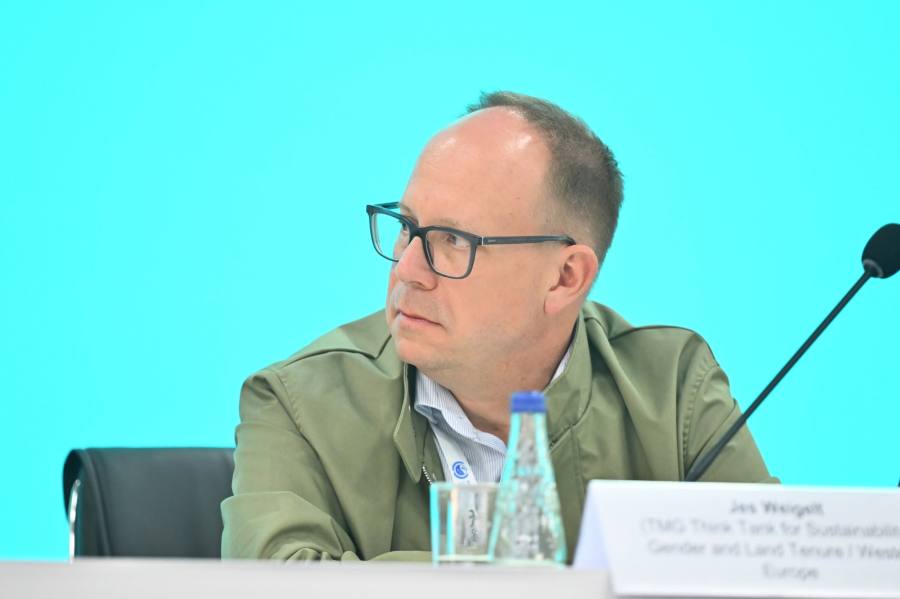
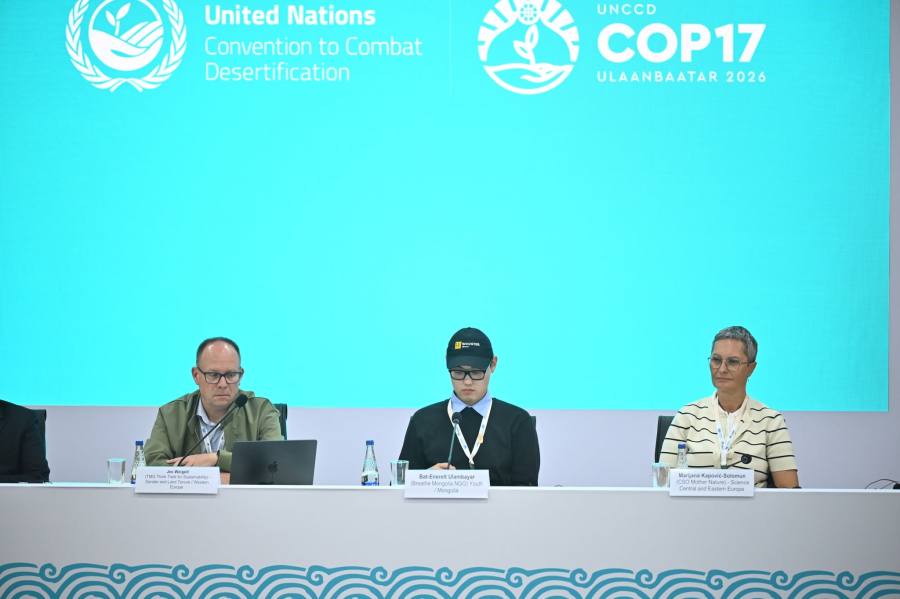
Jes Weigelt of the think tank for sustainability TMG framed the stakes in terms of the negotiations themselves. Without secure tenure and inclusive, gender-responsive land management, he said, sustainable land management will not be possible—a point he said the conference's own evidence had made clear.
He reminded parties that since COP14, the UNCCD had adopted far-reaching decisions with a specific emphasis on gender, further detailed at COP15 and COP16. COP17, he warned, had suddenly exposed the fragility of that progress. With no days for negotiations, he said, not a single decision had yet been adopted, and specific references were at risk of being removed from draft decisions at the insistence of one party.
The German delegation, for its part, pointed to the broader retreat from climate and gender commitments under the administration of US President Donald Trump, which has moved actively away from such pledges on the international stage.
The appeals came against the backdrop of a dispute that has shadowed COP17 since its opening, when objections from the United States and the Russian Federation forced several substantive agenda items—including those on gender, civil society engagement, and synergies among the Rio Conventions—into deferral pending consultation.