Loading…
Loading…

MONTSAME
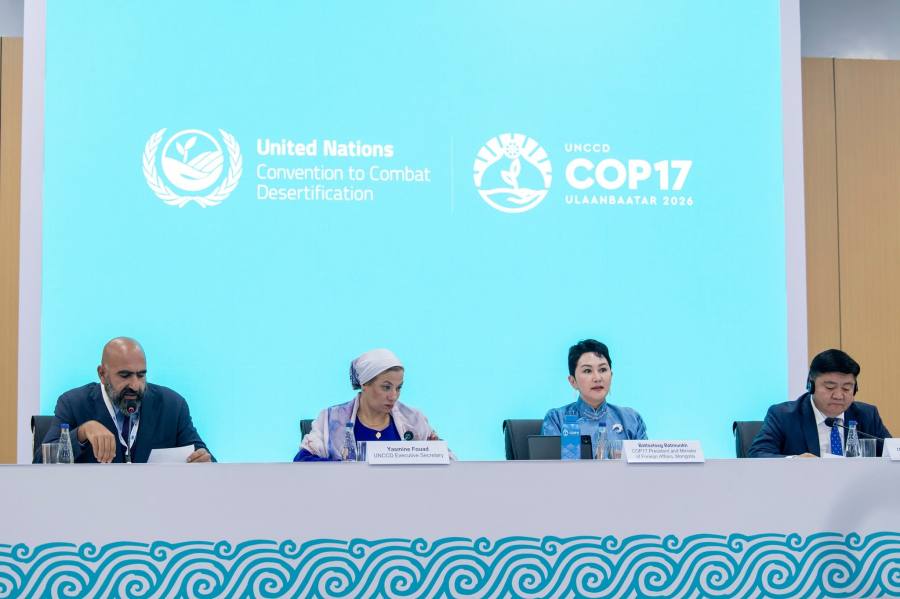
ULAANBAATAR, August 28, 2026 /MONTSAME/. Under the theme "Restoring Land, Restoring Hope," the 17th session of the Conference of the Parties to the UN Convention to Combat Desertification (UNCCD COP17) closed in Ulaanbaatar today, after two weeks of negotiations on how to confront land degradation, desertification, and drought.
The conference, which ran from August 17 to 28, gathered more than 197 parties and brought together the components the UNCCD considers essential to implementation: political direction, science, finance, investment-ready projects, partnerships, and the participation of the people who manage the world's land. As the first COP of the three 2026 Rio Convention meetings and the first hosted within the Central Asian region, it placed the world's rangelands, which cover 54 percent of the earth's land surface, support the livelihoods of roughly two billion people, and are stewarded by some 500 million herders — at the center of the global land agenda.
Rangelands take Center Stage
Launched in Ulaanbaatar during the International Year of Rangelands and Pastoralists, the Rangelands Priority Initiative consolidates USD 1.2 billion in financing across 45 projects. This would be the largest single investment in the rangeland sector in the Convention's history.
New economic research presented at the conference underscored what is at stake. Rangelands generate an estimated USD 21 to 47 trillion a year in ecosystem services, which is nearly half of global GDP through food production, water, carbon storage, and biodiversity. Every dollar invested in restoring rangelands typically returns four to six dollars, and as much as 36 dollars once wider public benefits such as water supply are counted. Yet despite their global importance, rangelands remain largely overlooked in policy and investment: only 24 countries include them in their national climate plans, against 181 that include forests.
The Global Environment Facility (GEF) is investing USD 3.3 million in the UNCCD COP17 Legacy Project to support the initiative and has approved more than USD 300 million over the past four years for over 50 projects benefiting rangelands and herder communities.
From commitment to implementation
The conference took place at a time of serious global strain. Up to 40 percent of the world's land is degraded, and countries have committed to restoring more than one billion hectares by 2030. More than 70 countries now have national drought plans, up from just three in 2013, but finance and implementation continue to lag behind the scale and speed of the challenge.
Governments, development banks, foundations, and companies announced a financing package of USD 1.3 billion at varying stages of development, spanning 23 countries across five continents. Of that, USD 644.5 million was identified as new funding, including USD 216.4 million already confirmed and moving into implementation, covering rangeland and landscape restoration, drought resilience, and locally led adaptation.
Brazil presented its voluntary Land Degradation Neutrality target through 2030, pledging to restore more than 163,000 square kilometers of land and to shield some 3.51 million square kilometers from degradation through protection and sustainable management. Research presented in Ulaanbaatar also found that all five Central Asian countries have adopted voluntary Land Degradation Neutrality targets, having already met roughly half of them, even as more than 80 million hectares in the region over a quarter of its land have degraded, affecting 24 million people.
A New Architecture For Drought Resilience
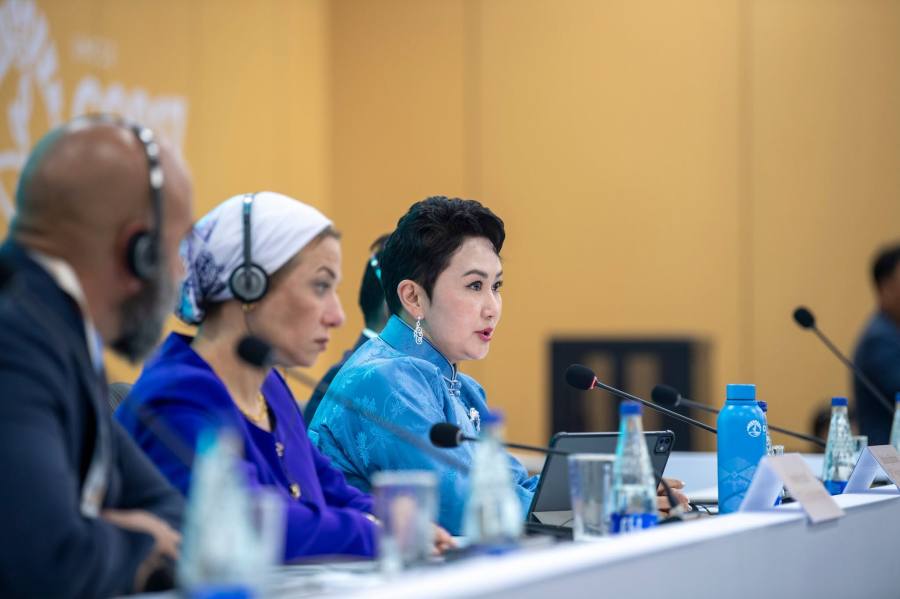
After lengthy negotiations, parties agreed to continue their discussions at COP18, building on progress made at COP16 and COP17, with the aim of adopting a decision on effectively managing drought risk through prevention at all levels and keeping drought as a standing agenda item at future sessions. The Riyadh Global Drought Resilience Partnership, launched at COP16, advanced toward implementation in Ulaanbaatar, where its first Partners' Assembly moved forward work on a joint fund to support around 70 low- and middle-income countries.
COP17 also saw the launch of the Drought Resilience Investment Facility (DRIF), described as the first global catalytic finance platform for drought resilience. Developed by the UNCCD and Luxembourg with the support of the International Drought Resilience Alliance, it aims to mobilize up to USD 400 million in public and private capital for water security, sustainable agriculture, nature-based solutions, and land restoration. The second phase of the International Drought Resilience Observatory introduced the first global Drought Resilience Index, giving countries a new tool to assess their preparedness and better target policy and investment.
Financing land restoration
The conference gave prominent attention to closing the gap between the financing needed to meet global land commitments and what is currently available. Meeting those commitments requires an estimated USD 355 billion a year through 2030, while current investment stands at around USD 77 billion, leaving an annual shortfall of USD 278 billion. Private finance accounts for only about six percent of total global investment in land restoration.
As host, Mongolia established its first national Business 4 Land (B4L) Hub, alongside sustainable finance principles, a national green taxonomy, and a target to raise green lending to 10 percent by 2030. The Russian Federation subsequently established its own national hub, Luxembourg is working to set up a B4L Foundation, and Germany agreed to support a B4L Finance Expert Group.
New Consultative Bodies for Indigenous Peoples and Local Communities
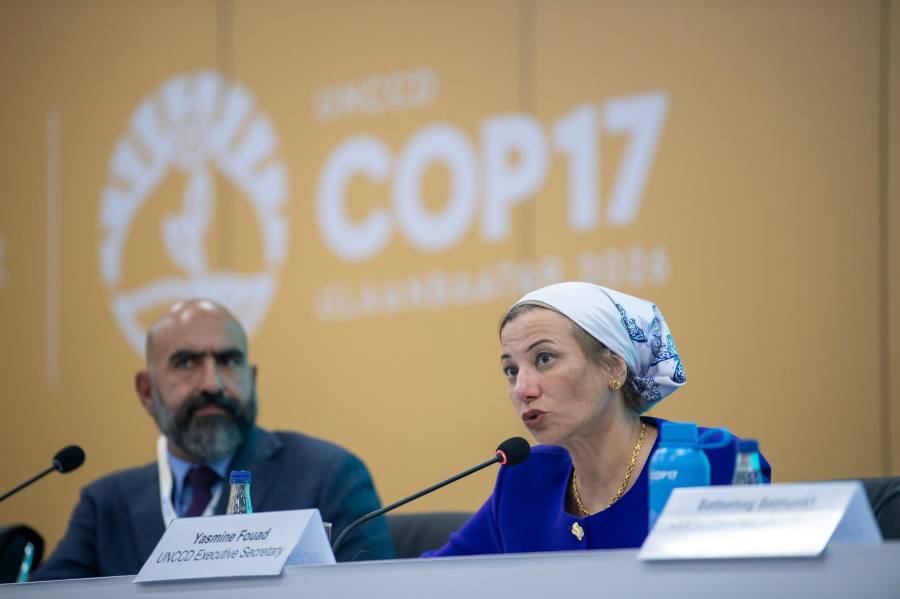
The conference held the first formal meetings of the UNCCD's Indigenous Peoples Consultative Group and Local Communities Consultative Group, both established by a decision taken at COP16 in Riyadh. It also convened the largest gathering of Indigenous representatives in the history of the Convention's COPs. A high-level event during "Land and People Day" highlighted Indigenous peoples as rights holders, knowledge holders, and implementation partners, and discussions throughout COP17 called for stronger land and mobility rights, direct access to finance, meaningful participation in decision-making, and recognition of Indigenous and traditional knowledge in land restoration and drought resilience. Speakers also emphasized the leadership of women and youth.
The Steppe Action Agenda
Throughout its presidency, Mongolia advanced the Steppe Action Agenda, which it has described as the policy legacy of COP17. Under the agenda, the government formally launched three international initiatives: the Rangelands Priority Initiative, the Integrated Water and Land Management Initiative, and the Sustainable Infrastructure Initiative based on nature-based solutions.
Statements From the Closing
UNCCD Executive Secretary Yasmine Fouad said the conference had strengthened the tools needed to deliver. "We came to Ulaanbaatar with the goal that COP17 must be a COP of implementation," she said. "We are leaving with the structures and systems needed to make that possible more refined and political decisions, a stronger scientific basis, innovative financing mechanisms, an investment project pipeline, and partnerships to bring solutions to scale." Ulaanbaatar, she added, would be judged not by what was announced during the conference but by the legacy it leaves: whether countries are better prepared for drought, whether degraded land and rangelands are restored, whether finance reaches bankable projects, and whether real change reaches the lives of the people who manage the land.
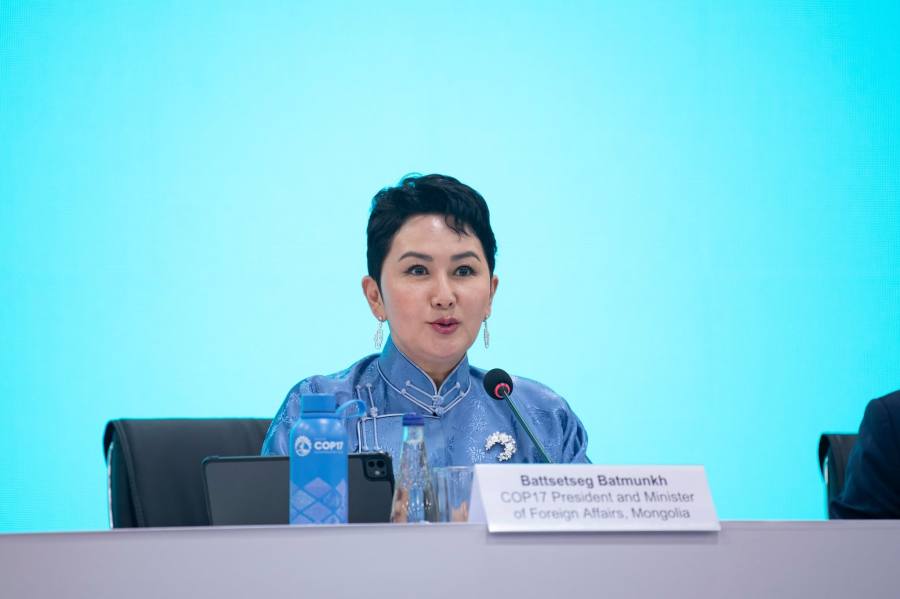
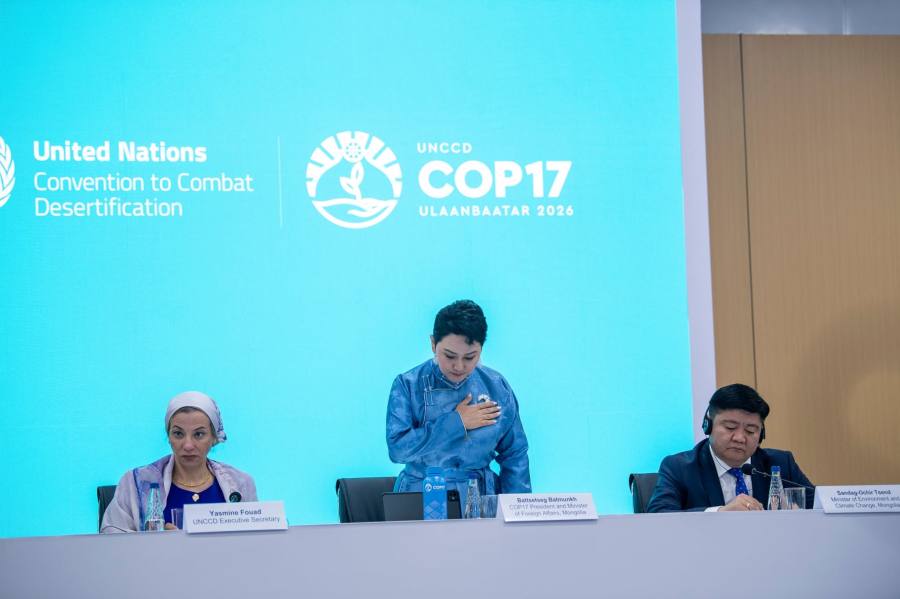
Minister of Foreign Affairs and COP17 President Battsetseg Batmunkh said Mongolia had worked to conduct the negotiations in an open, transparent, inclusive, and consensus-based atmosphere and to bring parties' positions closer together to reach concrete results. Through the International Year of Rangelands and Pastoralists, she said, Mongolia had shown the world that rangelands are a strategic ecosystem connecting food, environment, economy, biodiversity, and herders' livelihoods. In carrying out the presidency, she said, Mongolia had followed the principle of moving "from commitment to implementation, from discussion to real action."
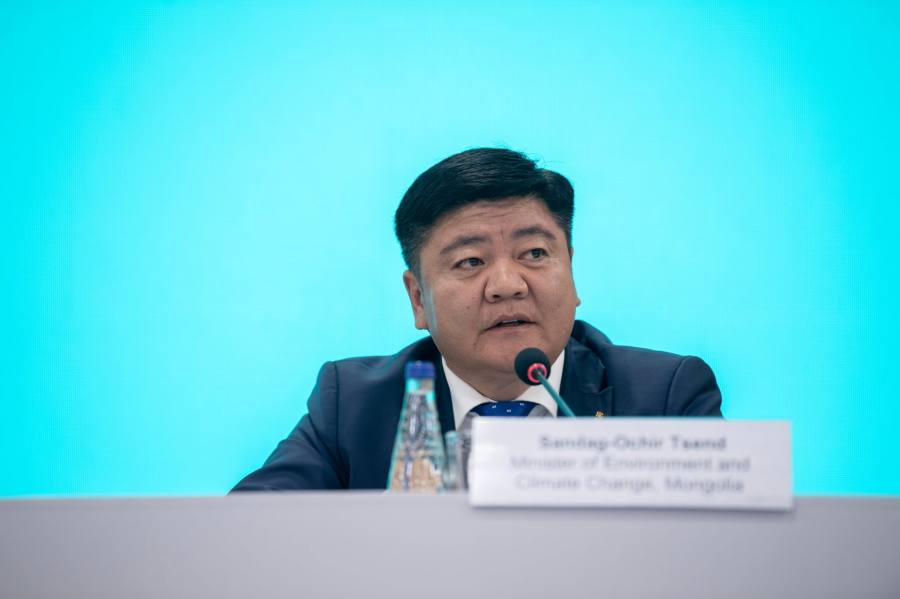
Minister of Environment and Climate Change and Chair of the COP17 National Organizing Committee Sandag-Ochir Tsend said one of the most important outcomes for Mongolia had been securing support from parties, international organizations, the private sector, and civil society for the Steppe Action Agenda. "Although COP17 concludes today, our work does not end here," he said. "Our next priority is to translate the decisions adopted, the partnerships built, and the confirmed investment commitments into real action, and to ensure that the initiatives launched from the Mongolian steppe deliver tangible, measurable results."
From Mongolia to Egypt
The next session, COP18, is expected to be held in Egypt in 2028, carrying forward the momentum built in Ulaanbaatar. It will assess the progress countries make on land restoration and drought resilience and mark the next major stage in building on the results reached in Mongolia.