Loading…
Loading…

MONTSAME
ULAANBAATAR, August 28, 2026 /MONTSAME/. COP17 wrapped up its thematic days on Thursday, the 11th day of the conference, with senior Mongolian officials and international representatives casting the past week’s discussions on finance, water, land, and food systems as interconnected pieces of a single task: moving the fight against desertification from commitment to implementation. Tomorrow will be the closing day of COP17.
The closing session coincided with Food Systems and Soil Health Day, the last of four themed days, and served to draw together the main outcomes of the UNCCD COP17 Action Agenda. Opening the session, UNCCD Deputy Executive Secretary Andrea Meza Murillo called the week “a tremendous success,” praising Mongolia’s leadership and the breadth of participation, from Indigenous peoples and mayors to parliamentarians.
Amarsaikhan Sainbuyan, Minister of Justice and Internal Affairs of Mongolia, framed the week’s discussions in human terms. Land, he said, is ultimately about people, good governance, and peace, and those who live on the land must have a meaningful voice in decisions about it. He stressed that women and young people are integral to decision-making — a point, he noted, that carries particular weight given Mongolia’s nomadic history and culture — and singled out the vital role of women pastoralists in protecting the land. Restoring land, he added, requires moving from commitment to implementation and financing, something no government can achieve alone without international organizations, civil society, and local communities. Mongolia, he said, understands deeply that the wellbeing of people and the health of the land are inseparable.
Iderbat Tsagaankhuu, Minister of Food, Agriculture and Light Industry, said the common thread running through the conference’s many meetings was land health, and that investment is crucial to making it a reality. He pointed to progress in areas such as wool-based fertilizer and sea buckthorn, and said the long-term goal must be to support the groups that need it most, including women and youth, with the genuine participation of herders at the center.
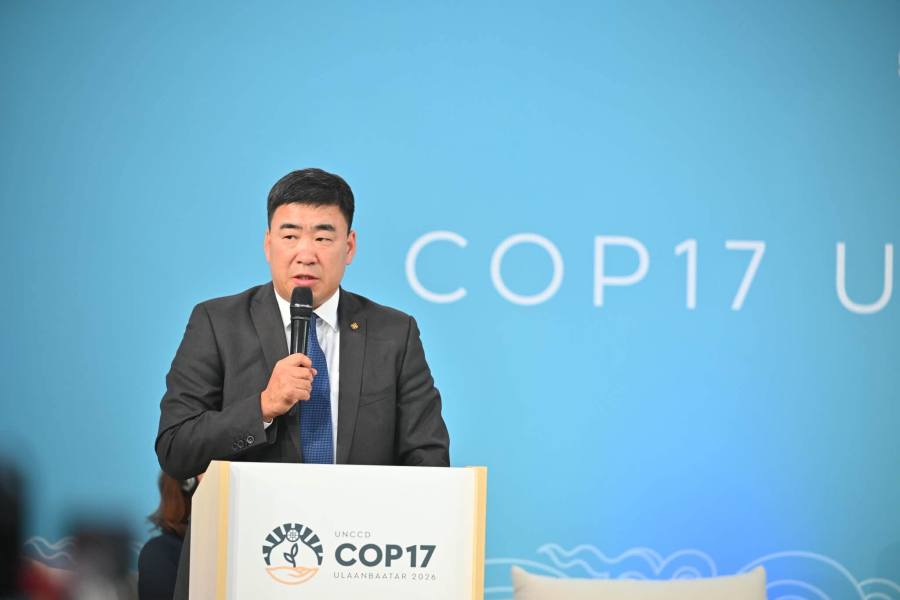
Javkhantugs Ganbaatar, adviser to the Deputy Prime Minister on foreign investment and procurement, speaking on behalf of the finance discussions, highlighted the international attention given to rangelands as one of the conference’s landmark achievements — an initiative he tied directly to the economy, food security, biodiversity, water security, and Indigenous communities. He pointed to an advanced rangeland initiative running toward 2035. On water, he stressed that drought does not respect borders and that water is the connector across every theme, calling for land that retains and holds water, stronger governance, and an end to treating solutions as mere pilot projects. “We can invest in prevention,” he said. “Let us protect now.”
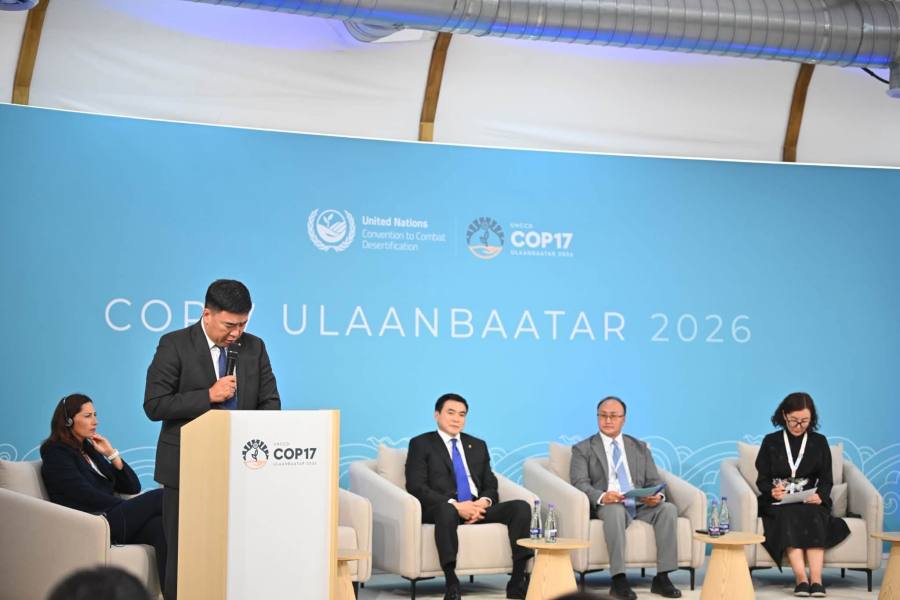
A panel of representatives from each of the four thematic days followed, underscoring how closely the themes were linked.
Bayanjargal Byamba, Vice-Chair of the Business Council of Mongolia, spoke for Finance Day and announced the launch of the Council’s “Business for Land” initiative. He noted that COP17 marked the first time mining had been brought to the forefront of the discussions and mining companies represented in them. “This isn’t business as usual,” he said, arguing that businesses have a leadership role to play in adopting practices that restore land and that partnerships are essential.
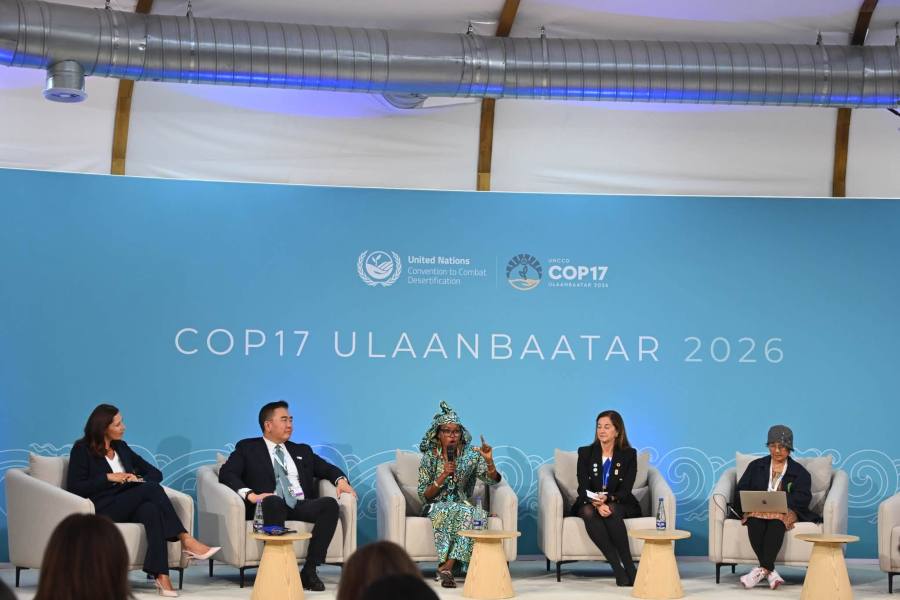
Monica Medina, Senior Policy Advisor at IDRA, called Water Day striking — its message driven home, she said, by flooding in Nepal that struck the day after. Returning again and again to the phrase “water is life,” she warned of “water bankruptcy” and called for new approaches to managing groundwater and sharing water resources. Conferences like this one, she said, matter more than ever for the action they galvanize: “Water is the essence of hope.”
Hindou Oumarou Ibrahim, President of the Association for Indigenous Women and Peoples of Chad, spoke for Land and People Day, noting that the Action Agenda had been people-centered throughout, with a dedicated local community day, a high-level Indigenous peoples’ day, and declarations adopted by both Indigenous groups and youth. People must remain at the center of the conference, she said — including those unable to attend.
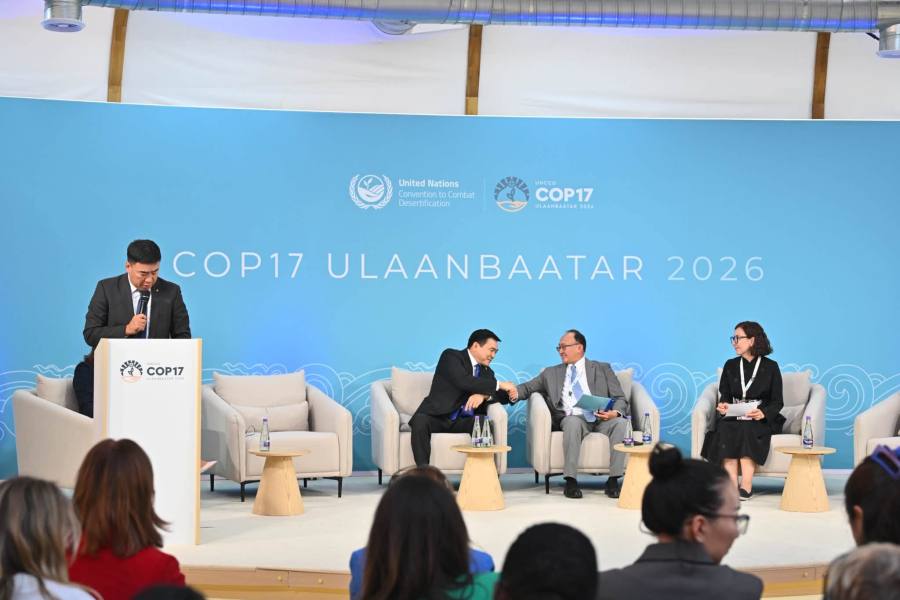
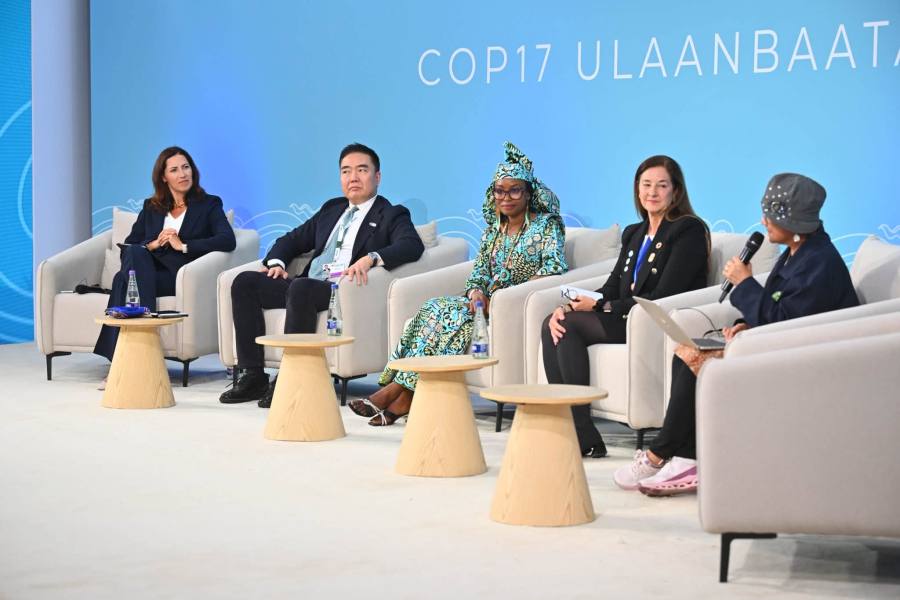
Esther Penunia, Secretary General of the Asian Farmers’ Association for Sustainable Rural Development, closed for Food Systems and Soil Health Day, expressing solidarity in the search for solutions. Without financing, she cautioned, there is no hope.