Loading…
Loading…

MONTSAME
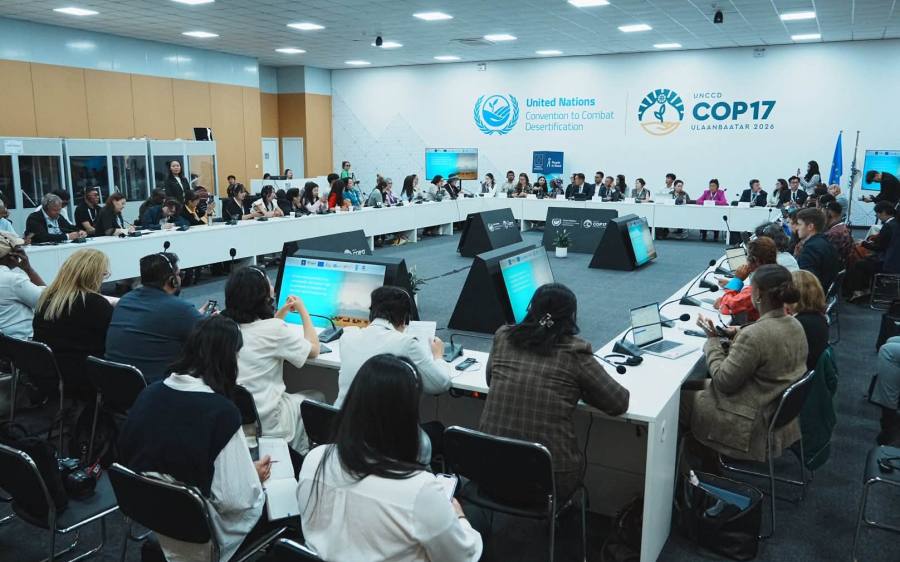
Ulaanbaatar, August 21, 2026 /MONTSAME/. A discussion themed "The Role of Civil Society Organizations in Driving UNCCD and UNFCCC Synergies: A Perspective from Mongolia” was held on August 20, 2026, within the framework of COP17.
Representatives of Mongolian and international civil society organizations, herders, and indigenous peoples attended the discussion to exchange views on the synergy of land and climate change actions and civil society participation. Munkhtamir Batbayar, Deputy Minister of Environment and Climate Change, participated in the event and expressed his position.
In his remarks, Deputy Minister Munkhtamir stated, “We have taken on specific duties and commitments under the Paris Agreement, the UN Convention to Combat Desertification (UNCCD), and the Convention on Biological Diversity. However, these commitments are developed under different processes and indicators. These commitments are reflected in our national policies and programs, and we are working to implement them in a coordinated and integrated manner. The discussion shows that the synergy between the land and climate sectors is built through partnerships. Civil society organizations represent local knowledge, experience, and perspectives, while the government can provide policy and regulatory frameworks. The “Steppe Action” introduced by the Government of Mongolia is a platform that unites multiple stakeholders.
We are also focusing on resolving institutional and legal barriers. In this regard, Mongolia’s national movement "Chuluulye" (Liberate) is of vital importance. It is a comprehensive reform program involving all government organizations and notably includes “Liberating the Green Transition” and “Liberating Good Governance” initiatives. We are shifting from isolated policy commitments to integrated implementation and working to strengthen coordination among state institutions. Therefore, successfully implementing this partnership requires, first, trust and openness. Civil society organizations must be able to freely express their critical feedback and recommendations. Second, complementarity. We must have a clear understanding of what the government can do, what civil society can do, and where we can collaborate. Third, continuity. The partnership should not begin and end with COP17 but must continue throughout the implementation phase,” he emphasized.