Loading…
Loading…

MONTSAME
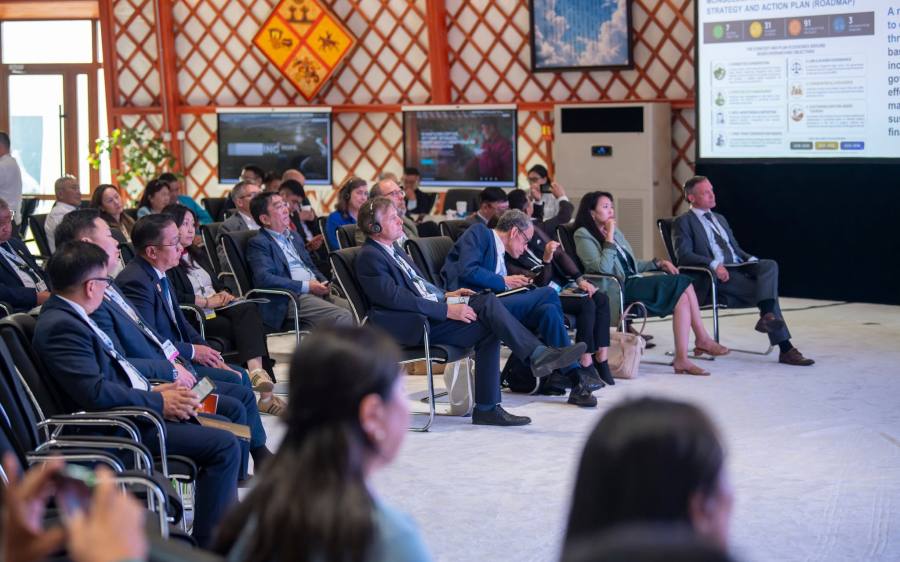
Ulaanbaatar, August 18, 2026 /MONTSAME/. A sub-session titled “Solutions to Reduce Land Degradation: Policy, Management and Financing of Protected Areas” was held under the theme “Protect Nature, Pass It on to Future Generations” as part of the 17th Conference of the Parties (COP17) to the UN Convention to Combat Desertification (UNCCD).
The session was jointly organized by Mongolia's Ministry of Environment and Climate Change, The Nature Conservancy (TNC), the Mongolian Nature’s Legacy Foundation, and the German Agency for International Cooperation (GIZ). Senior government officials, national and international conservation organizations, financial institutions, development partners, private-sector representatives and sector specialists attended the session.
Participants exchanged views on the current policy environment, long-term vision and strategic priorities for Mongolia's protected areas. They also discussed opportunities to scientifically expand the national protected area network, improve management, strengthen conservation systems, establish sustainable long-term financing, and expand cooperation among the government, civil society, private sector and international partners.
The session examined protected areas as a long-term policy instrument for reducing land degradation and desertification and conserving biodiversity and ecosystem integrity. Discussions focused on legal frameworks, policy, governance, management and sustainable financing solutions needed to achieve effective conservation. Participants also explored ways to translate policies into tangible results and strengthen cooperation among national and local governments, local communities, the private sector, financial institutions and international partners.
The first part of the session covered the ongoing reform of the Law on Special Protected Areas, development of the national protected area network, the importance of strategy and action plan documents, scientific research to identify areas of ecological importance, evidence-based decision-making, and management and financing mechanisms.
Joe Kiesecker, lead scientist at The Nature Conservancy, delivered a presentation on assessing areas of ecological importance and making evidence-based decisions.
The second part featured a high-level panel discussion involving policymakers and key sector representatives. The panel addressed policies and legal reforms to strengthen protected-area conservation, science-based decision-making, results-based management, sustainable financing, local community participation, and the roles and responsibilities of stakeholders.
A key focus was not simply on expanding the size of protected areas, but also on improving the quality and effectiveness of conservation, measurable outcomes and the sustainability of financing.

Bat-Erdene Bat-Ulzii, Member of Parliament, emphasized the importance of incorporating local communities' traditional knowledge into protected-area management.
“Protected areas need to be strictly protected, but local communities who have lived in these areas for hundreds of years understand when and where to move and how to interact with and restore the land and pasture. Since herders are part of the ecosystem, it is appropriate to reform the protected-area system with their participation,” he said.
He stressed that conservation should take into account not only nature itself, but also the interconnected relationship among ecosystems, biodiversity, people and wildlife, adding that conservation should be a shared responsibility rather than an effort led by the government alone.
He also noted that while human activity should be strictly prohibited in areas containing rare wildlife and plant species, traditional seasonal pasture-use practices should be considered in other areas.
“Drought and dzud conditions vary from one area to another. Herders traditionally manage and reserve pasture through seasonal migration, including winter and spring camps. Although such practices are not by themselves a sustainable solution amid changes in technology and land productivity, traditional seasonal movements should be considered in protected-area planning, alongside herders' knowledge, pasture rotation practices, monitoring and scientific research,” Bat-Erdene said.
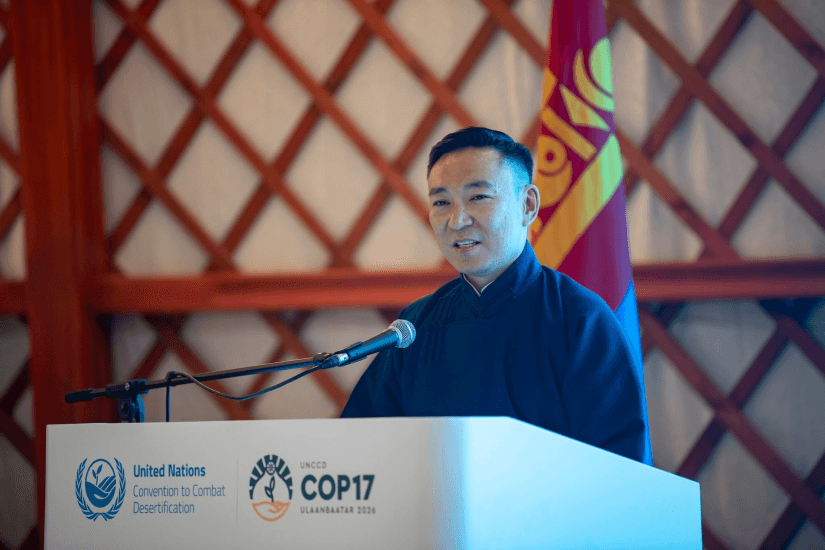
Batbayar Shurenchuluun, State Secretary of the Ministry of Environment and Climate Change, said Mongolia has a long-standing tradition of developing its protected-area system.
“The international community has set a goal of effectively protecting 30 percent of land and marine areas by 2030. In pursuing this target, Mongolia will focus not only on increasing the area under protection, but also on the quality and effectiveness of conservation, management capacity, sustainable financing, local community participation and science-based decision-making,” he said.
He noted that the ministry is working to improve Mongolia's legal framework for protected areas. The revised Law on Special Protected Areas currently under consideration is expected to strengthen conservation effectiveness, develop co-management mechanisms, establish sustainable financing mechanisms, and increase the participation and accountability of local communities and other stakeholders.
“This is not simply a legal reform, but a policy reform aimed at making the conservation system more effective, participatory and financially sustainable,” Batbayar said.
He expressed confidence that cooperation, expertise, experience and investment from participants would contribute to achieving tangible conservation results, reducing land degradation and maintaining ecosystem stability in Mongolia.
He also called for countries and organizations to share their experiences, best practices and solutions and work together to develop the 30×30 target into a new-generation conservation goal measured by tangible results.
During the session, Ariuntsetseg D., Head of the Protected Area Administration of the Dariiganga National Park, also spoke about the successful implementation of a major restoration project at Lake Ganga.
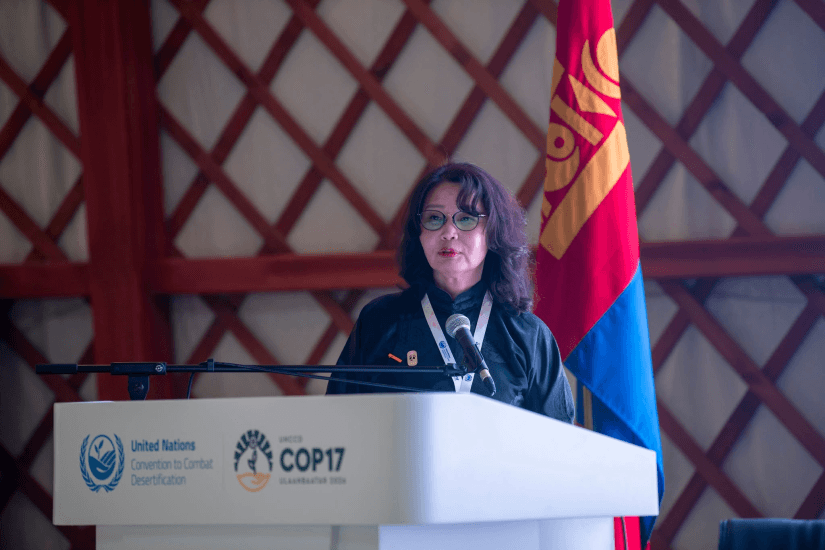
Meanwhile, Uranchimeg Ts., Director of the Protected Areas Policy Department, said international partners implementing various projects and programs to expand Mongolia's protected-area network and improve its management had gathered in Mongolia for COP17.
She noted that the timing coincides with the government's submission of the revised draft Law on Special Protected Areas to the State Great Khural.
“We are implementing numerous projects and programs with international partners to expand the protected-area network and improve its management. We are also working to incorporate Mongolia's obligations under international and UNESCO treaties and conventions into our legal framework. Going forward, we will discuss how to cooperate further in this area and explore financing opportunities with our partners. Following a series of consultations, we will move toward launching new projects,” Uranchimeg said.
Mongolia adopted its first Law on Special Protected Areas in 1994 and established a legal framework for buffer zones in 1997. Although the law has been amended 17 times over the past 32 years, its fundamental structure and content have remained largely unchanged.
Currently, 120 areas covering 32.8 million hectares, or 20.8 percent of Mongolia's total territory, are under state special protection. Mongolia aims to increase the share of protected areas to 30 percent by 2030 and 35 percent by 2050.