Loading…
Loading…

MONTSAME
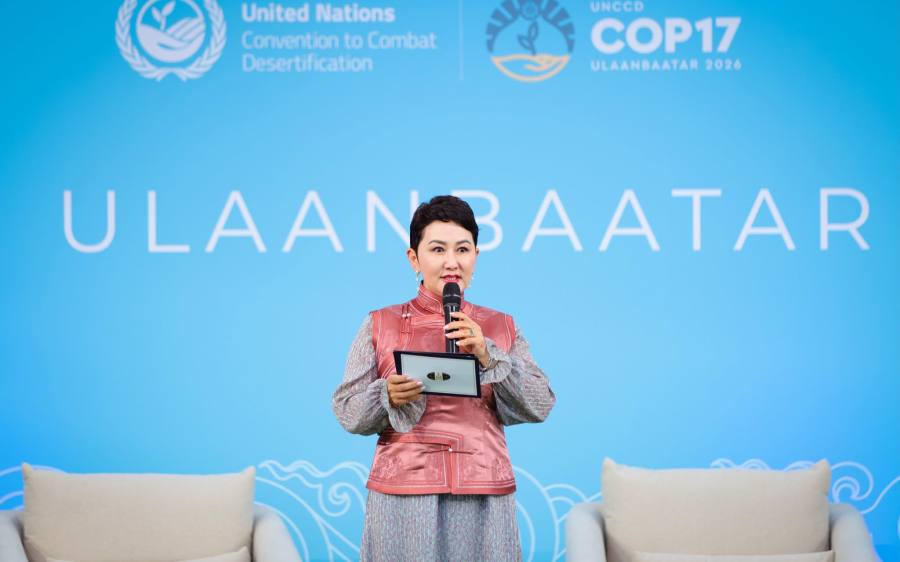
Ulaanbaatar, August 25, 2026 /MONTSAME/. Battsetseg Batmunkh, Minister of Foreign Affairs and President of the 17th Conference of the Parties (COP17) to the UN Convention to Combat Desertification, participated in the high-level panel discussion "Navigating Fashion Standards: Policy Dialogue on Sustainable Regulation" during the "Fashion4Land" forum, held as part of Finance Day at COP17.
In her remarks, Minister Battsetseg noted that the fashion industry, land degradation, and ecosystem sustainability are closely interlinked. She emphasized that behind the raw materials of clothing and textile production lie not only natural resources such as land, water, soil, and pasture, but also the labor and livelihoods of the people who depend on them. She mentioned that Mongolia accounts for about 40% of the world's raw cashmere production, and this sector is directly linked to the livelihoods of approximately 190,000 herder households.
Furthermore, she highlighted that new environmental standards and regulations being introduced in the fashion industry should not create additional burdens for producers but rather aim to provide opportunities for transitioning to sustainable and responsible production. To achieve this, she emphasized the importance of supporting small and medium-sized enterprises, raw material suppliers, and herders with the knowledge, technology, and financing necessary to comply with new requirements.
According to the UN Convention to Combat Desertification report "Fashion & Land: Unravelling the Environmental Impact of Fibres," the volume of raw materials used in global clothing and textile production was 58 million tonnes in 2000, reaching 124 million tonnes in 2023, and is projected to grow further.
This demonstrates that the fashion industry's environmental impact is not limited to carbon emissions but is directly related to land degradation, water resources, biodiversity, ecosystem sustainability, and the livelihoods of citizens dependent on natural resources.