Loading…

MONTSAME
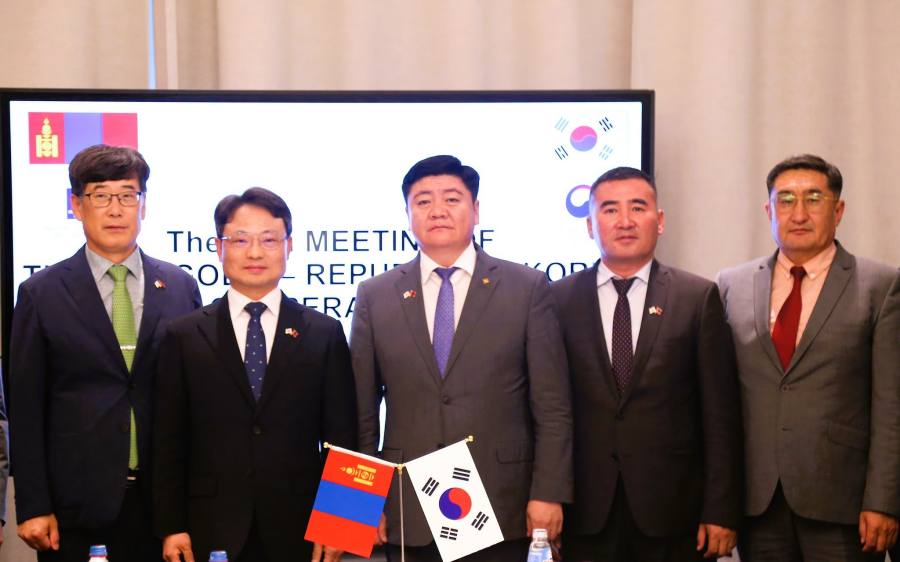
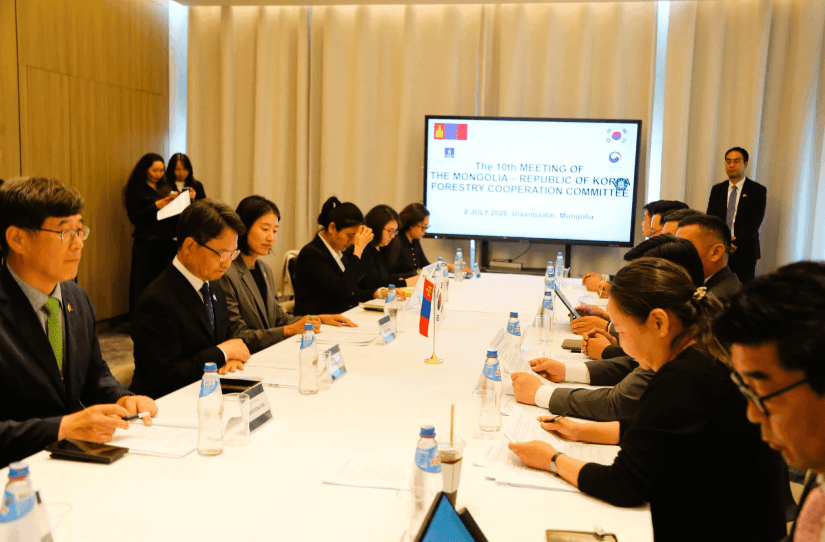
Ulaanbaatar, July 9, 2026 /MONTSAME/. The 10th Meeting of the Mongolia-Republic of Korea Forestry Cooperation was held on July 8, 2026.
In his opening remarks at the Meeting, Minister of Environment and Climate Change of Mongolia, Sandag-Ochir Tsend, stated, "Our two countries have strengthened trust and friendly relations over many years in the fields of environment, forestry, and combating desertification. A clear manifestation of this is the 'Greenbelt' project. Over the past twenty years, we are grateful that this project has evolved from an initiative on afforestation and combating desertification into a comprehensive model of cooperation."
He further emphasized, "The first phase of the project successfully implemented its objectives to combat yellow dust storms and desertification by afforesting a total of 3,046 hectares in Tuv and Umnugobi aimags. The establishment of three tree nurseries and two afforestation training centers, along with the training of over 7,900 specialists and citizens, is making a significant contribution to strengthening the human resources and technical capacity of the forestry sector."
Under the ongoing third phase of the "Greenbelt" project, an early forest fire detection system was established in Selenge aimag, and regional tree nurseries and training centers were built in Uvurkhangai and Khuvsgul aimags. The development of agroforestry and community forest grove model projects in Tuv aimag and the Gorkhi-Terelj area is setting a new standard for sustainable development in the forestry sector. These efforts are serving as a practical foundation to support the implementation of the "One Billion Trees" national movement.
During the 10th Meeting of the Mongolia-Republic of Korea Forestry Cooperation, the two sides exchanged views on launching the fourth phase of the "Greenbelt" project, aiming to evaluate the results of the previous phases and build upon these successes between 2027 and 2031. The Ministry of Environment and Climate Change reported that the upcoming phase will hold strategic importance in elevating the forestry sector to a new level by introducing new technologies and research, establishing genetic resources and seed banks, and developing modern tree nurseries, agroforestry, forest fire management, digital technologies, and human resource capacities.