Loading…
Loading…

MONTSAME
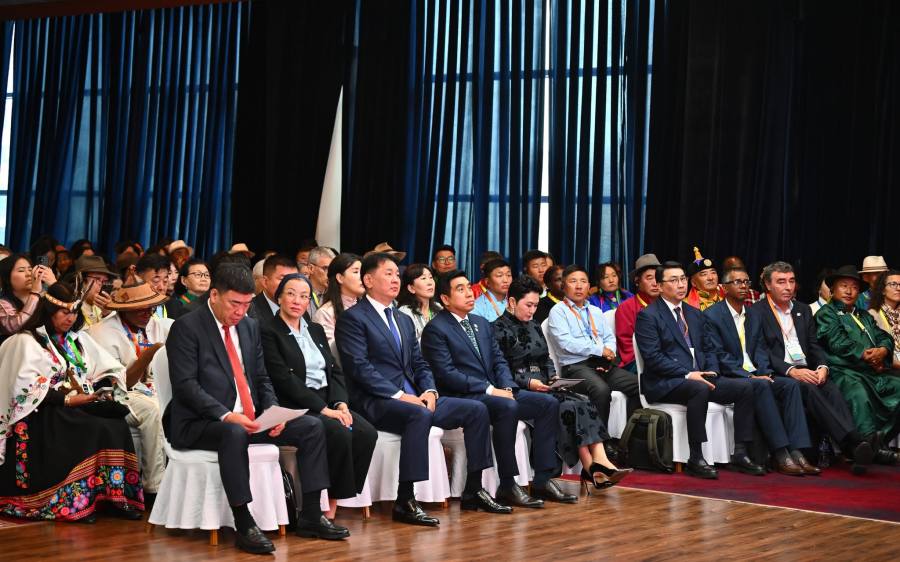
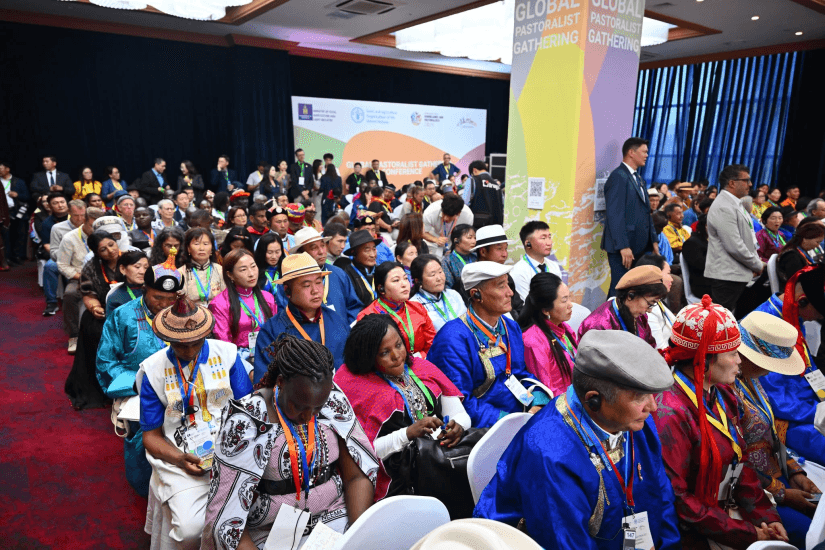
Ulaanbaatar, August 14, 2026 /MONTSAME/. The Global Pastoralist Gathering and Conference commenced in Ulaanbaatar on August 14, 2026.
 Opening the conference, President of Mongolia Khurelsukh Ukhnaa emphasized that Mongolia, with its deep historical traditions in pastoral livestock husbandry, initiated and secured the adoption of the United Nations General Assembly resolution declaring 2026 as the International Year of Rangelands and Pastoralists (IYRP). The initiative aims to protect the rights of herders in over 100 countries, improve pastureland management and utilization, preserve ecosystem balance, and safeguard global food supply and security.
President Khurelsukh stated, "Mongolia aims to host the 17th Conference of the Parties (COP17) to the UN Convention to Combat Desertification (UNCCD) and serve as a platform for concrete solutions to reduce land degradation, accelerate restoration, build drought resilience, support sustainable pasture management, strengthen the food-water-land nexus, and increase investment and financing.
Within the framework of this conference, the 'Steppe Action' proposed by Mongolia rests on three interconnected priorities:
-Rangelands Flagship Initiative
-Land–Water Nexus Initiative
-Nature-Based Solutions for Sustainable Infrastructure Initiative
Moving forward, Mongolia aims to be an active global hub for collaboration, exchanging knowledge and experience in rangelands and pastoralism, supporting joint research, projects, and programs, and expanding international partnerships.
Furthermore, we believe our shared objective must be to increase the participation of youth, girls, and women in the livestock sector, improve access to education, financial services, and markets, and transform pastoralism into a competitive sector grounded in knowledge, innovation, and technology."
 Dr. Yasmine Fouad, Executive Secretary of the UN Convention to Combat Desertification (UNCCD), said, "I deeply admire and draw inspiration from the wisdom of herders, learning from them every day. In the pastoral way of life, I see not just herding livestock, but genuine resilience and adaptability.
Herder families overcome immense hardships to make a living, passing on their traditional wisdom to future generations while shouldering the responsibility to protect their pasturelands and native soil. I congratulate our herders, who keep our unifying values - the land, rangelands, and pastoral culture - alive, and I emphasize once again that you are our pride."
 Iderbat Tsagaankhuu, Minister of Food, Agriculture and Light Industry of Mongolia, highlighted, "The UN General Assembly's declaration of 2026 as the International Year of Rangelands and Pastoralists, initiated by Mongolia, was a historic decision recognizing the labor and vital contribution to ecosystems of over 500 million herders and nomads worldwide. Therefore, through this congress, we need to unify three main directions to achieve tangible results:
-Sustainable Management & Restoration: Implementing practices that combat pasture degradation by combining traditional nomadism with modern scientific advancements.
-Climate Resilience: Developing climate-resilient pastoralism by reducing risk vulnerability for livestock producers, along with enhancing financing mechanisms, insurance, and early warning systems.
-Value Chains & Social Guarantees: Creating value chains that supply raw materials and products from pastoral livestock husbandry to global markets at high value, supporting young herders, and ensuring their social security."
 Thanawat Tiensin, Assistant Director-General of the UN FAO & Director of the Animal Production and Health Division, said, "I’d like to reflect on how the International Year of Rangelands and Pastoralists began. It officially launched in December 2025 at the FAO headquarters in Rome, with President Khurelsukh in attendance.
During that event, the President of Mongolia and the Director-General of FAO agreed on a simple yet crucial vision: 2026 should not merely be a year of commemoration; it must be a year of concrete action. This shared vision has now brought global pastoralists together here in Mongolia."
 Battsetseg Batmunkh, Minister of Foreign Affairs of Mongolia, emphasized, "The herders' way of life faces many challenges today. In many regions of the world, mobility - the core lifeblood of pastoral systems - is shrinking, and traditional migratory corridors and routes are diminishing.
Pasturelands are becoming fragmented, and infrastructure developments, changes in land use, and administrative boundaries sometimes overlook the ecological realities upon which herders' livelihoods depend. Mobility is often mistakenly viewed as a relic of the past rather than a sophisticated strategy adapted to environmental challenges.
However, pastoral mobility is by no means a sign of lagging behind development. On the contrary, it is a time-tested and effective system that preserves ecosystem balance and resilience in fragile environments."
 Jaap van Hierden, UN Resident Coordinator in Mongolia, said, "Today we are witnessing a clear example of how a national initiative becomes a global initiative. I am confident that the outcomes of today's discussions will serve as important reference documents for global policy makers and decision-makers. The three declarations emerging from this hall will serve as foundational documents for policy development.
Mongolia continues to lead the world in pastoral traditions, practices, and methodology. I am confident that the results and declarations from today's discussions will reach far beyond this room and bring pastoralism into the global spotlight."
Conference Overview
Following Mongolia's initiative that led the United Nations to declare 2026 as the "International Year of Rangelands and Pastoralists", a proposal supported by over 102 countries and more than 550 organizations worldwide, the conference brings together 100 domestic herders alongside approximately 240 foreign delegates representing pastoralists, herder organizations, civil society, and academic institutions across 102 nations to tackle pressing challenges like climate change and pasture degradation while discussing and adopting a draft declaration supporting the sustainable development of pastoral livestock husbandry.