Loading…
Loading…

MONTSAME
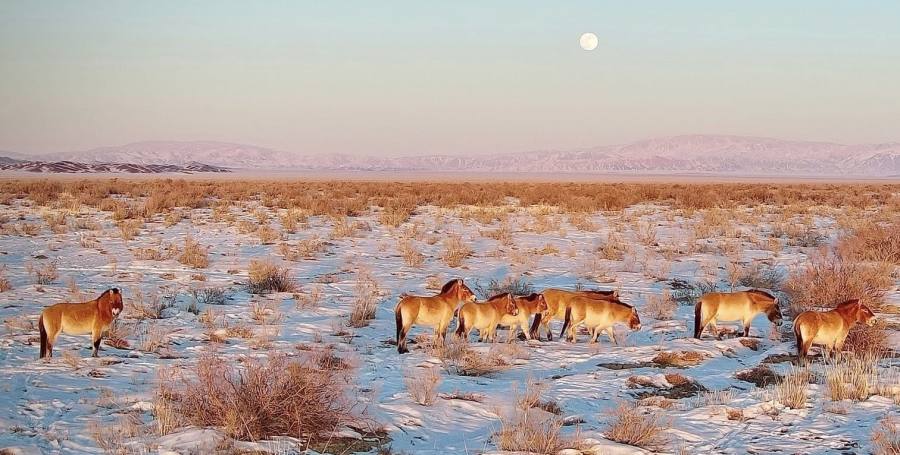
Yesunbulag, November 2, 2026 /MONTSAME/. As part of field research in Zone B of the Great Gobi Strictly Protected Area, researchers have equipped four Takhi (Przewalski’s horses) with GPS tracking collars.
The study aims to gain a better understanding of the horses’ distribution, habitat use, and movement patterns, as well as their access to pasture and water resources.
Data collected through the GPS collars will be used to map the Takhi horses’ distribution, identify their ecological needs and habitat characteristics, and support science-based planning of future conservation and management measures.
The field research is being carried out jointly by researchers, veterinarians, specialists, park rangers, and students, according to the administration of Zone B of the Great Gobi Strictly Protected Area.
Native to Mongolia, the Takhi horse became extinct in the wild in the late 1960s. Efforts to reintroduce the species to its native habitat began in 1992. On June 5 that year, 16 horses were transported to Khustai Nuruu in Tuv aimag, followed by five horses brought to Takhiin Tal in Gobi-Altai aimag the next day, marking the beginning of the reintroduction program in Mongolia.
Between 1992 and 2000, a total of 84 horses were reintroduced to Khustai Nuruu National Park, while 131 were brought to Zone B of the Great Gobi Strictly Protected Area between 1992 and 2019.
To date, around 300 Takhi horses have been reintroduced to Zone B, located in Bugat soum, Gobi-Altai aimag.