Loading…

MONTSAME
Ulaanbaatar, July 9, 2026 /MONTSAME/. The Gobi’s brown soil is highly fragile, with a very thin fertile layer. This structure makes is susceptible to degradation that takes decades to recover.
Drylands cover around 11% of the Earth’s land surface and support rich biodiversity, including many rare and endangered species. According to scientists, arid regions are defined as areas with very low rainfall, yet they have a unique ability to sustain biodiversity. This includes species that are rare globally or even threatened with extinction. Such dry climatic conditions create the perfect environment for nutrient-rich plants to grow and highly valuable minerals to form. For this reason, the Mongolian Gobi is world-renowned and considered an area that must be preserved. However, desertification continues to expand its reach year after year, taking an increasingly heavy toll.
Groundwater Is Gradually Declining
Jargalsaikhan D., a veterinarian who has worked for more than 40 years in Ulziit soum of Dundgobi aimag, said that groundwater levels have been steadily falling. “Hydrogeologists have conducted extensive studies covering Bayankhongor, Umnugobi, Dundgobi, and Dornogobi aimags for many years. Every time I meet them and ask how the water level is, they always give the same answer, “It is dropping inch by inch””.
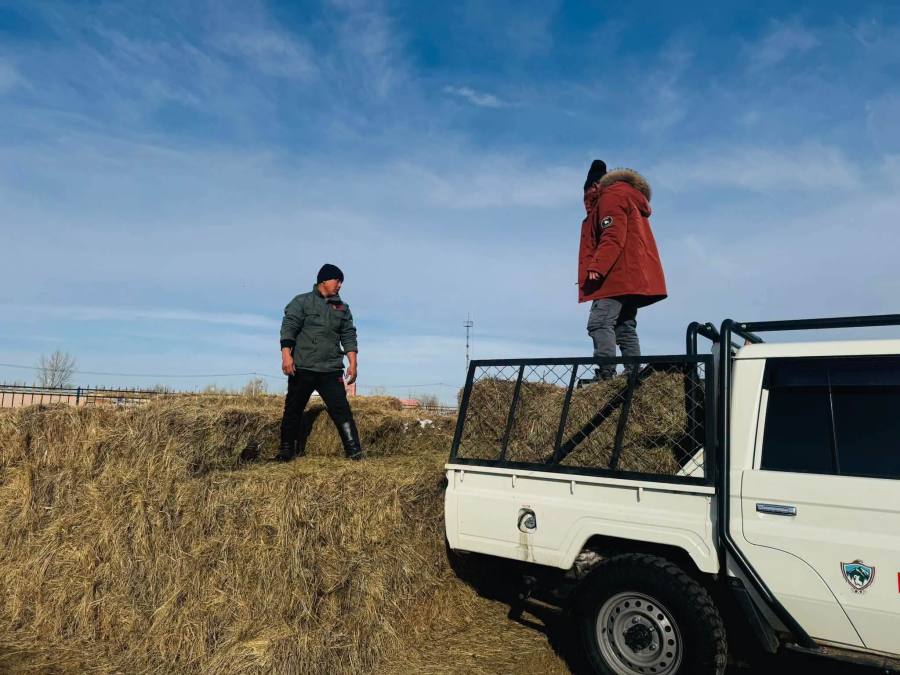
"Although Ulziit soum accounts for nearly one-fifth of Dundgobi aimag’s territory, its livestock population has exceeded the pasture carrying capacity. Herders' migration patterns have also changed. Many now remain in one place to prevent others' livestock from grazing on their pasture, instead of moving seasonally as they once did. Almost every household is drilling its own well, which is contributing to increasing aridity and declining groundwater levels," he added.
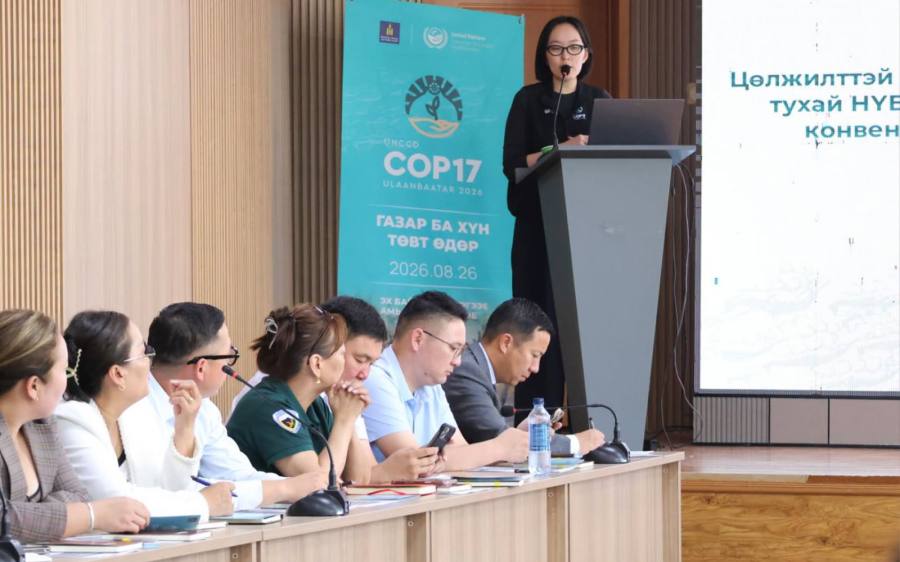
As part of preparations for COP17,
Mongolia’s National Committee for COP17, together with the United Nations
Educational, Scientific and Cultural Organization (UNESCO), the German Agency
for International Cooperation (GIZ), the United Nations Children’s Fund
(UNICEF), and “People in Need” (PIN) INGO, organized outreach activities in
Dundgobi, Umnugobi, Dornogobi, and Gobisumber aimags.
To reduce land degradation caused by multiple factors, restore pastures, and conserve water, it is crucial to guide local authorities, the government, NGOs, citizens, and herders, helping them understand that protection is a collective effort with opportunities for action at every step of daily life."
Jargalsaikhan emphasized that changing public attitudes is equally important. “Climate change, human activities, unsustainable grazing, the rapid growth of livestock, and poor water management all contribute to desertification. Without changing people's awareness and behavior, we cannot stop it. Nature has been warning us for a long time, and it is our responsibility to recognize those signals and act before it is too late. I believe COP17 presents a major opportunity for Mongolia. We have discussed desertification for many years, but now the international community will come and see the situation firsthand. People need to understand the lives and experiences of those living in drylands like ours. Herders, veterinarians, water engineers, and local residents interact with nature every day, and they possess valuable knowledge that deserves to be heard."
Civil Society Driving Green Future
In Umnugobi aimag, herders welcome each blade of grass that emerges in spring and eagerly await the scent of rain and the passing shadow of clouds. Sand dunes and scorching summers define the landscape of this region. Yet, do not mistake the desert for being lifeless. Umnugobi is one the places where the value of life is felt most profoundly. When a single spring dries up, migration routes shift, grazing areas shrink, and the livelihoods of herding families change accordingly.
Land degradation and desertification are therefore not merely environmental issues. They are closely intertwined with people's livelihoods, local economies, and cultural traditions.
Addressing these challenges requires more than government policy alone. Meaningful progress depends on the active participation of local communities, the traditional knowledge of herders, scientific research, and initiatives led by civil society organizations.
Working closest to local communities, civil society organizations serve as a bridge between citizens and policymakers while translating scientific knowledge into practical solutions.
Among the organizations supporting the regional consultation in the Gobi is People in Need (PIN), which has recently launched the "Twin Transition" project, officially titled "Civil Society Driving Mongolia's Green and Digital Transition", with financial support from the European Union. The initiative aims to strengthen the role of civil society in promoting sustainable development and supporting Mongolia's transition toward a greener and more digitally connected future.
Project Manager of the “People in Need” (PIN) INGO Bat-Erdene B. stated: “The ‘Twin Transition’ project aims to support green development and digital transition in Mongolia with the participation of civil society. Our project has been implemented in Ulaanbaatar city, as well as Dundgobi and Umnugobi aimags, since 2026. The Twin Transition project focuses on strengthening the capacity of civil society organizations (CSOs) and increasing their opportunities to participate more effectively in climate change and digital transition policies. Combating land degradation and desertification is not a task for a single organization or sector. The most sustainable solution lies in strengthening the capacity, cooperation, and citizen participation of CSOs operating at the local level.”
The green transition is about protecting and sustainably using natural resources to build and leave behind a green, sustainable future. Meanwhile, the digital transition aims to effectively utilize modern digital tools, data, and information channels to connect scientific data, local knowledge, and best practices more rapidly, thereby creating opportunities to integrate them into policymaking and decision-making.
“As Mongolia hosts COP17, we believe that bringing the experiences, proposals, and initiatives of local citizens, herders, and CSOs to international discussions is one of the most valuable contributions,” emphasized Project Manager Bat-Erdene.
Head of the “Steps Without Borders” NGO, Bayarsaikhan N., whose organization is participating in the “Twin Transition” project, shared: "Our organization works to protect the land, pasture, and water rights, livelihoods, and participation rights of herders living in the impact zones of mining, energy, and infrastructure projects. In the era of global digital transition, CSOs also need to modernize their operations, communications, and advocacy methods. The 'Twin Transition' program by People in Need provides valuable support in strengthening our organization's digital capacity and expanding the reach and impact of our operations. Simultaneously, another crucial goal of our organization is to bring the issues of land and pasture rights of herders affected by mining, energy, and infrastructure projects, along with their real-life experiences and proposed solutions, to national and international policy discussions.
Particularly within the framework of COP17, we believe that cooperation among CSOs is essential to deliver herders' voices in a more organized manner and reflect them in policy decisions. In this sense, PIN's 'Twin Transition' project is a valuable collaboration that practically supports two vital objectives: backing our organization's digital transition and strengthening efforts to elevate herders' rights to the international policy level. We are confident that as a result of this support, the voices of more herders will reach the policymaking and decision-making levels."
Pasture Degradation: A Trillion-Dollar Loss
Nature does not say how it is "hurting," but it shows how it is changing every day. In the territory of Govisumber aimag, where the steppe and the Gobi meet, the frequency and duration of droughts continue to prolong. As the water sources dry up and recede, the growing grass becomes sparse and stunted. In Dornogobi aimag, a region unimaginable without wind and storms, the colors of the four seasons are shifting year by year. Moisture is no longer retained in the soil, the water in the wells is visibly dropping, and the endless pastures turn yellow even in the summer months.
Looking at a broader scale, a report by the UN Food and Agriculture Organization (FAO) states that rangelands, which cover more than half of the world's land surface, support the livelihoods of 1.3 billion people and generate USD 21.0 to USD 47.0 trillion in economic value annually. However, with nearly half of these valuable resources degraded, it has become a major challenge not only for the environment but also for the economy, food security, and climate change. At such a critical time, by hosting COP17, Mongolia is presented with a unique opportunity to bring the issue of sustainable rangeland management and restoration to the center of global attention, introduce best practices and innovations, and direct investment flows into the environmental conservation sector, thereby writing a new chapter in history.
Project Coordinator of the German Agency for International Cooperation (GIZ), Javkhlan N., noted, "The German Agency for International Cooperation is providing policy and technical support to the Government of Mongolia in the areas of sustainable land management, pasture governance, and economics. Furthermore, the international report 'Rangelands Rising: Investing in Sustainable Global Restoration,' which will be presented during the conference, was developed in collaboration with the UN Convention to Combat Desertification (UNCCD), the Economics of Land Degradation (ELD) Initiative, the International Union for Conservation of Nature (IUCN), and the International Livestock Research Institute (ILRI). "The most crucial conclusion of the report emphasizes the necessity to view rangelands not merely as an ecological resource but as a valuable global economic asset, which is of paramount importance to us."
It is estimated that every USD 1 invested in rangeland restoration generates a return of USD 7 to USD 30. The effectiveness of investments and restoration efforts dedicated to reducing land degradation is not measured by pastures alone; herders' livelihoods improve, and food security, biodiversity, and water resources are also safeguarded. What remains is to prove internationally that the driving force to achieve such change and revitalization lies in the participation of civil society organizations, local citizens, and herders, along with their traditional knowledge.
Prepared by Tseveenherlen Ts.