Loading…
Loading…

MONTSAME
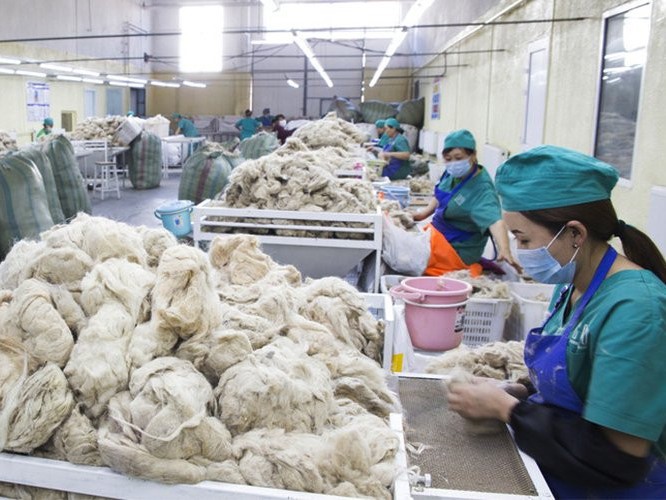
Ulaanbaatar, October 28, 2026 /MONTSAME/. The International Labour Organization (ILO) has focused on creating youth-friendly workplaces and improving workers’ skills and participation through its “Sustaining Competitive and Responsible Enterprises” (SCORE) program in Mongolia’s wool and cashmere sector.
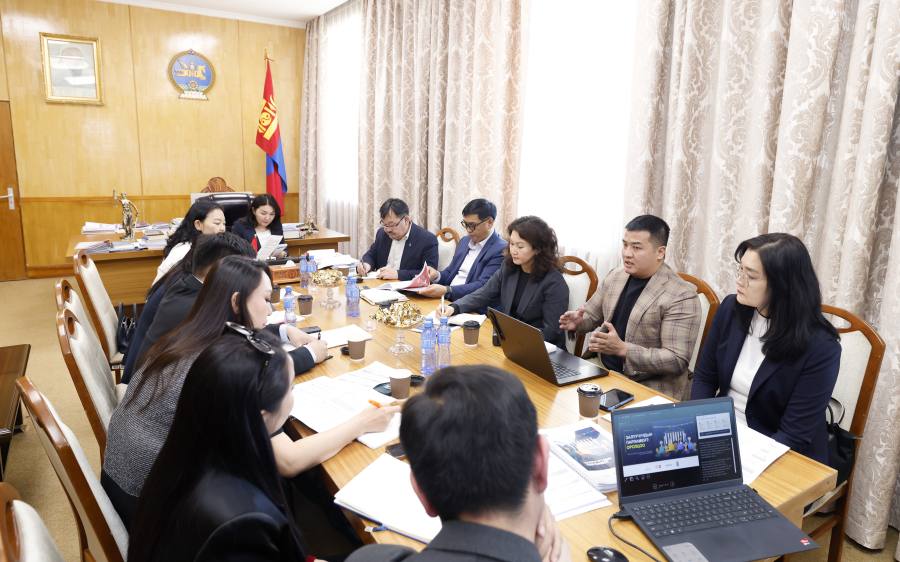
A discussion was held to present the results of the program for this year and explore ways to support youth employment. The program, which has been implemented in more than 6,000 enterprises across over 30 countries worldwide, was piloted at five Mongolian wool and cashmere companies last year, with positive results.
According to the report, productivity increased by 179.4% at Blue Sky Cashmere LLC and by 76.5% at Capra D’Oro Cashmere LLC, while production defects at Evseg LLC decreased by 66.6%. Khanbogd Cashmere LLC also reduced its energy consumption by 17%.
Building on these results, the program has been implemented this year at five companies: Uguujj Shim LLC, Gobi-Erdene Cashmere LLC, Saintumen Cashmere LLC, Baigal Cashmere LLC and Snowfields LLC. The focus was on creating youth-friendly workplaces and increasing workers’ skills and participation.

The Ministry of Food, Agriculture, and Light Industry reported that the program was financed by participating enterprises, the Employment Promotion Fund, the Government of the Republic of Korea, and the ILO’s Youth Employment Promotion project. The initiative has become a model of sustainable cooperation among the public sector, private enterprises and international partners.
Opening the discussion, Dondogdorj M., Head of the Department for Coordination of Light Industry Policy Implementation at the Ministry of Food, Agriculture and Light Industry, said that under the “White Gold” National Movement, Mongolia aims to increase the level of cashmere processing from 20% to 40%, raise export revenue from USD 398 million to USD 690 million, and create more than 3,000 new jobs between 2024 and 2028.
He emphasized that achieving these goals requires not only investment, equipment, and technological upgrades, but also a skilled workforce, higher labor productivity, and improved product quality. Young people, he noted, are a driving force behind technological modernization, innovation, productivity growth, and the green transition in light industry.
He stressed the importance of aligning the good practices of the SCORE program, workplace learning opportunities for young people, and innovation initiatives with the objectives of the “White Gold” movement and expanding them to more enterprises.

During the discussion, participants shared results and good practices in improving enterprise productivity, working conditions, and workplace cooperation. They also discussed opportunities to create youth-friendly workplaces, develop young employees’ skills, expand practical training opportunities, and establish safe and healthy working environments. Participants agreed to disseminate the results and good practices more widely.
According to statistics, approximately 46,000 people were employed in the light industry sector of Mongolia as of 2025, including more than 10,000 in the wool and cashmere sector. More than 60% of those working in the sector were aged 35 or younger.
According to the Mongolian National Chamber of Commerce and Industry, Mongolia has 17 deep-processing factories, 34 primary processing factories, 68 small and medium-sized knitting enterprises, and 150–200 small household workshops in the cashmere processing sector.
Mongolia exports washed cashmere to China, dehaired cashmere to Italy, the United Kingdom, China, the Republic of Korea, and Germany, and knitted and woven products to more than 30 countries, including the United States, Germany, the Republic of Korea, Japan, Belgium, and France.
The global cashmere market produces an average of 24,000 tonnes annually. China supplies 50%, or 12,000 tonnes, while Mongolia supplies 40%, or 10,500 tonnes.