Loading…
Loading…

MONTSAME
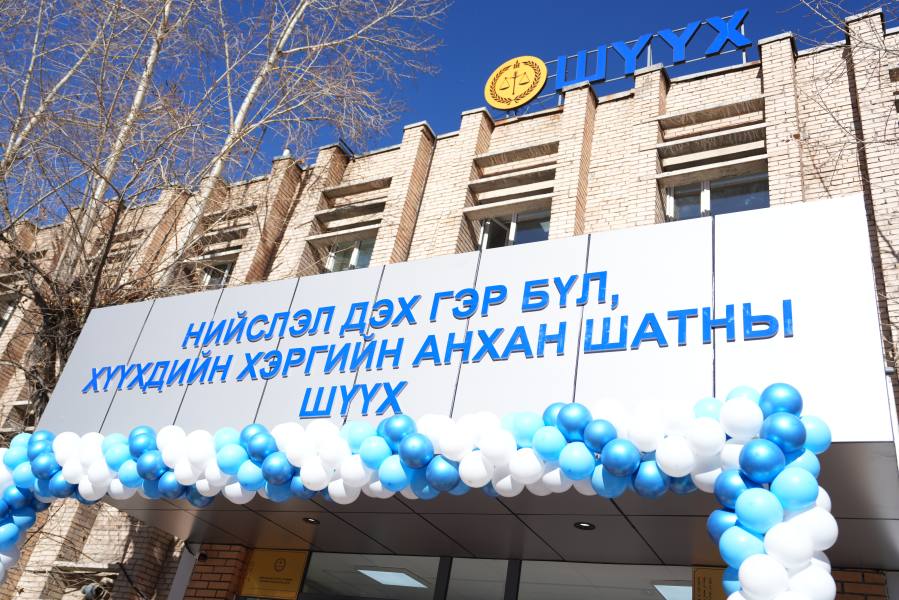
Ulaanbaatar, October 30, 2026 /MONTSAME/. An Interview with Janchivnyambuu Osordeleg, a member of the Judicial General Council, regarding the establishment of specialized court for family and youth cases in Mongolia.
- What is the concept, principles, and characteristics of the Family and Youth Court?
- On June 5, 2024, the State Great Khural adopted the Law on the Establishment of Courts. However, the procedural law was not adopted until July 3, 2026, and the newly established specialized court is scheduled to commence operations in just a few days, on November 1.
The family is, and should be, one of the most valuable foundations of the social systems of every country in the world. In other words, the family is the fundamental unit from which social relationships emerge. As the Mongol saying goes, “First put yourself in order, then your household, and then the state.” This means that individuals should first develop themselves, then establish a stable household and raise their children properly before engaging in broader social relations.
One of the primary reasons for establishing specialized Family and Youth Court is, of course, the workload of the existing courts.
The concept is that, when resolving disputes arising from divorce, the rights and best interests of children should be affected as little as possible. Children should not become the victims of the consequences of their parents’ divorce.
The foundations for establishing specialized courts to resolve family disputes can be traced back to around 2016–2017. At that time, more experienced and specialized judges began handling divorce cases in the capital city. Some people criticized the arrangement, saying, “A court has been established within a court.” Today, however, the relevant law has been adopted, the specialized court has been established, and its operations are about to begin, demonstrating that the underlying rationale was well-founded.
One of the distinctive new provisions introduced by the Law on Family Case Court Proceedings is the introduction of family and child specialists. Although these specialists will be administrative staff of the courts, their functions will differ significantly from those of other court administrative personnel. Specifically, at a judge’s initiative and in accordance with a court order issued by the judge, these specialists will conduct assessments and report the results along with their expert opinion to the judge. Their assessments may address the consequences of divorce, including whether a child should remain in the care of the mother or the father; the factors and circumstances that contributed to an adolescent’s involvement in a criminal case; and what guidance and support the child will need in the future from society.
The law also introduces provisions under which the court may establish a visitation schedule for a child to meet with their parents following divorce.
- What professional backgrounds should family and child specialists generally have?
- At a judge’s ex officio order, these specialists will examine the circumstances of a family or child from multiple perspectives. Where necessary, they will conduct individual or joint interviews with the child, analyze the relevant circumstances, and prepare reports based on their findings.
Suitable candidates would generally include psychologists, sociologists, teachers and educational specialists, and social workers. Their training focuses on professional knowledge and skills, the ability to work with children, and appropriate methodologies for engaging with children.
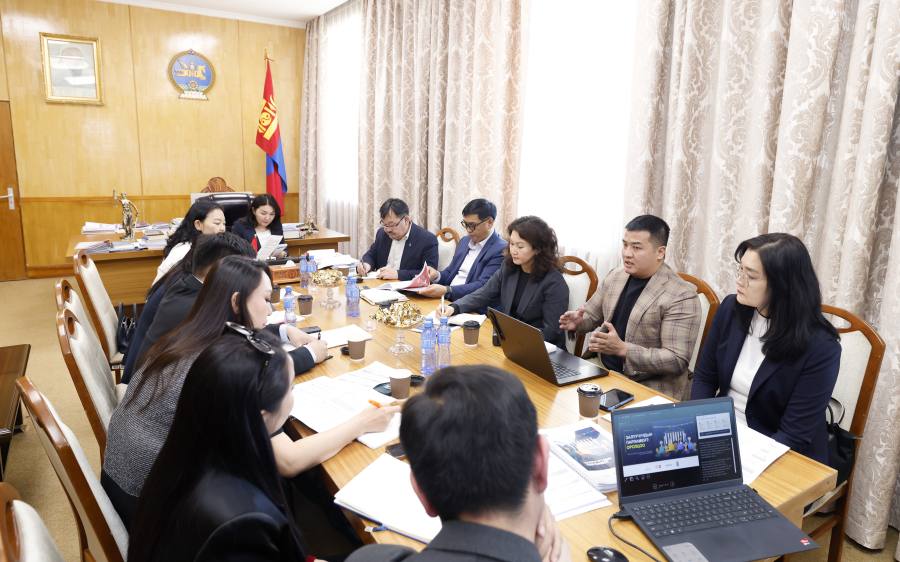
For this reason, the Judicial General Council has recently held the opening ceremony of a training program for family and child specialists in cooperation with the International Development Law Organization (IDLO).
I would like to express my gratitude to IDLO. During the process of developing and adopting the Law on Family Case Court Proceedings, IDLO provided opportunities to study Canada's experience of courts in handling family and child cases. It continues to support the professional development and capacity-building of judges and court administrative personnel through its project. Just a few days ago, a training program was also organized to prepare specialized journalists.
- Should we understand this to mean that children's rights and interests were violated in judicial proceedings in the past?
- That should not be the interpretation. Children's rights were also protected and upheld in accordance with relevant laws in the past. The establishment of a specialized court means that greater emphasis will now be placed on protecting children's rights and best interests. For example, the law introduces a new provision under which the court establishes visitation rights and a schedule when the father or mother may meet with the child following divorce.
- How many countries around the world operate family courts? Was the Mongol model based on the experience of any particular country? What is the impact of such courts?
- Considerable research has been conducted on the experiences of other countries. This has not been the responsibility of the Judicial General Council alone. Many institutions, including Parliament, the Government, and the Supreme Court, have worked together on this initiative. Rather than simply determining which country's laws are better, it is important to consider Mongolia's particular circumstances and how effectively the law can be implemented in practice within our own context.
- Which courts will handle disputes concerning family property?
All disputes relating to the family, except those arising from inheritance, fall within the scope of this law.
- It has been stated that children involved in criminal cases will now be referred to as “adolescents.” Could you explain this further?
- An adolescent involved in a criminal case will not be referred to using the terms set out in the Criminal Procedure Law, such as “suspect,” “accused,” or “defendant.” Instead, the term “adolescent” will be used consistently, from the investigation stage through the court proceedings and even after the individual has been found guilty by the court.
The purpose is to protect the child's rights and best interests and to avoid creating the impression or emotional experience that the child is being subjected to criminal justice and legal systems.
- Adoption cases were previously decided by Governors. These matters will now be handled by the Family and Youth Court. How will the adoption council be selected?
- Laws are interrelated and must be consistent with one another for their objectives and concepts to be realized. The Law on Family Case Court Proceedings clearly specifies the laws and other regulatory legal acts that form part of the applicable legal framework and must be aligned with it.
- Will divorce-related claims, as well as criminal cases involving adolescents, filed before November 1, 2026, be transferred to the new courts?
No, the courts that have already accepted the claims or are handling the criminal cases will complete those proceedings and issue final decisions. In other words, the newly established specialized courts will begin their work afresh, with new cases from the starting point of their operations.
- There is a public perception that courts pay greater attention to cases that receive widespread media coverage. From a professional perspective, how would you explain this?
-Today, we are discussing the Family and Children’s Court. As a matter of principle, information about spouses falls within the scope of personal privacy. Hearings are therefore held in private, and court decisions are confidential. Criminal hearings involving adolescents are also held in private. It is not possible to predict what decision a court will make. Nor may anyone influence the court’s decision in any way. Courts carry out their adjudicative functions strictly in accordance with the law.
For cases that, as you put it, “have received publicity,” the courts provide information by preparing summaries of their decisions and the proceedings.
Disclaimer:
This article was first published in Udriin Sonin (Daily Newspaper) in Mongolian, and it is part of the “Strengthening the Response to Gender-Based Violence in Mongolia (2025–2030)” project, implemented by the International Development Law Organization (IDLO) with funding from the Government of Canada. The views expressed in this article are those of the initial authors at Udriin Sonin and do not necessarily reflect the official policies or positions of the Government of Canada or IDLO.