Loading…

MONTSAME
Ulaanbaatar, July 26, 2026 /MONTSAME/. "We’ve reached a point where we move only when we hear reports of rain. We are basically just wandering now, trying to survive with our livestock,” said Gantulga J. He is a herder from Baatsagaan soum in Bayankhongor aimag. It was this remark, made during his migration last year, that has remained most vividly in my memory.
This was the most memorable part of his remarks during last year's migration. Herders have now begun to say, “Even when it rains, the grass no longer sprouts.” An increasing number of herders have become wanderers, forced to follow remaining pastures. As overgrazing worsens, water sources dry up, and droughts and dzuds (severe winter conditions) become more frequent, the number of families left with no choice but to abandon their native regions continues to rise. In international studies, these people are classified as ENVIRONMENTAL REFUGEES.
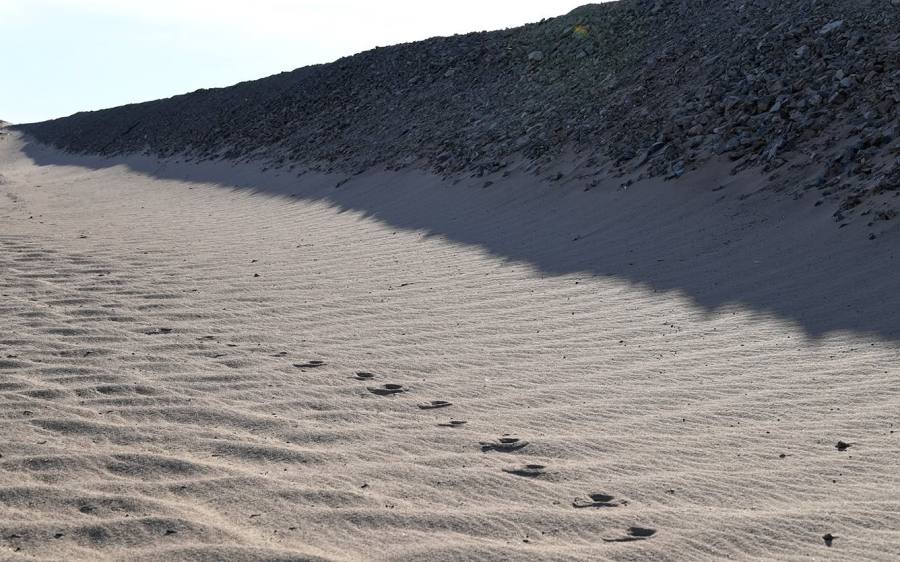
Environmental degradation and desertification have become among the greatest drivers of human displacement in the twenty-first century. Wars and armed conflicts may seem distant from us, yet as the land loses its fertility, dries out, and droughts and harsh winters become more frequent, herders are increasingly forced to leave the places they have long called home. Researchers estimate that, over the coming decades, climate change could displace hundreds of millions of people worldwide. This is not merely about rising seas overtaking coastlines or expanding deserts. It is about people being left with no option but to leave places that are no longer capable of sustaining human life.
So, how close is this danger to Mongolia? There is no official classification for environmental refugees in Mongolia. Nevertheless, many herders who have left their ancestral lands for towns and cities because of drought, severe winters, water scarcity, and deteriorating pasturelands have become living examples of this phenomenon. Have you, as a resident of Ulaanbaatar, ever stopped to think about how pasture degradation and the resulting herder migrations affect your own life? If herders lose their livestock, where do they turn next? For most, the answer is urban areas. As a steady stream of families leaves, schools close, village centers empty out, and local shops shut their doors. Meanwhile, urban populations swell, multiplying the strain on water supplies, schools, hospitals, and the job market. This is how land degradation shifts from a purely environmental issue into a profound socio-economic crisis.
Unfortunately, Mongolia does not currently maintain official records or measurements of migration driven by environmental degradation as a category of environmental refugees. As a result, there is still no nationwide assessment capable of answering the question of the true scale of the problem. However, the report by Gantsetseg Gantumur, "A Review of the Socio-Economic Impacts of Desertification and Land Degradation in Mongolia," clearly illustrates both the causes and consequences of this phenomenon during the period from 2020 to 2023. Between 2000 and 2023, more than 665,000 people migrated to the capital, with an average of approximately 30,000 people moving to Ulaanbaatar each year. Certainly, not all of them can be considered environmental refugees. Yet it is undeniable that herders, having lost their livelihoods due to drought, severe winters, degraded pasturelands, and livestock losses, have become part of this migration.
Environmental degradation alters not only the land but also people's way of life. As soils deteriorate, water sources diminish, and pastures decline, ways of living that have been passed down through generations begin to disappear. People are confronted with two difficult choices: adapt to a new environment or leave their homeland. Across much of the world, environmental degradation has become closely linked with increasing human migration. This also comes at an extremely high economic cost.
According to the "A Review of the Socio-Economic Impacts of Desertification and Land Degradation in Mongolia," losses from degraded rangelands alone amount to approximately MNT 1.2 trillion every year. The study also found that water scarcity has increased the cost of water use by two to three times.
In other words, land degradation has long since become not only an environmental concern but also a major economic challenge for the nation.
Yet, we have the power to change this trajectory. For millennia, Mongolians have possessed a unique understanding of how to manage pastures by balancing topography, water sources, vegetation, soil types, and seasonal changes. By integrating this traditional wisdom with modern science and advanced land management, it is entirely possible to mitigate pasture degradation.
Indeed, such pressing issues and practical solutions will be discussed at the COP17 conference. Today, key effective solutions include:

Article by Tseveenkherlen Tseveendolgor, Environmental Journalist