Loading…
Loading…

MONTSAME
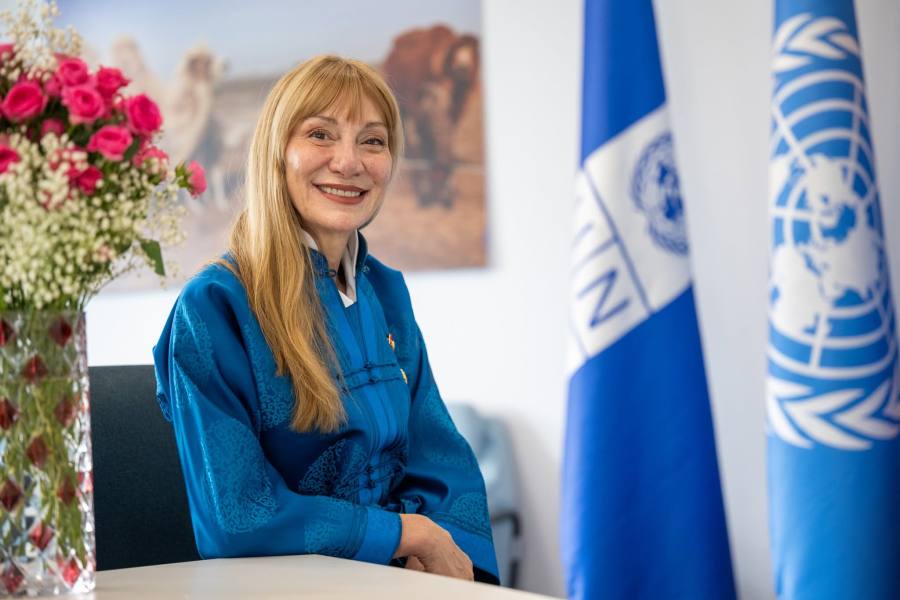
Ulaanbaatar, July 23, 2026 /MONTSAME/. Matilda Dimovska concludes her tenure in Mongolia as UNDP Resident Representative, she reflects on a country whose development journey has been shaped by resilience, ambition, and a strong sense of national ownership. Her tenure marks 50 years of partnership between UNDP and Mongolia. Ms. Dimovska speaks with MONTSAME for "Posted In" about the trust built over decades, Mongolia’s response to climate and development challenges, and the traditions and experiences that have shaped her time in the country.
-As you reflect on your time in Mongolia, what has stood out most about the country’s development journey?
-What strikes me most is Mongolia’s remarkable ability to adapt and reinvent itself while remaining true to its identity. Development is often described through indicators and economic trends, but what I have seen here is something deeper: a society that repeatedly demonstrates resilience in the face of change. Whether navigating economic transitions, climate challenges, or global uncertainty, Mongolia has consistently shown a willingness to learn, innovate, and move forward, while staying true to its culture and identity.
Mongolia’s story is not simply about resilience. It is also about ambition. I have been impressed by the growing confidence with which institutions, communities, and young people are engaging with the future. Across many of our conversations with government, civil society, and citizens, I sense a shift in mindset: not simply responding to challenges, but thinking boldly about Mongolia’s future and its place in the world. That creates opportunities not only for national progress but also for Mongolia to contribute solutions and experience to the region and beyond.
-UNDP and Mongolia are marking 50 years of partnership this year. What do you consider the most significant legacy of this collaboration?
-The most important legacy is not a single project or institution. It is the trust that has been built over decades. Development is often measured by tangible outcomes, and there are many examples we can point to, from supporting democratic governance and accountability to strengthening climate resilience and helping establish institutions that continue to serve the country today. Yet these achievements were possible because of a partnership built on mutual trust and national ownership.
What I find particularly meaningful is that the partnership has evolved alongside Mongolia itself. It supported the transition to a market economy, contributed to democratic reforms, and today focuses on challenges such as climate resilience, green energy, digital transformation, and inclusive governance. In many ways, the partnership mirrors Mongolia’s development journey. Its enduring value lies in its ability to remain relevant as national priorities change.
-What initiative or work are you most proud of during your tenure?
-It is difficult to choose one, because UNDP’s work in Mongolia is broad and always carried out with many partners. But I am particularly proud of UNDP’s contribution to Mongolia’s energy transition, especially because it has become visible in people’s daily lives.
When we started the solar facility project three years ago, there was understandable hesitation. For many ger households, the chimney and traditional stove were not only practical parts of the home; they were part of how families had lived through Mongolia’s winters for generations. Moving to a solar-powered heating system was therefore more than a technical change.
But people’s confidence grew gradually, with the support of national and international partners, local authorities, and the communities themselves. Today, many ger households are embracing solar energy, generating surplus energy, and even earning additional income from it. For me, the moment is when development becomes real: when pilots and policy discussions turn into reforms, and when innovations move from strategies into people’s daily lives. Ultimately, that is the real impact of this intervention: a cleaner, more affordable, and more hopeful reality in people’s homes.
-Mongolia, like many countries, faces significant climate and development challenges. How do you see its future development pathway?
-We need to be clear-eyed about the scale of the challenge. The climate and development pressures facing the world are serious, and Mongolia is among the countries most affected by climate change. Its impacts are already visible in people’s lives: harsher weather, growing pressure on herder livelihoods, and rising disaster risks in a country where the livelihoods of one-third of the population, as well as its nomadic culture, remain closely connected to nature. Dzud is a clear example of how climate change, livelihoods, poverty, and the economy are deeply interconnected. When herders lose livestock, they also lose income, security, and a way of life. Combined with rising fuel and food prices, this can force families to migrate to urban areas, where many face a cycle of poverty.
At the same time, I have optimism for Mongolia’s future because of what I see on the ground. Mongolia is investing in climate resilience, early warning and disaster risk reduction, renewable energy, digital solutions, and new approaches to sustainable livelihoods. Communities are adapting to climate shocks, institutions are strengthening their capacity to plan and respond, entrepreneurs are innovating to address social challenges, and young people are bringing fresh ideas into the development conversation. For Mongolia, the future development pathway must therefore be one that reduces vulnerability before shocks become crises: protecting livelihoods, strengthening rural resilience, expanding clean and affordable energy, and creating economic opportunities that allow people to thrive where they live. These are the building blocks of resilience: practical actions that help people manage risks today while opening new possibilities for tomorrow. That is where the optimism comes from.
-What has been the biggest lesson for you personally as a development leader?
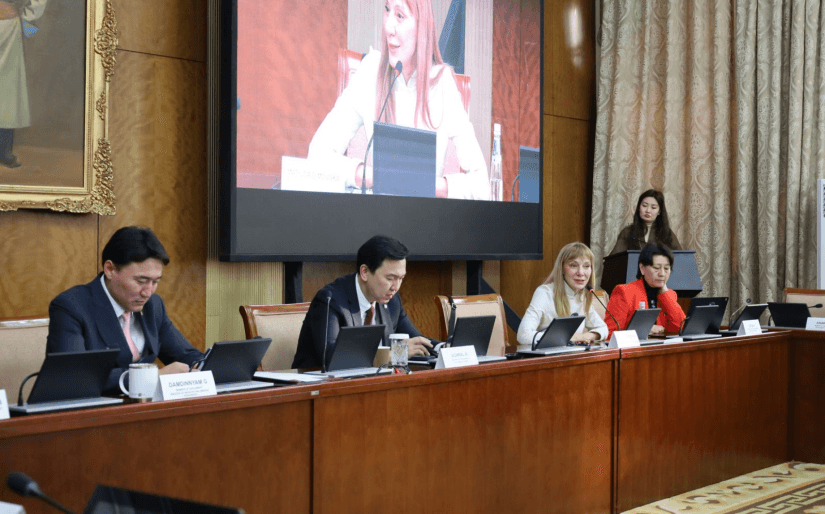
-One of the biggest lessons for me has been that development leadership requires both trust and agility. Good intentions and technical expertise are not enough. What matters is the ability to act with purpose, adapt quickly to changing realities, and work with national partners to turn ideas into practical solutions that can deliver real results.
In Mongolia, we are also well aware that today’s development challenges cannot be addressed in isolation. Climate resilience, governance, digital transformation, inclusion, and economic transformation are all connected. Progress depends on moving beyond separate interventions and bringing people, institutions, and partners together around solutions that are integrated, timely, and grounded in national priorities. For development to be lasting, promising pilots and ideas must be connected to the policies, institutions, and capacities that can take them to scale.
-Any Mongolian saying, teaching, or figure of speech that you took to heart?
One saying I came to appreciate is “If a person makes an effort, fortune will also make an effort.” To me, it captures something very important: progress is not accidental. It is a reminder that opportunity often follows commitment. It is a simple but powerful lesson for all of us.
-Which Mongolian tradition resonated with you most?
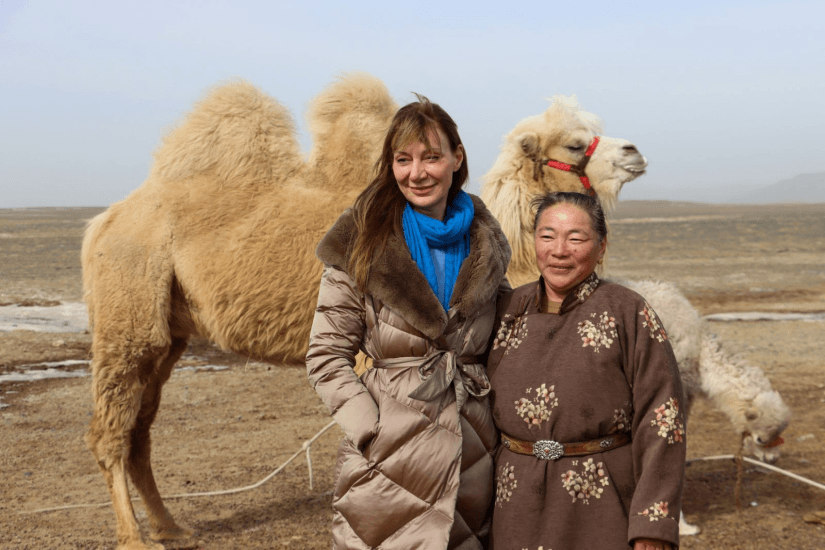
What resonated with me most is Mongolia’s tradition of hospitality. It is deeply rooted in everyday life. Whether in Ulaanbaatar, in an aimag center, or in a herder household, there is a generosity in the way people welcome you, offer tea, share food, and make space for conversation. It is a tradition that says something important about Mongolian society: people make time for one another.
That sense of connection extends beyond people. I have also been moved by the close relationship Mongolians have with nature, with the land, the seasons, and the animals. Experiencing that connection so closely has been one of the most meaningful parts of my time here.
 -What advice would you give your successor, or what advice would you have given yourself when you first arrived in Mongolia?
-I would advise any development practitioner to think bigger, sooner. The possibilities for partnership in Mongolia are broad, and we should look to the future with greater ambition and confidence in what can be achieved when there are shared purpose and strong national ownership.
I would also say: build on the trust that already exists and continue to elevate the partnership. UNDP’s relationship with Mongolia is long-standing, and that trust is one of its greatest strengths.
As for me, when I arrived, many people warned me about the Mongolian winter. What I was less prepared for was the Mongolian summer, and the depth and rhythm of nomadic culture and how profoundly it shapes the people.
I also learned that in Mongolia, “a short trip outside Ulaanbaatar” can mean six hours on the road, and that distance is sometimes measured less in kilometres and more in patience. Yet every journey was worth it.
-If you could describe your hope for the next 50 years of the UNDP-Mongolia partnership, what would it be?
-My hope is that the next chapter of the UNDP-Mongolia partnership will build on five decades of joint work and catalyze progress at greater scale. The partnership has always evolved with Mongolia’s own development priorities, and the next phase should be even more strategic, knowledge-driven, and nationally owned.
What I see ahead is a strategic alliance focused on long-term transformation. That means bringing together policy, finance, innovation, and implementation so that solutions can move beyond individual pilots and reach people at scale. It also means co-creating and co-financing solutions that are tailored to Mongolia’s context.
For UNDP, this is about continuing to be a trusted partner while working in ways that are more integrated and forward-looking. It is about helping connect ideas with institutions, investments with impact, and national priorities with the global knowledge and partnerships needed to deliver lasting results.