Loading…
Loading…

MONTSAME
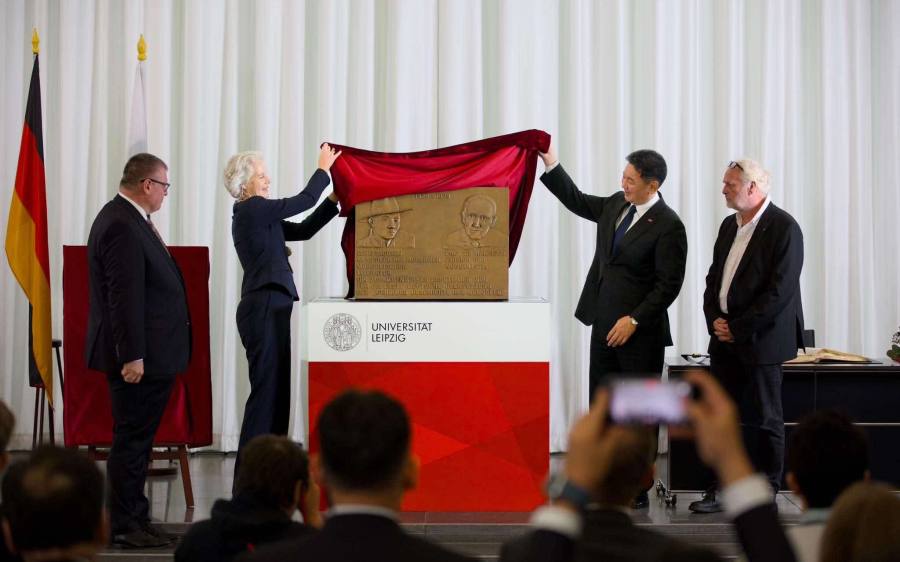
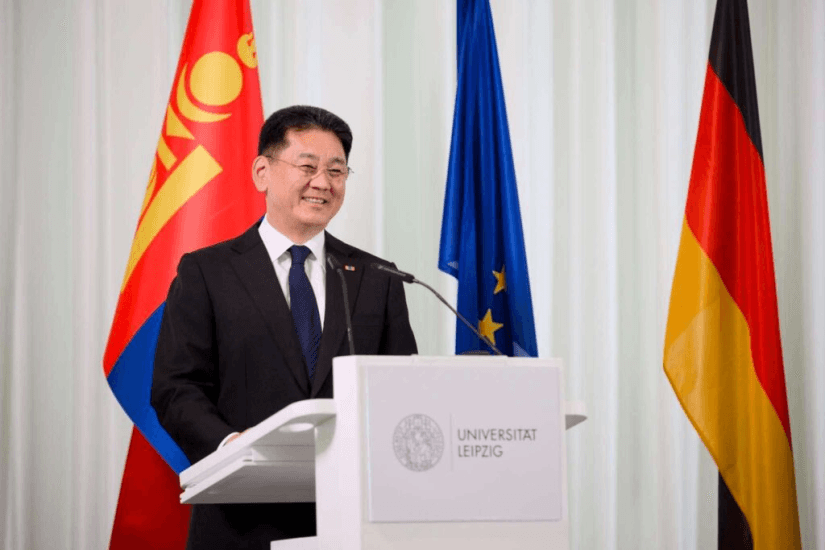
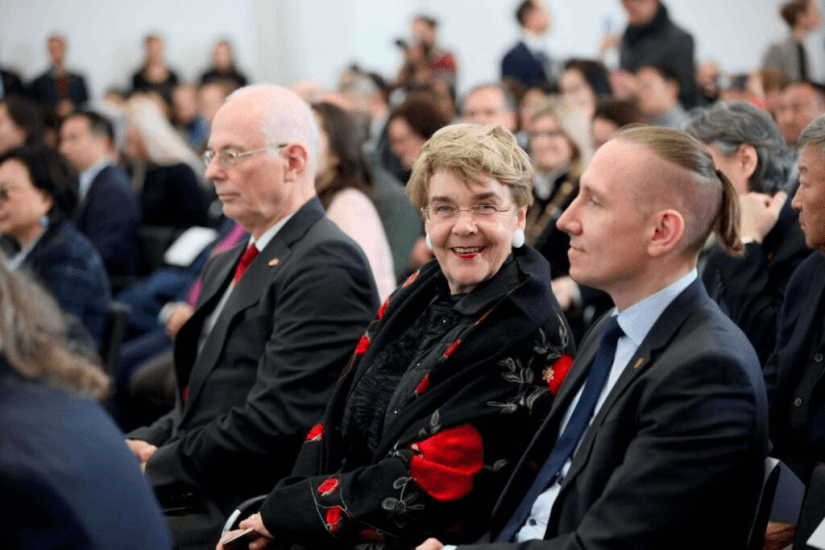
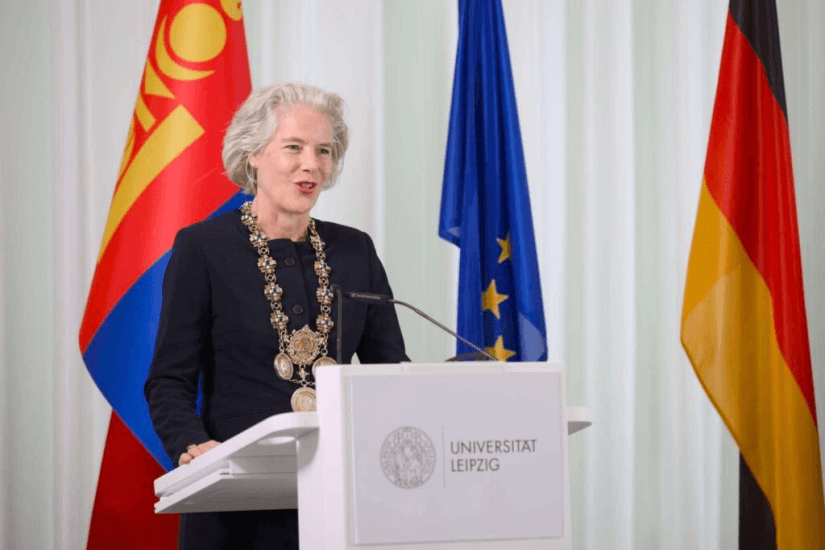
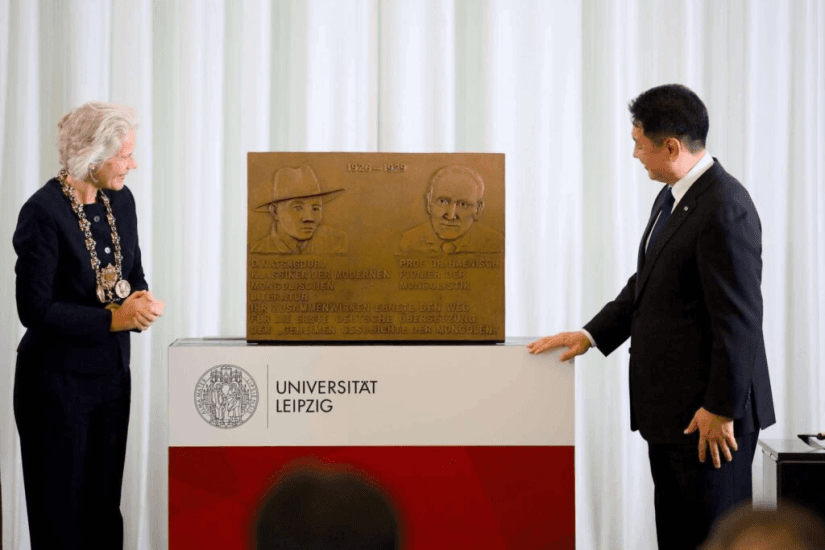
Ulaanbaatar, October 28, 2026 /MONTSAME/. During his visit to the Free State of Saxony, President of Mongolia Khurelsukh Ukhnaa visited the Institute for South and Central Asian Studies at Leipzig University, where he attended the unveiling ceremony of a memorial plaque dedicated to Natsagdorj Dashdorj, the great writer and founder of modern Mongolian literature, and Professor Erich Haenisch, a distinguished German Orientalist and scholar of Mongolian studies. The ceremony also marked the launch of a postage stamp commemorating the 120th anniversary of Natsagdorj’s birth.
In his remarks at the ceremony, President Khurelsukh emphasised that the memorial would honour and preserve the names, scholarly achievements and contributions of these two outstanding figures. He also noted that it symbolised a century-long historical bond between the Mongolian and German peoples, built on knowledge, intellectual exchange and mutual respect.
A century ago, writer Natsagdorj was among the young Mongolians who travelled to Germany to pursue their education. He would go on to lay the foundations of modern Mongolian literature.
The years Natsagdorj spent in Germany, particularly in Leipzig, were a formative period that profoundly influenced his worldview, intellectual development, and literary thinking.
During this period, the distinguished scholar Erich Haenisch, who worked at Leipzig University, made significant contributions to the study of Mongolian history, language, and culture, leaving a lasting legacy as a pioneer in the development of Mongolian studies in Germany.
The academic relationship between the young Mongolian intellectual Natsagdorj and the German scholar Haenisch, forged within the halls of academia, holds a special place in the history of relations between the two countries.
President Khurelsukh noted that while young Mongolians travelled to Germany a century ago to acquire knowledge and return home, this historical tradition continues to grow stronger today. Mongolian students continue to pursue their studies, while researchers from both countries successfully carry out joint research, projects and programmes.
Leipzig University occupies a special place in this history. Since the late nineteenth century, courses and research on Mongolian culture have developed at the university, which has since remained a distinguished centre of Mongolian studies.
Noting that the tradition of teaching Mongolian and conducting research on Mongolia and Central Asia continues at Leipzig University, the President highlighted the profound significance of the memorial, which both honours shared history and symbolises future cooperation.
President Khurelsukh expressed his gratitude to the university's leadership, scholars and researchers for supporting the initiative, as well as to the artists who created the memorial plaque and the Mongolian and German institutions, scholars and researchers who made valuable contributions to its preparation.
An international academic conference was also held at Leipzig University this year to mark the 120th anniversary of the birth of the great writer Natsagdorj Dashdorj.
Founded in 1409 in Leipzig, in the German state of Saxony, Leipzig University is one of the oldest universities in Germany and Europe. More than 35,000 Mongolians have acquired German-language skills and received an education in Germany.
Leipzig University has a long tradition of Mongolian studies. In the late nineteenth century, the university became the first in Germany to offer courses on Mongolian culture. During the twentieth century, Mongolian studies developed into an independent field of research.
Professor Erich Haenisch, a scholar of Mongolian and Chinese studies who worked at the university, was among the scholars who translated The Secret History of the Mongols into German.
In 1926, the first 35 Mongolian schoolchildren and university students arrived to study at Leipzig University and other German higher education institutions. During the German Democratic Republic (GDR) era, many Mongolian students attended German-language preparatory courses at the Herder Institute in Leipzig before continuing their professional studies.
Today, Leipzig University maintains an inter-university cooperation agreement with the National University of Mongolia, continuing academic and educational cooperation between the two institutions.