Loading…
Loading…

MONTSAME
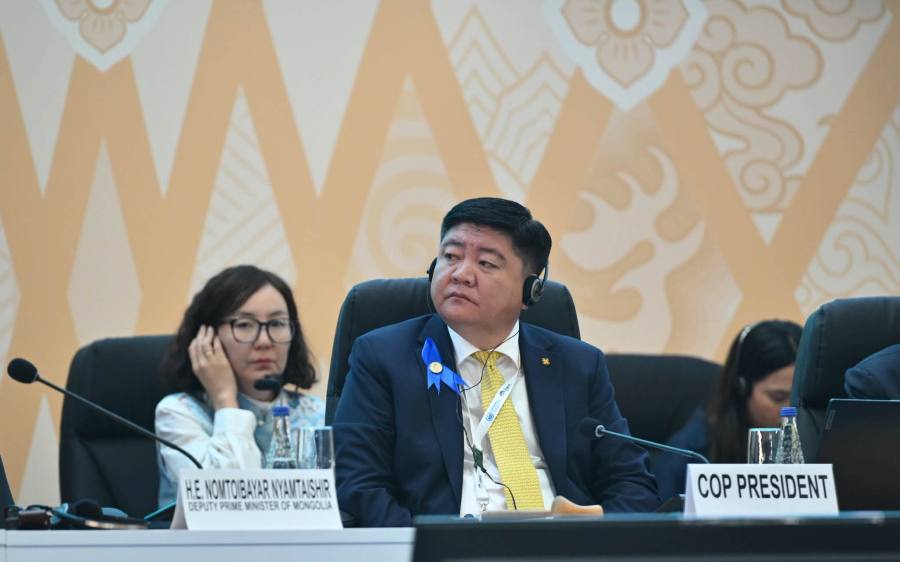
Ulaanbaatar, August 25, 2026 /MONTSAME/. The 17th session of the Conference of the Parties to the United Nations Convention to Combat Desertification (COP17) continued with Water Day on August 25.
Rather than addressing water as a standalone issue, the day’s discussions focus on integrated solutions linking water, land and people, including the water-land-climate nexus, drought resilience, water security, land restoration and investment in these areas.
For example, the “Making Water a Connector” discussion highlights water as a strategic link between climate, land, biodiversity and food security, while “Transforming Agricultural Water Management” addresses efficient water use, drought-resilient food systems and increased investment. The “Water-Land-People” High-Level Dialogue explores ways to integrate science, policy and practice for the integrated management of water, ecosystems and land. Meanwhile, the “Land Restoration for Water Resilience” discussion examines solutions for mobilizing science, partnerships and investment to advance ecosystem restoration, strengthen water security and reduce drought risks.
Asked about Mongolia's Integrated Water and Land Management Initiative, which is being advanced through COP17, Sandag-Ochir Tsend, Minister of Environment and Climate Change said:
“As the host country of COP17, Mongolia today launched its Integrated Water and Land Management Initiative, the second of three initiatives proposed under the Steppe Action Agenda. We will present our water-related projects to build partnerships and promote cooperation. Results are already emerging, and a number of memoranda of understanding are being signed. Yesterday, we launched cooperation in the areas of forests, rangelands and water and signed major agreements.
The main objective of this initiative is to improve access to water for citizens, herders and farmers living and working in the Gobi and steppe regions. Investment and financing secured through these agreements and memoranda of understanding will create opportunities to support water projects.
As the country chairing the Convention in the coming years, it is important for us to clearly communicate the significance of our water initiative and projects to the public and draw international attention to them. At a time of growing water scarcity, there is a need to develop projects and programmes for recycling and reusing greywater in industry and services, as well as for supplying groundwater and surface water to areas facing water shortages. This will help create conditions for local communities to settle and live sustainably.”

The minister emphasized that water is directly linked to land degradation and desertification. Water scarcity in Mongolia's desertified regions makes the sustainable use of both groundwater and surface water resources particularly important.
As mining and industrial activities rely heavily on groundwater, greater attention should be given to the more efficient use of surface water, as well as water recycling and the use of treated greywater, he said. Feasibility studies are also underway for major water projects in the Gobi region, including projects to transfer water to the region.
“To successfully implement projects and programmes to bring water to the Gobi, it is important to determine the key priorities, bring these projects to international attention, build partnerships and mobilize investment and financing,” he said.
Mongolia is also drafting a Water Law, according to the minister. In some areas, water scarcity has left rangelands without adequate water, making it difficult for people and livestock to live sustainably. He stressed the need to use and store surface water efficiently, develop reservoirs and ponds, and maintain ecological systems suited to local conditions.
Such measures would, in turn, help create the conditions necessary for local communities to live sustainably and strengthen the economic foundations of rural areas.
The Integrated Water and Land Management Initiative is based on the interconnectedness of water and land and seeks to promote their integrated and holistic management rather than treating them as separate resources for sustainable development in drylands. The initiative aims to mobilize financing and introduce new technological solutions to address climate change, drought and water scarcity; develop nature-based and green infrastructure; improve water-cycle management; and strengthen partnerships among landlocked developing countries on water governance, legal frameworks and protection against transboundary risks.