Loading…

MONTSAME
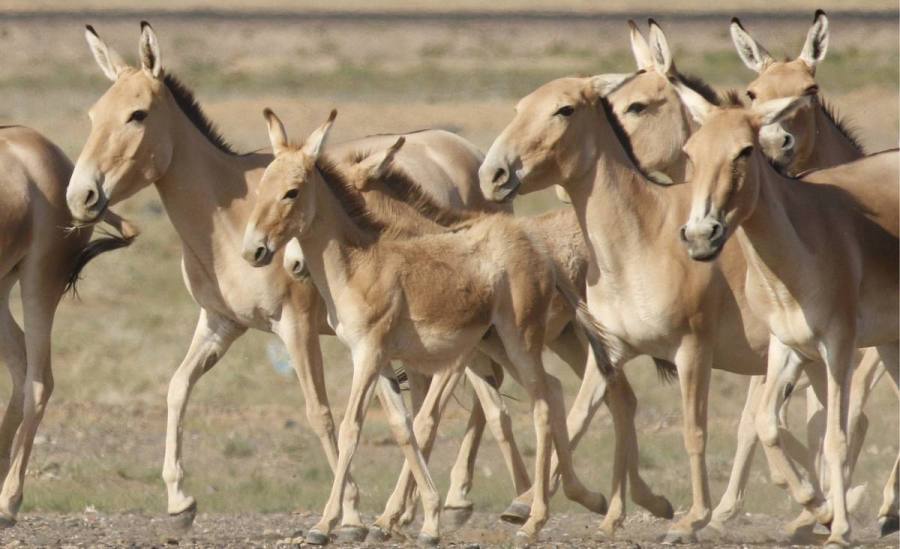
Ulaanbaatar, October 26 /MONTSAME/. Mongolia has showcased its experience in protecting the khulan, or Asiatic wild ass, at the 17th Conference of the Parties to the Convention on Biological Diversity in Yerevan, Armenia, highlighting the country’s role in conserving the species and the need for stronger international cooperation.
The event was organized by the Ministry of Environment and Climate Change of Mongolia in partnership with the Wildlife Conservation Society (WCS) Mongolia office to mark Khulan Conservation Day. It focused on Mongolia’s contribution to global khulan conservation and opportunities to strengthen cooperation among countries and conservation organizations.
Mongolia is home to an estimated 90,000–91,000 khulan, accounting for approximately 80 percent of the global population, according to research estimates. The species depends on vast, interconnected desert and steppe landscapes, migrating in search of water and grazing resources. However, expanding infrastructure, habitat fragmentation and increasing development pressures are threatening their ability to move freely across their natural range.
During the event, Uranchimeg Ts., Head of the Protected Areas Policy Department at the Ministry of Environment and Climate Change, emphasized the importance of strengthening cooperation to ensure the long-term survival of the khulan.

Dr. Susan Lieberman, WCS Vice President for International Policy, outlined international frameworks supporting khulan conservation, including the Convention on the Conservation of Migratory Species of Wild Animals (CMS), the Convention on International Trade in Endangered Species of Wild Fauna and Flora (CITES), and the Kunming-Montreal Global Biodiversity Framework.
She stressed the need to translate international commitments into practical action through cross-border cooperation, improved habitat connectivity and better land-use planning. She also underscored the importance of protecting khulan populations now rather than waiting until the species disappears from parts of its range and attempting to reintroduce it later.
The event also featured research findings on khulan migration and movement patterns, alongside an assessment of threats to their habitats. Presentations highlighted how railways, roads and border fences can obstruct wildlife movement, while showcasing Mongolia’s progress in developing wildlife-friendly infrastructure through cooperation with government agencies, local communities and the private sector.
A discussion titled “Khulan Conservation: Together for the Future” brought together representatives from the Ministry of Environment and Climate Change, WCS, the Frankfurt Zoological Society, WWF-Mongolia, Khomiin Tal National Park and other conservation organizations. Participants exchanged views on how policy, scientific research, international partnerships and wildlife reintroduction experience can contribute to more effective khulan conservation.
Mongolia officially began observing Khulan Conservation Day on October 25, 2024. Building on this national initiative, Mongolia and its partners aim to encourage broader observance of the day across Central Asia, raise public awareness of the species’ ecological importance and strengthen long-term conservation efforts.