Loading…
Loading…

MONTSAME
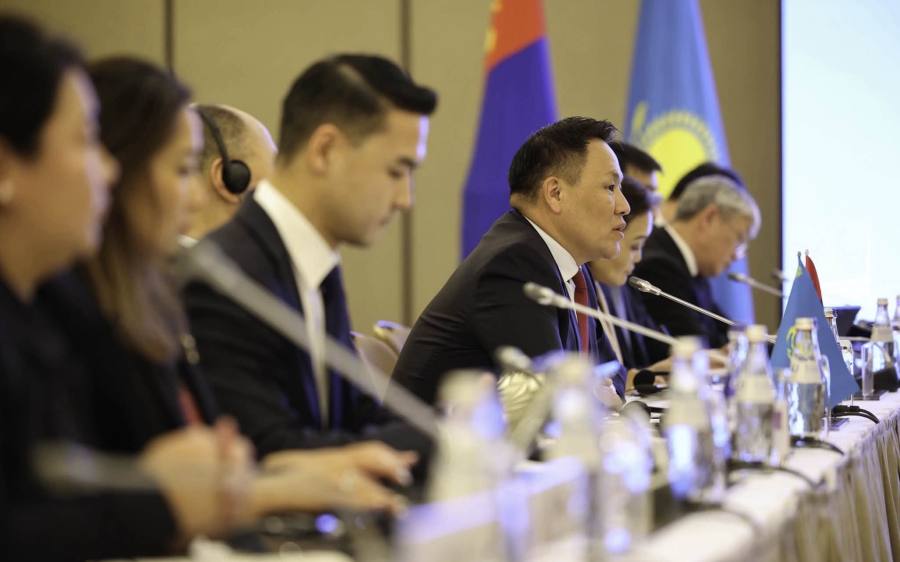
Ulaanbaatar, October 2, 2026 /MONTSAME/. The 10th session of the Mongolia-Kazakhstan Intergovernmental Commission on Trade, Economic, Scientific, Technical and Cultural Cooperation was held in Astana, Kazakhstan.
During the session, the sides noted the potential for the two countries, which share deep historical, cultural and traditional ties and have strategic partnership relations, to develop trade, economic and investment cooperation, and agreed to support proposals and initiatives aimed at increasing bilateral trade, the Ministry of Foreign Affairs reported.
Under the “Roadmap for Intensifying Trade and Economic Cooperation between Mongolia and Kazakhstan for 2025-2027,” the sides aim to increase bilateral trade turnover to USD 500 million. They agreed to study and identify areas and mechanisms for cooperation within special economic zones, as well as the demand and need for implementing joint projects.
The sides also signed a joint protocol to expand and strengthen cooperation in transport and logistics, geology, mining, agriculture, culture, education, science, tourism, healthcare, information technology, the environment, climate change, green development and disaster risk reduction.
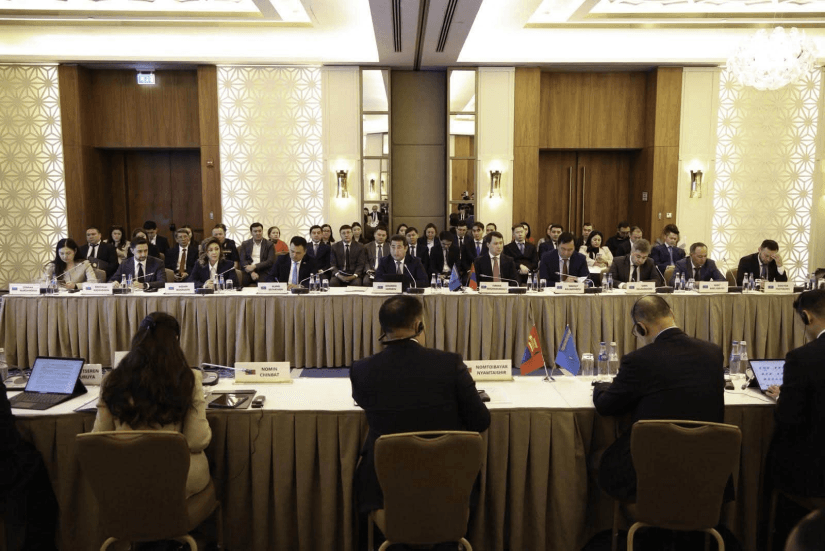
Deputy Prime Minister Nomtoibayar Nyamtaishir expressed confidence that the session would provide an important impetus to expanding mutually beneficial trade and economic cooperation and contribute to implementing the agreements reached during the reciprocal visits of President of Mongolia Khurelsukh Ukhnaa and President of Kazakhstan Kassym-Jomart Tokayev.
He noted that as Mongolia’s foreign trade is becoming more active and export opportunities are increasing, expanding trade and economic cooperation with Central Asian countries, particularly Kazakhstan, is important for diversifying Mongolia’s export products and entering new markets.
He also emphasized the important role of the Interim Free Trade Agreement between Mongolia and the Eurasian Economic Union, noting the need to intensify cooperation by removing sanitary, trade, technical and customs barriers and facilitating conditions for transit transportation.
Given the
importance attached to developing transport and logistics cooperation as agreed
by the two heads of state, he noted that opening new routes, improving
transport connectivity, increasing exports and imports of goods, and creating a
favorable environment for expanding trade, investment, and business relations
would be beneficial.
The Deputy
Prime Minister Nomtoibayar also expressed Mongolia’s commitment to implementing
the agreements reached between the two sides on exporting wool, cashmere, hides
and skins, meat and meat products from Mongolia to Kazakhstan. He welcomed the
signing of memorandums of understanding by the relevant organizations of the
two countries to develop cooperation in standardization, metrology and
conformity assessment, with the aim of exporting quality products that meet
required standards from Mongolia as well as organizing joint training sessions
involving emergency service personnel, including practical exercises and drills
for high-altitude rescue operations.
Minister of
Digital Development, Innovation and Communications Nomin Chinbat proposed
expanding cooperation between the two countries in information technology,
e-governance, space technology and telecommunications, as well as jointly
exploring possible interconnection routes and directions for international
network access and telecommunications infrastructure, taking into account the
geographical locations of the two countries.
Minister of
Agriculture of Kazakhstan Aidarbek Saparov noted that although bilateral trade
turnover is increasing, there is a need to open new and shorter transport and
logistics routes and further expand and develop trade and economic cooperation. He also emphasized
that Mongolia’s accession to the interim free trade agreement with the Eurasian
Economic Union would open up new business opportunities for the two countries
and increase supplies of chemical, pharmaceutical, construction and
agricultural products.
The sides noted
that the session was important for deepening the traditional friendly relations
and cooperation between Mongolia and Kazakhstan, implementing the agreements
reached during the reciprocal visits of the two heads of state, and defining
areas of cooperation. They expressed their commitment to working together to
implement the activities set out in the protocol.