Loading…
Loading…

MONTSAME
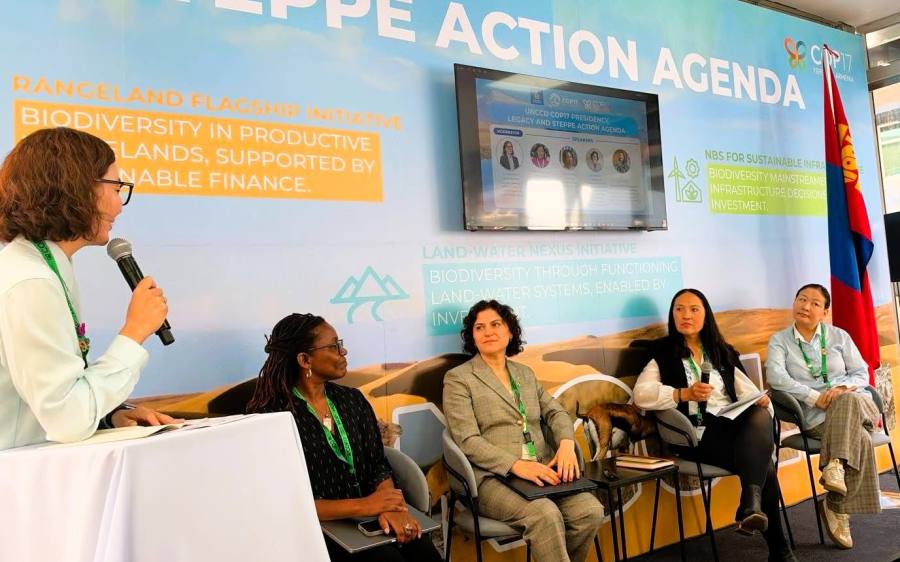
Ulaanbaatar, October 26, 2026 /MONTSAME/. Mongolia presented its “Steppe Action Agenda” at the 17th Conference of the Parties (COP17) to the Convention on Biological Diversity, currently underway in Yerevan, Armenia, in its capacity as president of the 17th Conference of the Parties to the United Nations Convention to Combat Desertification (UNCCD COP17).
The Mongolian side emphasized that the Steppe Action Agenda is a collaborative framework for translating voluntary commitments and initiatives launched under UNCCD COP17 into concrete action. It also outlined activities to be implemented under three initiatives: the Rangeland Flagship Initiative, the Integrated Water and Land Management Initiative, and the Nature-Based Solutions for Sustainable Infrastructure Initiative, the Ministry of Environment and Climate Change reported.
Armenia presented its “Yerevan Initiative” as president of the 17th Conference of the Parties to the Convention on Biological Diversity. Meanwhile, representatives of Australia, which presides over the negotiations at the 31st Conference of the Parties to the UN Framework Convention on Climate Change (UNFCCC COP31), shared good practices in rangeland management and integrated water and land management despite not participating in the voluntary commitments program. They also expressed support for the Steppe Action Agenda and the Yerevan Initiative.
Representatives of the governments of Armenia and Australia, along with the nongovernmental organization Ambition Loop, took part in the discussions, exchanging views on strengthening coordination in implementing the three Rio Conventions, which address land, biodiversity and climate change.
The discussions highlighted the importance of measuring the outcomes of the Steppe Action Agenda, which will be implemented under the slogan “Restoring Land, Restoring Hope.” Key indicators include the area of land restored, improvements in rangeland conditions, greater resilience to drought, biodiversity conservation and improvements in local livelihoods.