Loading…

MONTSAME
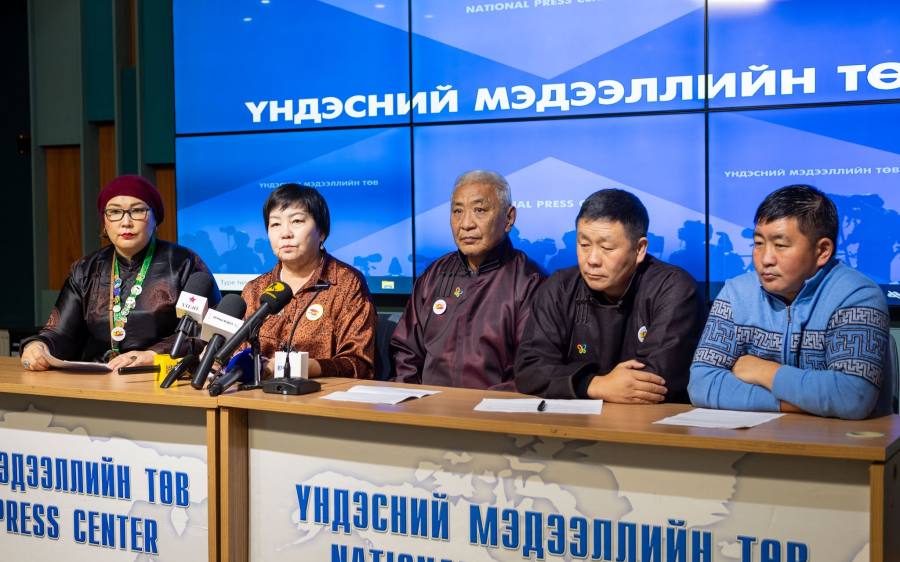
Ulaanbaatar, November 3, 2026 /MONTSAME/. Representatives of herder communities facing the risk of losing pastureland and water resources due to mining and infrastructure development participated in an international biodiversity conference, where they called for herders’ rights and participation to be incorporated into policymaking and introduced the “Nomads’ Red Line” initiative.
Representatives of herders from Mongolia’s Gobi region attended the 17th meeting of the Conference of the Parties to the Convention on Biological Diversity (CBD COP17) in Yerevan, Armenia, where they raised concerns over the protection of pastureland, water sources, seasonal migration routes, and traditional knowledge. They emphasized the need to ensure herders’ participation in decision-making on environmental protection and development projects.
The initiative is also planned to be piloted in Mongolia’s Gobi region. Based on herders’ traditional knowledge and scientific research, it aims to identify and protect ecologically sensitive areas, water sources, migration routes, and traditional land-use areas.
The herders stressed that the success of environmental protection efforts should be measured not by policies adopted, commitments made, or funds spent, but by tangible results, including protected pastures, accessible water sources, uninterrupted migration routes, healthy ecosystems, and the actual enforcement of herders’ rights.
Battulga Ts., a herder from Khatanbulag soum, Dornogobi aimag, emphasized the need to assess the environmental impacts of mining, energy, road, and water-use projects.
“Nomadic herders are increasingly being squeezed. To sustain our traditional nomadic livestock farming, we are drawing a red line to make it clear that there is no room for further mining and nowhere else for us to go,” he said, adding that he would share information on biodiversity with local herders and encourage their participation in conservation efforts.

The herders also called for their rights, traditional knowledge, and participation to be respected in decisions affecting their environment, land, and livelihoods, as well as for financial and technical support for community-led initiatives.
They proposed incorporating pastureland, water sources, seasonal migration routes, ecological corridors, and wildlife habitats into the national biodiversity strategy and land-use planning. Their position, they stressed, is not aimed at opposing development but at ensuring that the interests of pastureland, water resources, ecosystems, and local communities are considered in decisions on natural resource use and infrastructure development.
The extent to which these demands are reflected in Mongolia’s policies, land-use planning, and local decision-making will determine their practical implementation.
During COP17, the Mongolian herders' delegation also established cooperation with the Global Forum of Local Communities and joined its international network for knowledge and information exchange, opening up further opportunities to share experiences.
Undram Ts., a herder from Umnugobi aimag, highlighted the importance of joining the network and emphasized that traditional herders’ knowledge must be valued in environmental policymaking. She stressed that herders should participate in decision-making not merely as recipients of information but as knowledge holders, rights holders, and influential contributors to the process.