Loading…

MONTSAME
Ulaanbaatar, October 16, 2026 /MONTSAME/. The World Wide Fund for Nature (WWF), the Zoological Society of London (ZSL), and over 100 leading international scientists jointly presented the "Living Planet Report 2026."
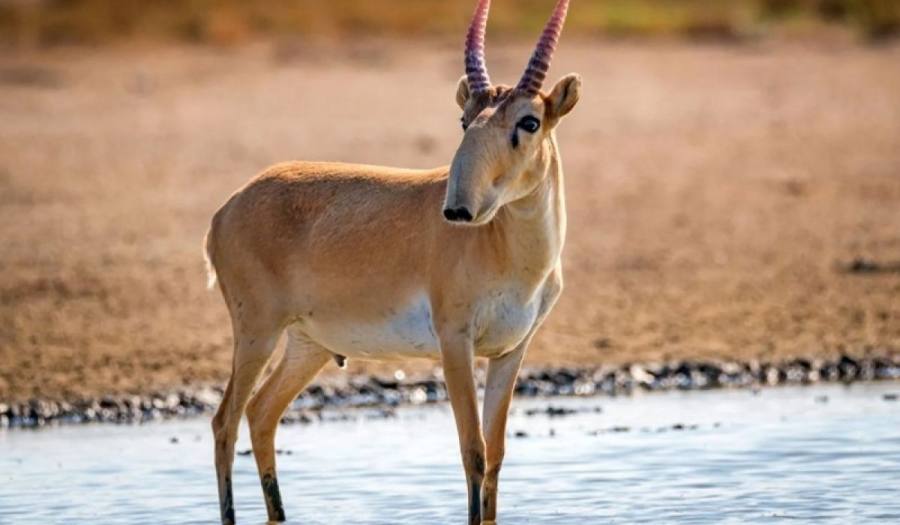
This report highlights positive examples where the populations of once near-extinct animals have recovered and conservation efforts have borne fruit. Among them, the successful population recovery of the Mongolian saiga, an endemic animal found exclusively in Mongolia, is drawing international attention.
Due to negative natural and social pressures, the population of the Mongolian saiga drastically declined, and its range shrank until only about 1,000 saigas remained in the Sharga Gobi in 1981. To save this native animal from extinction, the WWF Mongolia Programme Office, starting in 1997, continuously carried out conservation work in cooperation with various partners. As a result, a 1998 survey showed that 3,000 Mongolian saigas remained.
The following optimal conservation efforts carried out over many years have brought about today's positive results:
Recent survey results have been exceptionally positive. Specifically, a 2025 study determined that the population of the Mongolian saiga has grown to approximately 28,800.
As a result of improved conservation, the Mongolian saiga has returned and settled in its former historical distribution range – the Khyargas Lake valley – after many years, with 1,659 saigas now newly established in that region.
This success serves as a classic example of wildlife conservation, demonstrating that rather than artificially reintroducing a large mammal, implementing optimal conservation methods and management allows animals to naturally migrate and disperse, and their populations to fully recover, experts emphasized.