Loading…
Loading…

MONTSAME
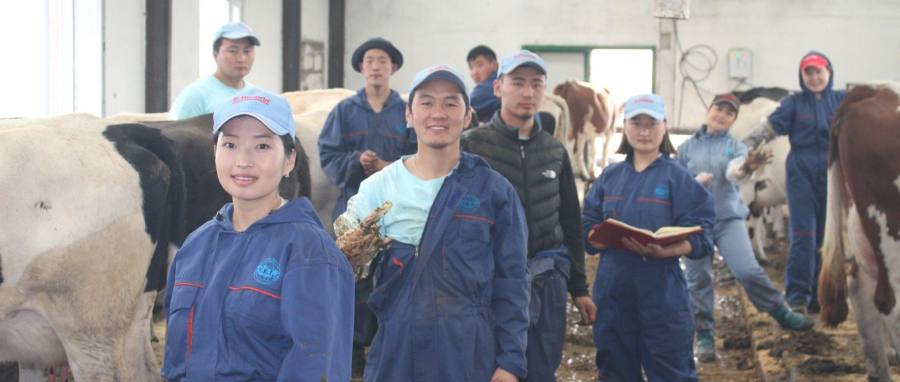
Sukhbaatar, October 6, 2026 /MONTSAME/. A new opportunity to train skilled personnel locally for the livestock sector has opened in Mandal soum of Selenge aimag, with the Zuunkharaa Polytechnic College launching a new “Livestock Technician” vocational training program.
The new program is being implemented with support from the STREAM+ project, jointly funded by the European Union and Germany. Running from 2024 to 2028, the project aims to train skilled workers who meet labor market needs in the agriculture and forestry sectors and strengthen the capacity of vocational education institutions.
The “Livestock Technician” program combines theoretical knowledge with practical, on-the-job training. Through the program, students will develop practical skills in livestock productivity, breeding, husbandry, animal health and nutrition, and farm management, enabling them to acquire the competencies needed to work directly in livestock production after graduation.
For Selenge aimag, the program will help train specialists needed by the livestock sector locally and reduce the shortage of skilled human resources. By aligning training with the actual needs of herder households and businesses, the program will lay the foundation for professional support to improve livestock breeding and productivity, husbandry and nutrition, and the adoption of sound production management practices.
Zuunkharaa Polytechnic College has been expanding its vocational programs based on local characteristics and labor market demand. As part of its specialization in agriculture, the college previously launched a “Forestry Technician” program. Selenge aimag is also pursuing a policy of aligning vocational education and training with regional labor market conditions and employers’ needs.
Nationwide, 20,576 students graduated from vocational and technical education and training institutions last year, of whom 1,540 graduated in agriculture and forestry. This indicates that the share of graduates specializing in these sectors remains relatively low and highlights the need to increase the skilled workforce to meet the needs of agricultural production.
Thus, the launch of the “Livestock Technician” program in Selenge aimag represents more than the addition of a new vocational program. It establishes a foundation for developing skilled human resources who can bring livestock-sector knowledge and technologies closer to herder households and producers, train young professionals locally, and ultimately help increase livestock productivity, product quality, and production efficiency.