Loading…
Loading…

MONTSAME
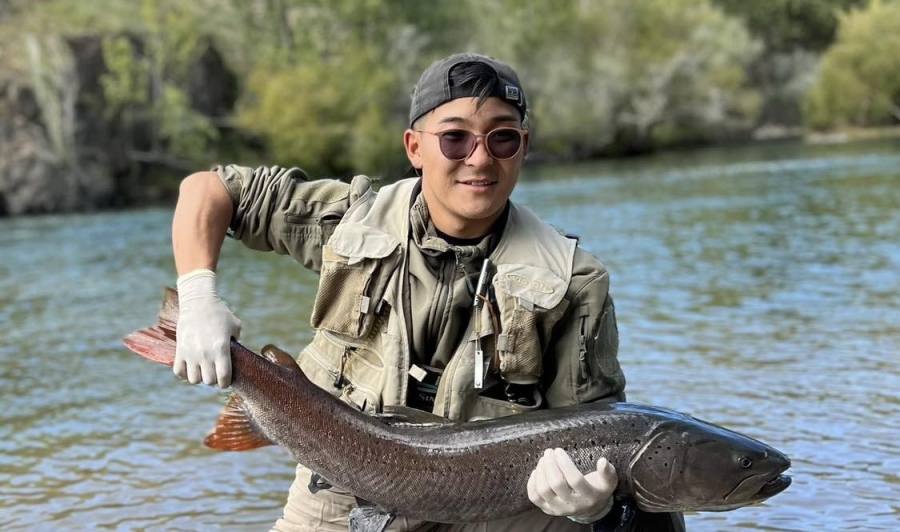
Ulaanbaatar, October 20, 2026 /MONTSAME/. In 2015, I enrolled in the Fish Breeding and Aquaculture program at the Mongolian University of Life Sciences.
At the time, people who heard about my major were surprised, laughed, or made jokes. But to me, aquaculture engineering was not just a rare profession, it was a meaningful choice connecting my future with Mongolia's rivers, aquatic environments, and freshwater ecosystems.
I was the sole student in Dr. Oyuntuya's class. Beyond foundational expertise, those academic years taught me self-reliance, responsibility, perseverance, and a broader perspective on life.
When I graduated in 2019, ichthyologist Munkhzorig B. invited me to join the newly launched "Chuluut Taimen" project. I accepted the invitation right away, seeing it as the most meaningful next step of my life.
Initiated in 2018 and launched in 2019, "Chuluut Taimen" is a conservation initiative operating in the Chuluut River basin of Tariat soum, Arkhangai aimag. The project aims to artificially breed, raise, and reintroduce vulnerable fish species, including the endangered Taimen (Hucho taimen), Lenok trout (Brachymystax lenok), and Grayling (Thymallus), back into their natural habitats to restore their populations.
This work is about far more than raising fingerlings and releasing them into the river. It strives to instill a spirit of conservation in citizens, ensuring that our country’s magnificent nature is preserved for future generations. During our first year, we set up a field laboratory along the banks of the Altaad River to fertilize and incubate eggs of Lenok trout and Grayling.
Every spring is our most crucial period. The survival rate of each egg, water temperature, oxygen levels, currents, and incubation conditions may seem like small details, but each plays a role in the final outcome. Releasing the surviving fry back into their native river is the most rewarding part of all that hard work.
Through years of sustained effort, the "Chuluut Taimen" project team has raised and reintroduced more than 4 million fish fry into the Chuluut River basin. This is not just a statistic, it represents breathed life into river currents, a restored ecological balance, and a commitment to leaving rich, freshwater rivers for our children.
Over the years, I came to realize, day by day, not just as a biologist but as someone who witnessed firsthand how fragile and precious our rivers, plants, wildlife and nature itself are. Environmental protection is not the work of one person, one season, or one project alone. It requires a sustained, collective effort uniting local communities, the private sector, volunteers, researchers, and government agencies.
The success of the "Chuluut Taimen" project gave us the confidence to expand our operations, protect additional river basins, and create further opportunities for natural resource restoration. In 2024, we initiated the "Ilenkh" project, which commenced implementation in 2026 across the Ilenkh and Erin River basins in Teshig soum, Bulgan aimag. The project focuses on protecting the Eg River basin ecosystem, restoring depleted fish stocks, and establishing a community-based sustainable conservation system.
Under the "Ilenkh" project, we established an international-standard field laboratory and built a new facility capable of raising hundreds of thousands of fish fry during breeding seasons. However, our goals extend beyond laboratory walls to include population monitoring, water quality assessments, habitat protection, and raising environmental awareness and participation among local residents.
My name is Molor-Erdene Enkhtaivan, though my friends call me Mok. I was born and raised in Chandmani soum, Gobi-Altai aimag. I believe that growing up among those distant mountains, rivers, and vast steppes instilled in me from an early age a deep-seated commitment to cherish and protect all living things.