Loading…
Loading…

MONTSAME
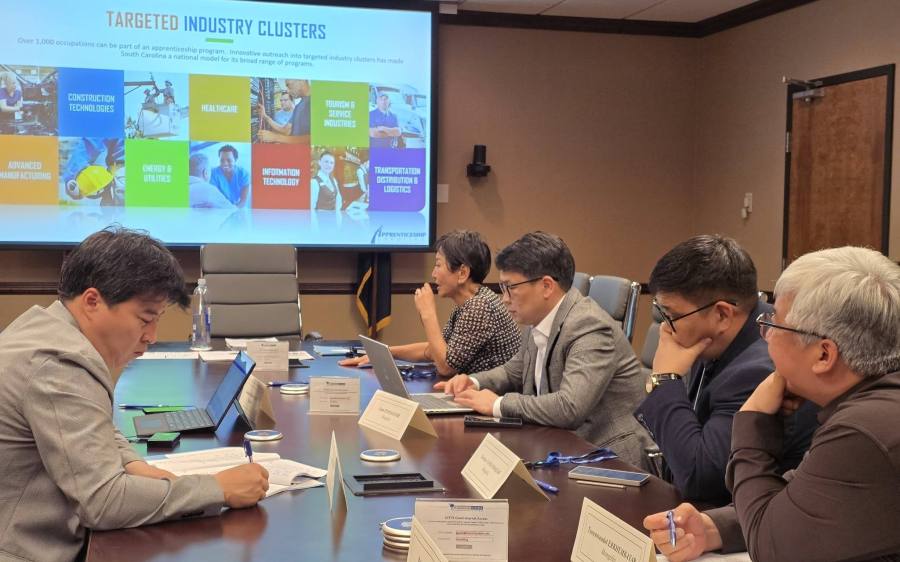
Ulaanbaatar, November 11, 2026 /MONTSAME/. Nyam-Ochir Tumur-Ochir, State Secretary of the Ministry of Education, met with Amanda Richardson, Vice President of the Apprenticeship Carolina program in the US state of South Carolina, to discuss aligning the vocational education and training system with labor market demand and expanding employer involvement and partnerships.
According to the Ministry of Education, the South Carolina Technical College System comprises 16 public colleges. It provides residents with opportunities to pursue vocational and technical education, gain professional qualifications, upgrade their skills and continue their studies at higher education institutions. The system aims to develop a skilled workforce that meets labor market demand through cooperation among educational institutions, employers, and government agencies.
A distinctive feature of the Apprenticeship Carolina program is its earn-while-you-learn model. Participants receive practical training at workplaces under the supervision of experienced employees while also attending theoretical classes. Their wages increase as they develop their professional skills. Upon successful completion of the program, participants receive nationally recognized occupational credentials.
The program offers high school students and adults opportunities to gain professional skills through paid apprenticeships in various sectors, including manufacturing, construction, healthcare, information technology, energy, transportation, and services. Meanwhile, participating employers can develop skilled workers whose qualifications match their operational requirements, technologies, and specific workforce needs.
Participation in the program also helps employers improve workers' skills and productivity, enhance workforce retention, reduce the costs of training new employees, and develop a pipeline of future talent. Businesses and organizations participating in the program may also qualify for state tax incentives.
The Apprenticeship Carolina model serves as an example of an effective approach to aligning vocational education and training with actual labor market needs, strengthening employer participation, expanding employment opportunities for learners and developing a skilled workforce.