Loading…
Loading…

MONTSAME
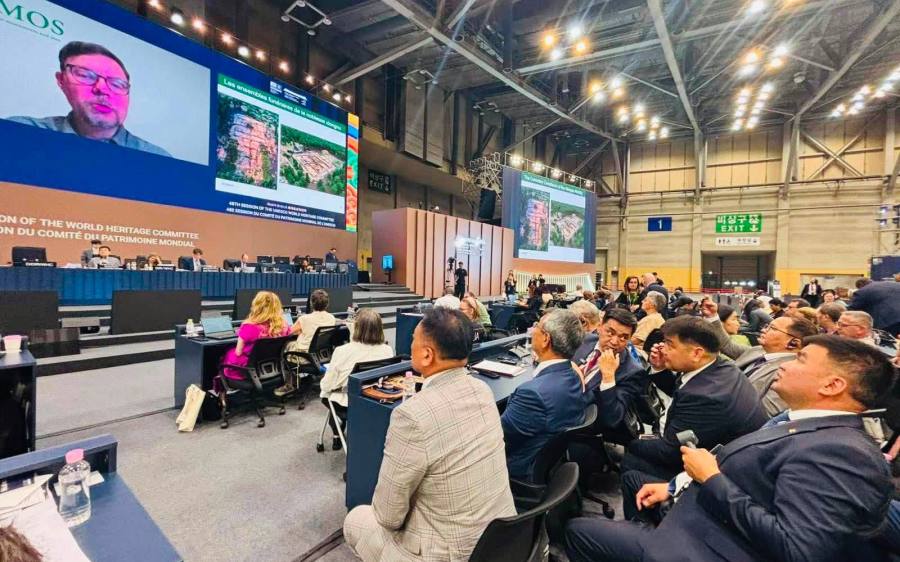
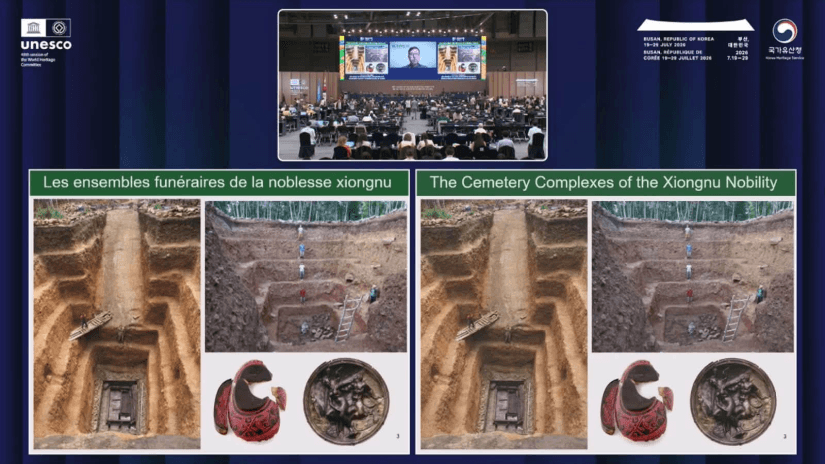
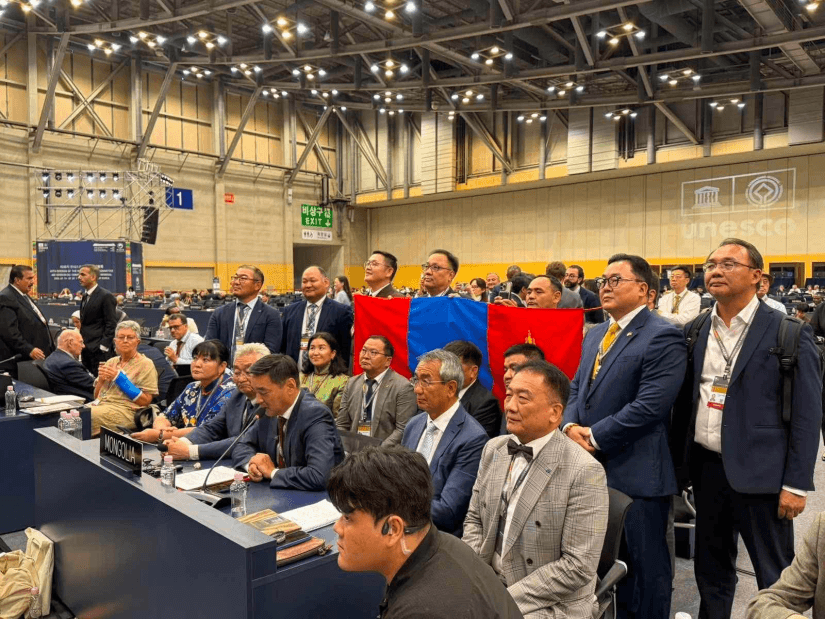
Ulaanbaatar, July 26, 2026 /MONTSAME/. The Cemetery Complexes of the Hunnu Nobility, dating back to Mongolia's first state, the Hunnu Empire, has been inscribed on the UNESCO World Heritage List during the 48th session of the World Heritage Committee, currently taking place in Busan, the Republic of Korea.
The newly inscribed serial property comprises archaeological sites: Noyon Uul in Bornuur soum of Tuv aimag, Chikhertiin Zoo in Bayantsagaan soum of Tuv aimag, Duurlig Nars in Bayan-Adraga soum of Khentii aimag, Gol Mod I and II in Arkhangai aimag, and Takhiltiin Khotgor in Mankhan soum of Khovd aimag.
The inscription marks the successful culmination of years of archaeological research carried out under a project implemented by the Chinggis Khaan National Museum, bringing international recognition to one of the most significant cultural legacies of the ancient Hunnu civilization.
Speaking on behalf of the Mongolian delegation attending the 48th session, Minister of Culture, Sports, Tourism and Youth Aldarjavkhlan Jukov said the inscription is the result of decades of dedicated work by Mongolian and international archaeologists, historians, and researchers, whose studies have greatly enriched historical knowledge of the Hunnu Empire through authentic sources and established the site's outstanding value.
During the session, Academician Chuluun Sampildondov, head of the team of experts, noted that the inscription not only recognizes the Hunnu nobility cemetery sites as part of humanity's shared heritage but also represents international acknowledgment of the history of Mongolia's first state. He described the decision as the culmination of many years of scientific research and emphasized that the Chinggis Khaan National Museum now preserves a site recognized as part of the world's heritage.
Under the World Heritage Convention, a site must demonstrate Outstanding Universal Value by meeting at least one of ten selection criteria. It must also satisfy the conditions of authenticity and integrity.
Mongolia acceded to the UNESCO World Heritage Convention in 1990. Before this inscription, the country had six World Heritage properties: the Uvs Nuur Basin (2003), Orkhon Valley Cultural Landscape (2004), Petroglyphic Complexes of the Mongolian Altai (2011), Great Burkhan Khaldun Mountain and its surrounding sacred landscape (2015), Landscapes of Dauria (2017), and Deer Stone Monuments and Related Bronze Age Sites (2023). With the inscription of the Cemetery Complexes of the Hunnu Nobility, Mongolia now has seven UNESCO World Heritage sites.