Loading…
Loading…

MONTSAME
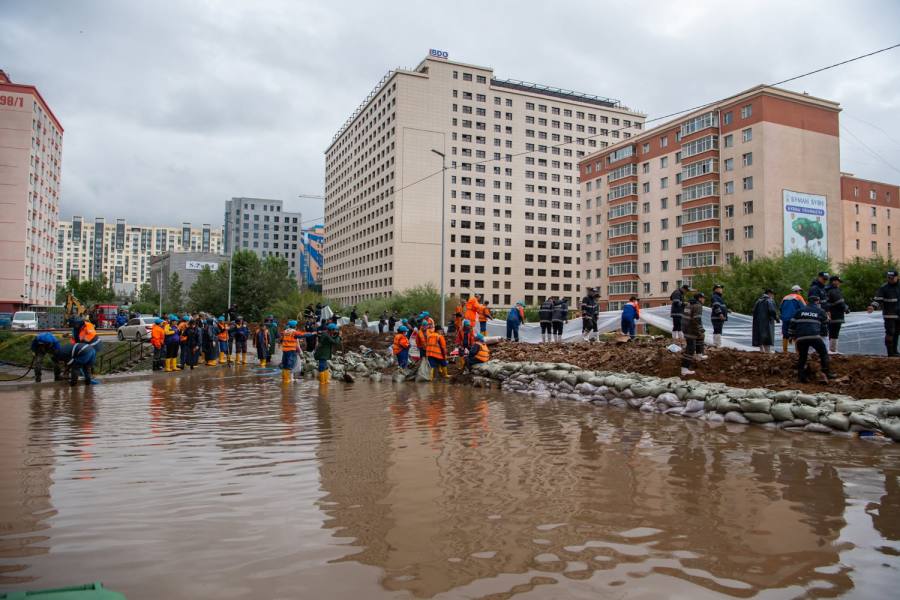
Ulaanbaatar, August 12, 2026 /MONTSAME/. Climate change isn’t just a singular event, it is different weather and climate phenomena that happen on a much larger and unpredictable manner. On 16 January 2026, Russia’s Kamchatka Peninsula experienced its heaviest snowfall since 1960’s. In some areas, snow accumulation reached 4-6 metres, completely burying buildings, roads and public spaces and bringing public transport, and work places to a standstill. We can be thankful that the cold air mass from the north did not bring similarly heavy snowfall to Mongolia. It is not difficult to imagine the consequences if Mongolia were to experience snowfall of that magnitude.
Climate change is also impacting on the global economy on a larger scale. In 2023, United Nations experts presented a sobering report on the future of the planet. The report concluded that the adverse consequences of climate change could only be described as a Global Ecological Crisis. It also warned that, if the pace of climate change cannot be slowed, more than 7-8 per cent of global GDP will be lost. So, it is worth reviewing some of the major climate-related disasters recorded around the world in recent years, particularly between 2023 and 2025.
The consequences of disasters caused by extreme heat across Europe, sudden torrential rainfall, abrupt cold spells, heavy snowfall, strong winds and storms continue are starting to become the norm. In March 2024, heavy snowfall in Italy disrupted the movement of more than 6,000 people, leaving many stranded. In Greece, several days of severe weather left streets completely flooded. Germany saw winter conditions return within a single day, while heavy snowfall in Ireland led to the closure of schools and kindergartens and the introduction of movement restrictions. More recently, the US state of California experienced flooding. International researchers are closely monitoring the scale of such disasters, the losses they cause and the measures taken by governments in response.
Türkiye also recorded a destructive event involving multiple waterspouts that caused extensive damage. One tornado travelled 12 kilometres, leaving a path of destruction measuring around 80 metres in width. More than 300 hectares of greenhouse farming areas were reportedly affected. In Russia, meanwhile, wildfires of a scale not seen in recent years, compounded by strong winds, have been recorded among the unprecedented natural hazards.
Argentina also experienced what was described as one of the most severe natural disasters in its history. More than 300 mm of precipitation fell within just three hours, including 200 mm in a single hour, more than the average monthly rainfall. The torrential rain caused power outages and widespread disruption. Amid the disorder, pharmacies and jewelry stores were reportedly looted, prompting authorities to declare a state of emergency from the aftermath.
North America experienced a life-threatening snowstorm, with three metres of snow falling over three days and winds reaching dangerous speeds, leaving thousands of households without electricity. In Pakistan, severe flooding reportedly killed at least 37 people, while the amount of rainfall normally received over two years fell within just 20 days. In Iran, torrential rain and flooding left 178 villages isolated as restricted areas. Taken together, these events are further evidence of how the global climate is changing from year to year and becoming increasingly unpredictable. In Mongolia, studies indicate that the frequency of natural disasters has doubled over the past 40 years.
By Tseveenkherlen Tseveendolgor