Loading…
Loading…

Unurzul Mishigdorj
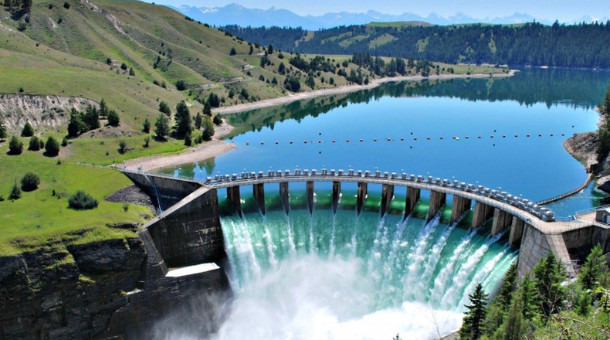
Ulaanbaatar, November 23, 2026 /MONTSAME/. Scientists from the Mongolian and Russian Academies of Sciences have emphasized that favorable conditions are now in place to launch the "Egiin Gol Hydropower Plant" (HPP) project, which has been awaited for decades in Mongolia's energy sector.
During a joint working group meeting of scientists from both countries, participants discussed the final results of the environmental impact assessment (EIA) regarding the project's effects on the Selenge River and Lake Baikal ecosystems. They concluded that the project is feasible to implement and officially handed over the final report to the Russian Academy of Sciences.
According to the Egiin Gol HPP project team, the meeting, held in Moscow on November 19 within the framework of the Mongolian Government's 2024–2028 Action Program, decided to present the research findings and recommendations at the bilateral Intergovernmental Commission meeting scheduled for this December.
The Egiin Gol HPP is a strategically important project planned on the Eg River, a major tributary of the Selenge River, in Khutag-Undur soum, Bulgan aimag. Its goal is to ensure Mongolia's energy independence and regulate peak loads in the national power grid. Located 450 km northwest of the capital, Ulaanbaatar, the plant is designed to have an installed capacity of 315 MW and generate an average of 606 million kWh of electricity annually. The project includes building a 103-meter-high dam and creating a reservoir with a volume of 5.7 billion cubic meters, which will also supply clean water to mining operations, industries, and residents in the Gobi region, while helping prevent drought and flood risks.

Although the project has been studied since the 1990s and its feasibility study has been updated several times, construction was delayed because the Egiin River flows into the Selenge River, the main water source for Russia's Lake Baikal. Both Russia and the UNESCO World Heritage Committee had requested a detailed study on the potential impact on Lake Baikal's ecosystem, leading to this additional environmental assessment.
The meeting in Moscow was attended by a Mongolian delegation of 10 scientists and experts led by Academician Demberel S., President of the Mongolian Academy of Sciences; Odontuya S., Member of Parliament and project initiator; Regdel D., Member of Parliament and Academician; Davaa D., Ambassador of Mongolia to Russia; Namjiljav B., Senior Specialist at the Ministry of Energy; and Battulga M., Executive Director of Egiin Gol HPP SOE. The Russian side was represented by 20 scientists and experts led by Kozlov A.A., Minister of Natural Resources and Ecology; Krasnikov G.Ya., President of the Russian Academy of Sciences; and Academician Bychkov I.V.