Loading…
Loading…

MONTSAME

Ulaanbaatar, October 31 /MONTSAME/. Around 30 percent of Numrug Strictly Protected Area in Khalkhgol soum, Dornod aimag, remains unaffected by the recent wildfire. Wild animals that fled the fire have gathered in these unburned areas, prompting the Ministry of Environment and Climate Change to call for wildlife support measures, including supplementary feeding, based on weather conditions.
Naranbaatar D., head of the Administration of Numrug Strictly Protected Area, said three working groups had spent 14 days assessing the damage caused by the wildfire.
According to him, wildlife has gathered in areas that escaped the fire, including the southern part of Bichigt Mountain near Nariin Gol, as well as the southern and western areas of Khavirga Mountain. Biological experts have determined that wildlife populations in these areas are more concentrated than usual, making it necessary to implement measures to support the animals. He also said that no animals killed by the fire had been found during surveys of the affected areas conducted by vehicle and on horseback.
Naranbaatar noted that livestock belonging to four households in the area graze alongside wildlife, and that people sometimes disturb and drive away wild animals. Therefore, the protected area's administration has proposed relocating these households farther into the area this year in coordination with the relevant authorities.
The ministry said that, following several meetings with the Mongolian Academy of Sciences, research institutes, and scientists specializing in the field, it is important to develop a restoration plan once the working group's assessment has been completed. The plan will include short-, medium-, and long-term measures based on the intensity of the fire, the affected area, and soil analysis.
Surveys conducted by relevant professional organizations in 2018 and 2022 recorded more than 3,000 red deer, over 300 moose, and more than 10,000 roe deer in the protected area.
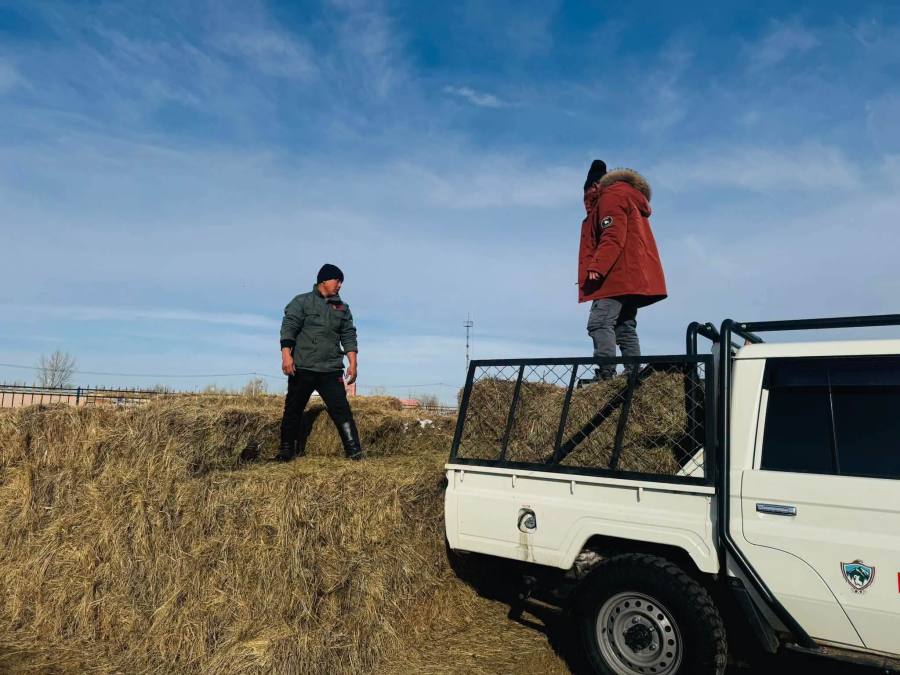
In previous years, the protected area's administration prepared between 2,000 and 3,000 bales of hay annually for wildlife. However, given the current wildfire situation, an estimated 25,000–30,000 bales will be needed this year.
Minister of Environment and Climate Change Sandag-Ochir Tsend emphasized the need to accurately assess the damage caused by the wildfire, carry out restoration measures without delay and in stages, and organize support for wildlife concentrated in the unburned areas to help them survive the winter.
The minister issued the following instructions:
Based on the resulting assessments, the necessary budget and funding will be presented to a Cabinet meeting for consideration and a decision.