Loading…
Loading…

MONTSAME
Ulaanbaatar, November 4, 2026 /MONTSAME/. Since 2015, the 3rd of every month has been observed as “Blood Donation Day” to encourage citizens to participate in this life-saving cause. This month marks the 138th time the initiative has been organized.
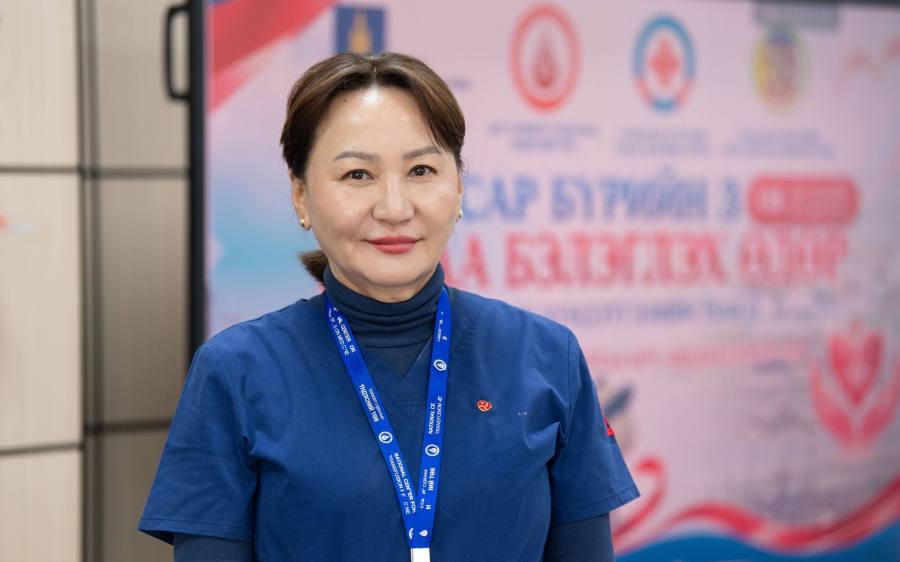
In connection with this, Dr. Enkhtuya R., Head of the Blood Donor Organization Department at the National Center for Transfusion Medicine, shared insights on blood supply levels, donor participation, and key guidelines for donors.
How has the number of blood donors and public participation changed in recent years? On average, how many units of blood are collected daily to meet hospital demands?
The number of blood donors is increasing year by year. Previously, we collected around 150 units of blood a day to cover daily needs. Today, operating through three stationary centers and a mobile team, we need to collect 250 to 300 units daily to adequately supply hospitals. To boost donor engagement and honor their contributions, we introduced a tiered donor recognition system.
While previously a person who donated blood 35 times was recognized as an “Honored Donor,” we now separately acknowledge donors who have given blood anywhere from 10 to 200 times through bronze, silver, and gold tiers.
This helps raise public awareness about the importance of being a blood donor and fosters a positive social mindset. We
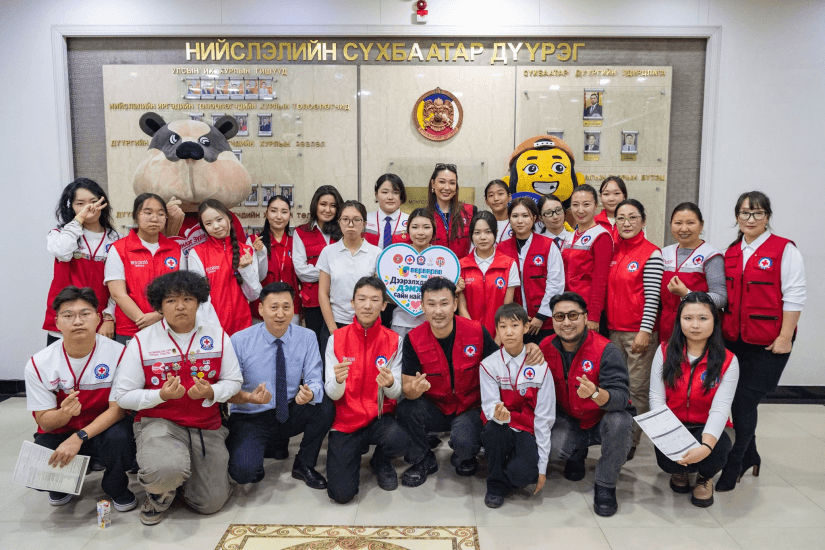
organized this month’s Blood Donation Day in cooperation with the Governor’s Office of Sukhbaatar District and the Mongolian Red Cross Society. On this day, we express our gratitude to our dedicated donors while sharing information and encouraging others to become donors.
Institutional partnerships and group participation play a crucial role in blood donation activities. How does the mobile team schedule and conduct its work?
Any healthy individual between the ages of 18 and 60 who considers themselves healthy can become a donor. We perform four types of infectious disease screenings on donated blood, including tests for hepatitis B and C and others, to ensure complete blood safety.
Public initiative is growing. It has become common for friends, colleagues, and alumni groups to organize and donate blood together. We actively partner with public, non-governmental, and private sector organizations.
Our mobile team visits organizations daily between 09:30 AM and 12:30 PM. We plan our visits seasonally and monthly, reaching out to organizations in advance with necessary information.
University students are very active participants in blood donation. Because the academic year starts in September, student participation temporarily drops during exam periods between October and December. However, in the spring semester from January to April, students come out in large numbers to donate.

Organizational involvement has also grown, with some workplaces hosting blood donation drives two to three times a year. Since busy work schedules make it difficult for everyone to visit our center in person, we strive to reach workplaces directly through our mobile teams.
Hospital demands for blood and blood products vary. How do you maintain a continuous supply when specific blood types are in high demand or when organ transplant surgeries are scheduled?
We regularly organize donation activities to steadily increase blood reserves and continuously meet hospital requirements. For instance, we received requests to support four liver transplant surgeries scheduled for this December. Accordingly, we are working to collect the necessary blood, prepare the blood products, and supply them to the hospitals.
While requests for specific blood types occasionally surge, we maintain sufficient reserves and ensure hospitals are supplied without interruption.
The recent increase in blood donors shows strong engagement from citizens, especially young people. What is the current growth trend, and what is your advice for prospective donors?
In recent years, young people's knowledge and attitude toward blood donation have improved dramatically. Many express a desire to donate as soon as they turn 18, and a significant number become regular donors. Some choose to donate every month on "Blood Donation Day," while others make it a tradition to donate on their birthdays. Youth account for about 40 to 50 percent of all donors.
We plan to collect blood from over 35,000 donors annually, a figure that continues to grow. In past years, the number was around 30,000, and it is now rising toward 40,000. This reflects the increasing demand for blood and blood products within medical services.
Becoming a blood donor is one of the greatest acts of kindness to save human lives. We often tell our donors: "A single donation of your blood can save up to three lives."
After donating blood, the body’s blood volume recovers within 72 hours, while cellular recovery continues over a specific period—red blood cells take several weeks to months to fully regenerate. There are also distinct differences in the recommended donation frequency for men and women.
Therefore, I encourage everyone who is healthy and eligible to embrace their social responsibility and become a blood donor.