Loading…
Loading…

MONTSAME
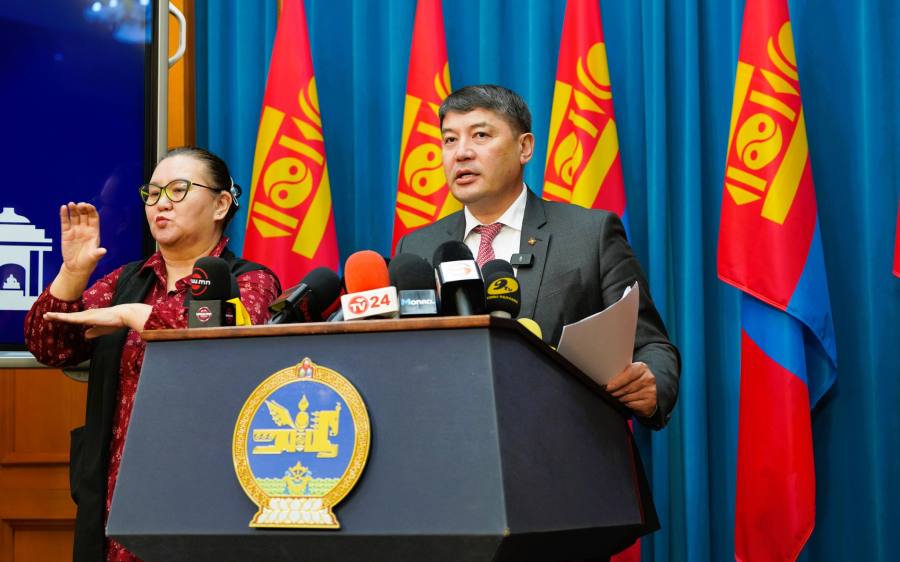
Ulaanbaatar, March 5, 2026 /MONTSAME/. At its session on March 4, 2026, the Government decided to implement the “National Initiative to Promote Household Employment and Reduce Poverty.”
Based on the experience of implementing the “Graduation Approach” project, carried out jointly by the Ministry of Family, Labour and Social Protection and the Asian Development Bank for 1,259 low-income households, the Government is launching the “Targeted Household Employment Promotion and Livelihood Improvement Program” this year. The program will cover 5,000 households living below the poverty line, aiming to reduce unemployment and improve livelihoods.
As the national poverty rate has not declined — particularly in rural areas where the prevalence remains high — the Government plans to ensure the participation of administrative units and local leadership. The Prime Minister will conclude performance agreements with aimag and district governors, who in turn will sign agreements with soum and khoroo governors. Implementation will be evaluated accordingly, and local authorities will identify and select low-income households based on official data and work with them directly.
To support income generation, the initiative will provide land for crop farming and agricultural production, assist with livestock husbandry, and offer comprehensive support for product processing and marketing. Successful poverty reduction practices will be expanded, and private enterprises and NGOs will be encouraged to participate. A mechanism will also be introduced to monitor governors’ performance, assess reports, and apply incentives or accountability measures.
The results of the national initiative will be measured by indicators such as the number of people who gain employment, households accessing small loans, and newly registered social insurance contributors. Aimags, districts, soums, khoroos, and supporting organizations that demonstrate effective implementation will be rewarded by the Government at year-end. Overall coordination of the initiative will be provided by the Cabinet Secretariat, while the Ministry of Family, Labour and Social Protection will be responsible for professional and methodological guidance.
Mongolia’s poverty rate stood at 27.1 percent in 2022, with approximately 913,700 people living below the poverty line. Poverty affected 35.5 percent of the rural population and 23 percent of the urban population. The situation is attributed to limited education, skills, work attitudes, health conditions, and living standards. As of last year, Mongolia had 2.4 million people aged 15 and above, of whom 1.5 million were economically active, with total employment at 1.4 million.