Loading…
Loading…

MONTSAME
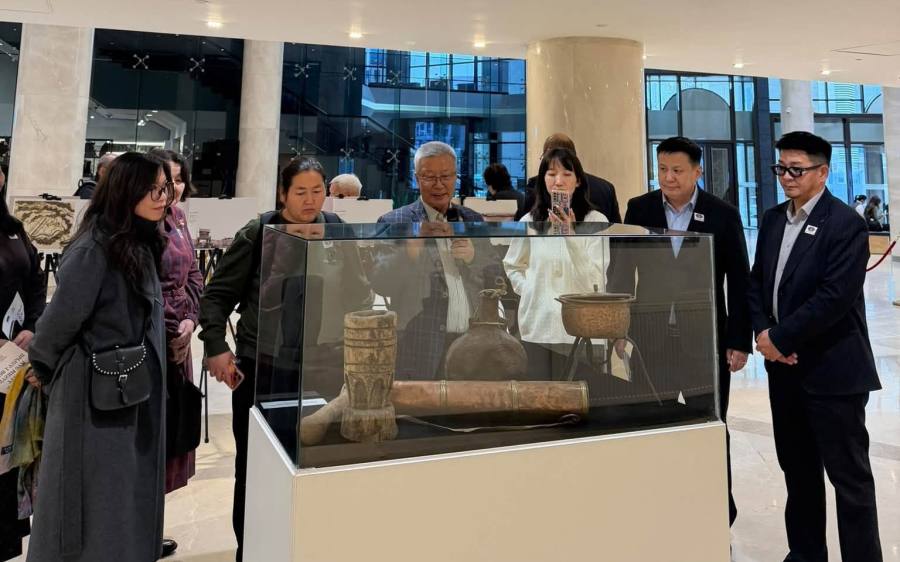
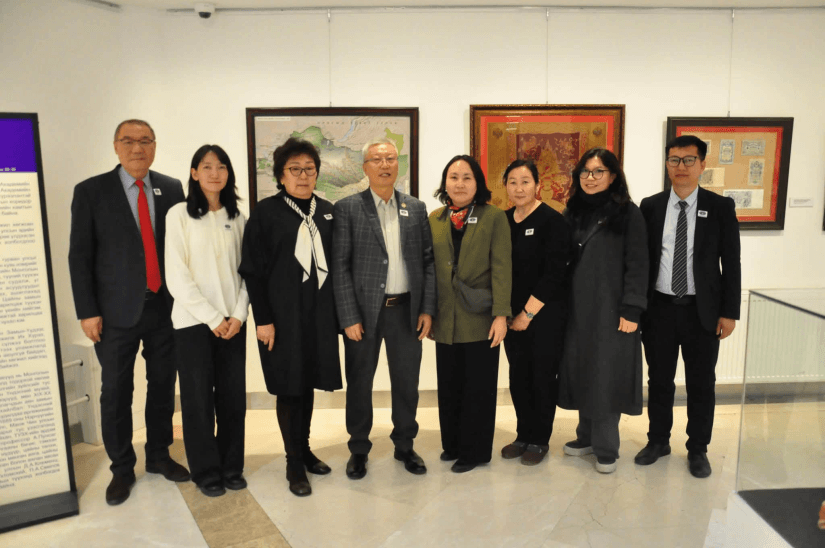
Ulaanbaatar, October 27, 2026 /MONTSAME/. A temporary exhibition titled “Mongolians Along the Great Tea Road” opened on October 26 at the Chinggis Khaan National Museum, organized jointly by the Institute of History and Ethnology of the Mongolian Academy of Sciences and the museum.
The exhibition is part of a 2024-2026 joint research project with the Institute of Mongolian, Tibetan and Buddhist Studies of the Siberian Branch of the Russian Academy of Sciences, titled “From the Great Tea Road to the ‘New Silk Road’ Economic Corridor: Historical Reflections and Modern Cooperation Among Russia, Mongolia and China.”
Trade along the Tea Road flourished for more than two centuries, from the 17th century to the early 20th century, leaving a lasting mark on the economic, social, political, and cultural relations of Mongolia, Russia, and China. The historic trade route continues to hold significance for developing contemporary relations among the three countries.
The Mongolian section of the Tea Road stretched approximately 1,150 kilometers from present-day Zamiin-Uud on the Chinese border to Altanbulag near the Russian border. It developed into a trade network linking Ikh Khuree (present-day Ulaanbaatar), Maimaachin and the international trading center of Kyakhta. Mongolians’ longstanding experience in camel caravans played a key role in securing and transporting goods, distributing tea and expanding markets and cultural exchanges.
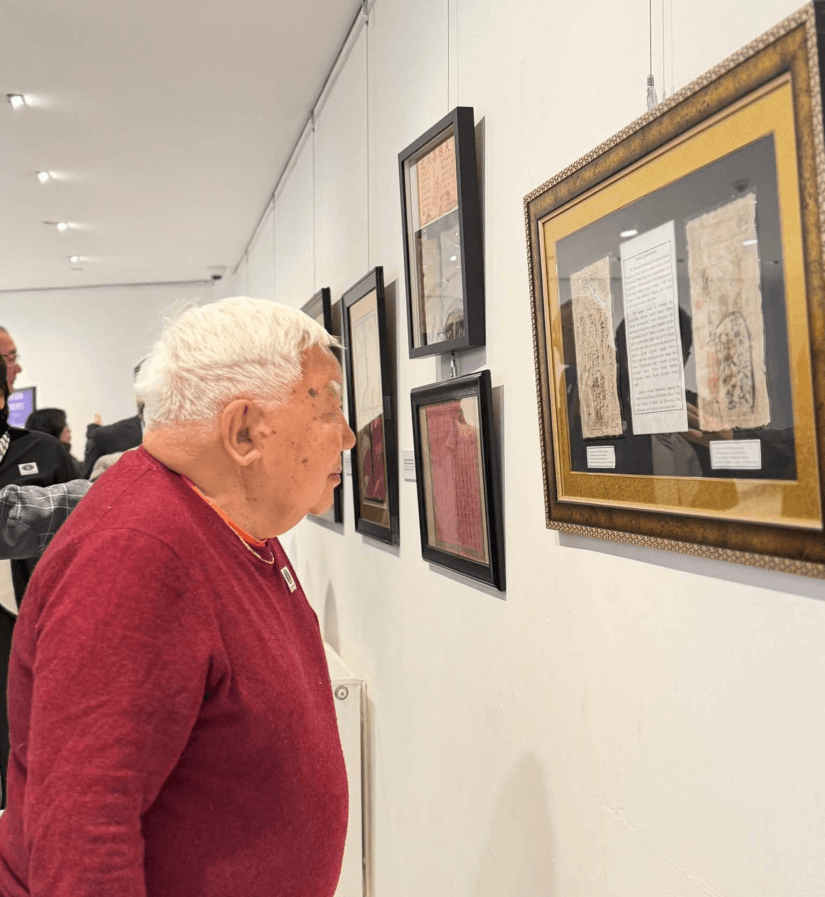
The exhibition features photographs and artifacts documenting the influence of trading centers in Ikh Khuree, Maimaachin and Kyakhta on Mongolia’s social and cultural development, urbanization and foreign trade.
The exhibition features artifacts from the Chinggis Khaan National Museum and the National Archives, photographs included in the travel accounts of foreign visitors to Mongolia in the 19th and 20th centuries, and a copy of the 1727 Treaty of Bura, signed by the Russian Empire and the Qing Dynasty to clarify border arrangements and prevent disputes as Tea Road trade expanded, building on the 1689 Treaty of Nerchinsk.
Other exhibits include tea advertisements, camel caravan bells, tea caddies, compressed tea, mortars and pestles, tea bricks, currency used to value tea, wooden and silver cups, and porcelain tea ware. These items come from the private collections of collectors Batsaikhan Ts. and Punsag A., a doctor of science and professor and a senior researcher at the Institute of History and Ethnology.
The exhibition also presents photographs taken by Russian, Danish, and British travelers and researchers who visited or lived in Mongolia, including Klements D.A., Ivanov D.V., Kristal Brae, Binsted, Ukhtomsky D.E., and Smelov P.A.
The exhibition will run through October 29.