Loading…
Loading…

MONTSAME

Ulaanbaatar, October 7, 2026 /MONTSAME/. An international academic conference on “Woodblock Printing Heritage: Documentation, Preservation and Accessibility” has opened at a branch of the National Library of Mongolia.
The two-day conference brings together scholars, researchers, curators, librarians, and cultural heritage specialists from several countries to discuss best practices for preserving woodblock printing heritage, emerging technologies and methodologies, and comprehensive strategies for interdisciplinary cooperation. It is also expected to contribute to strengthening international cooperation in the study of manuscript and woodblock-printed book heritage.
Of the seven countries worldwide with woodblock-printing traditions, representatives and scholars from five countries, Mongolia, the Republic of Korea, Japan, Germany, and Vietnam, are presenting their research at the conference. Among the Vietnamese delegates are practitioners from families that have produced woodblocks for generations and continue to preserve and develop the tradition today. Korean researchers participating in the conference specialise in international documentation and preservation of woodblocks, factors important for their conservation, and ways to further develop and pass the tradition on to future generations. A Japanese scholar is presenting research on the chemical technologies, construction and forms of woodblocks. Thus, scholars and researchers with diverse areas of specialisation in woodblock printing are presenting their respective research findings.

Director of the National Library Ichinkhorloo Bayarkhuu said the library preserves not only a large number of books printed from woodblocks but also the woodblocks themselves.
“Woodblocks are an important part of our cultural heritage that demonstrates that we are not only a nation known throughout world history for our conquests and historical events, but also a people with a rich printing tradition that has played an important role in this field,” she said.
“The books and works printed from woodblocks clearly show that Mongolians have a thousand-year-old printing tradition and history. Therefore, preserving the tradition known as ‘carving woodblocks’ and ‘engraving woodblocks’ is one of the distinctive features that sets Mongolians apart from the many cultural heritages that exist around the world.”
She also noted that member countries of the International Woodblock Printing Association are not limited to academic institutions that study works printed from woodblocks, but include countries that continue to develop and pass on the woodblock printing tradition, regarding it as part of their printing and cultural heritage, written language and national identity.
“Therefore, this conference is important not only because it brings together scholars from different countries to present their research, but also because it provides an opportunity to develop important decisions and initiatives on how to preserve Mongolia’s woodblock printing tradition and pass it on to future generations as part of our cultural heritage and national identity,” she said.

In his presentation, Dr. Takaaki Kaneko, Associate Professor at Kyoto University in Japan, said historical sources need to be studied comparatively to determine the purposes for which woodblocks were made and how they were used.
“In other words, information on how a particular woodblock was used is verified through historical sources, which makes it possible to determine what types of woodblocks were produced for what purposes and how they were used in printing,” he said.
According to Dr. Kaneko, in the Japanese tradition, printing a single book required a large number of woodblocks, so the work was divided among many people rather than being carried out by one person. Historical sources, therefore, need to be examined to determine which woodblocks were held by which individuals when a particular book was printed.
He explained that there were several reasons for distributing woodblocks for a single book among multiple people, one of the main ones being risk reduction. Woodblocks were also sometimes transferred or sold by their owners. In such cases, the blocks became the property of the new owners, and if the book needed to be reprinted, the necessary woodblocks had to be located and collected from their new owners. “Thus, woodblock printing in Japan has developed its own unique system in line with the country’s distinctive characteristics and traditions,” he said.
He recommended storing woodblocks in purpose-built above-ground facilities rather than underground structures, while carefully managing environmental conditions. In particular, he said temperature and humidity should be regularly monitored and maintained at appropriate levels, which is important for the preservation of woodblocks.

Khureltsooj B., a librarian at the Tibetan Collection of the National Library, Tibetan-language translator and researcher, said the woodblocks held by the National Library had been preliminarily counted and documented for the first time, with detailed individual records to be compiled in the future.
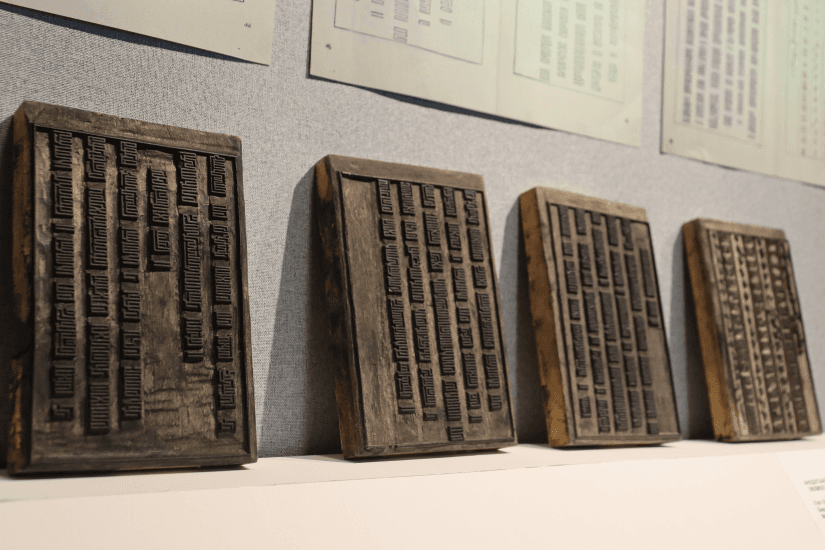
“The National Library preserves a rich heritage of woodblocks in addition to books and manuscripts. Based on the preliminary inventory, more than 2,080 woodblocks are currently held by the library,” he said.
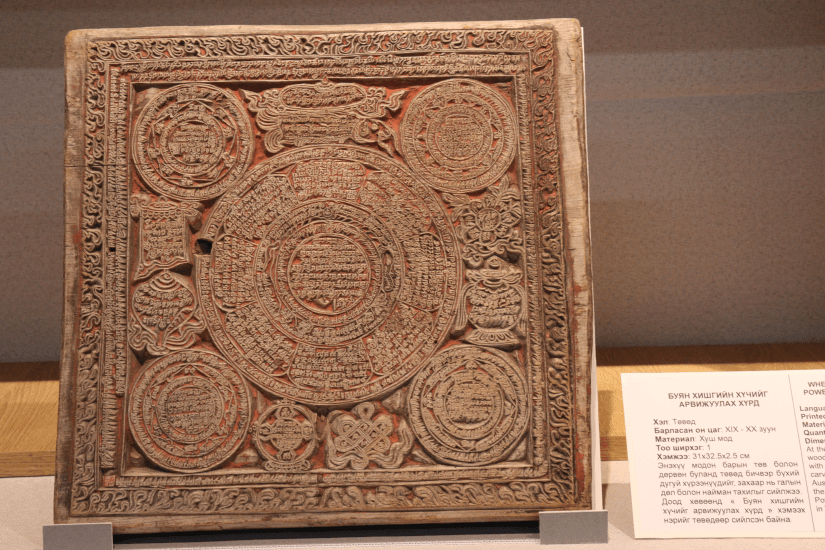
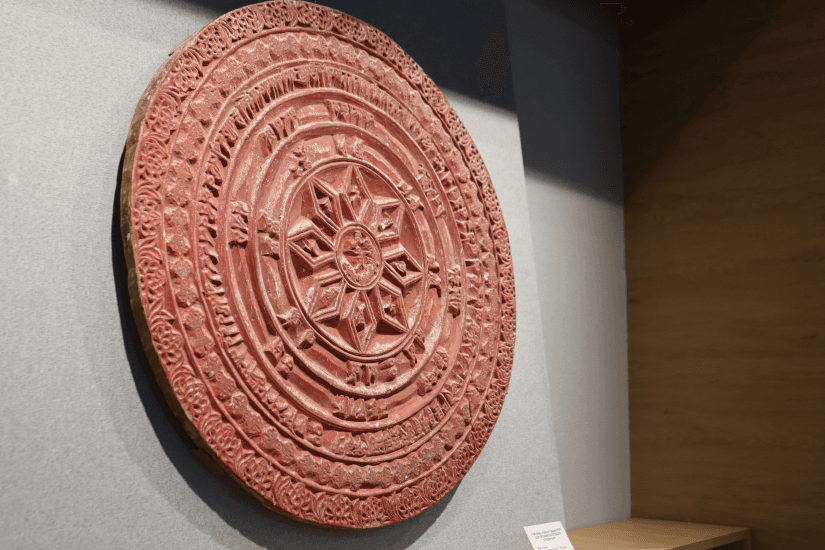
He explained that the woodblocks had been preliminarily classified into four categories according to their content and purpose: book blocks, image blocks, mantra blocks and ritual blocks.
He stressed the need to improve storage conditions, including maintaining stable temperature and humidity levels. The preliminary inventory also identified several woodblocks containing particularly rare and valuable content, including blocks for the multi-page Jadamba Sutra, as well as blocks related to seals and sealing. Various blocks associated with Mongolian customs and traditions were also identified, including those used in rituals intended to protect against natural hazards such as lightning and hail and to invoke blessings and prosperity.
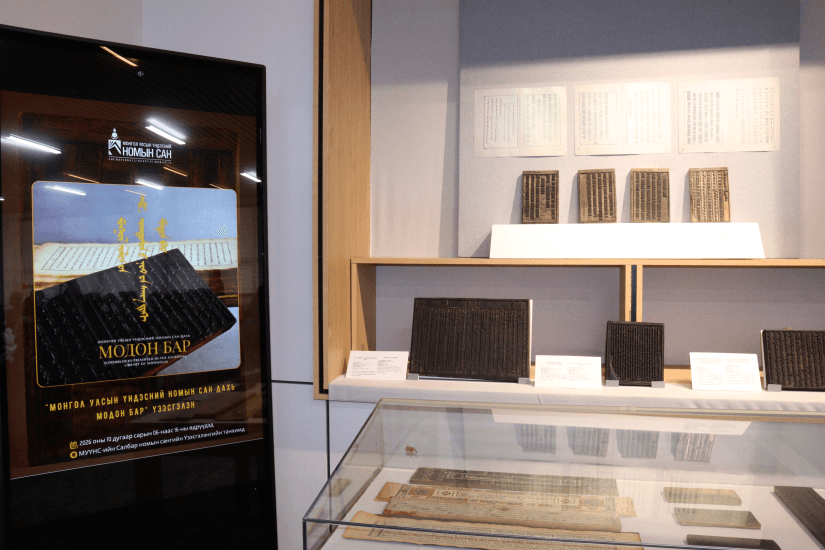
During the conference, a special exhibition featuring samples of rare and valuable woodblocks preserved in the National Library’s collections was also presented to conference delegates and the public.
In addition, a catalogue titled “Woodblocks at the National Library of Mongolia” has been published to introduce and promote Mongolia’s woodblock printing heritage and its various forms and to facilitate further research into the collection.