Loading…
Loading…

MONTSAME
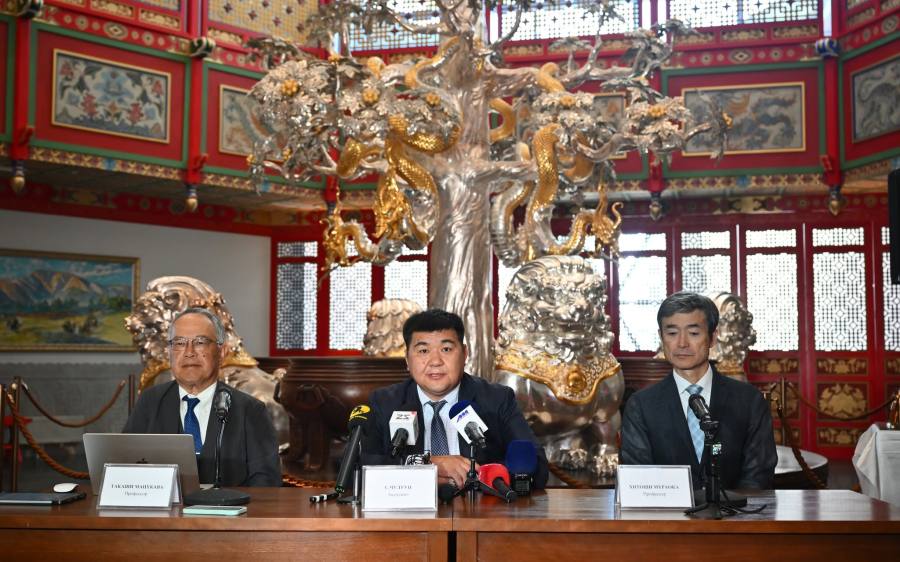
Ulaanbaatar, September 15, 2026 /MONTSAME/. A press conference presenting the highlights of the 2026 archaeological research conducted under the Mongolia-Japan joint “Inscription” Project was held at the Chinggis Khaan National Museum on September 15.
Under the Mongolia-Japan “Inscription” (Bichees) Project, the Institute of History and Ethnology of the Mongolian Academy of Sciences has been conducting archaeological excavations and research at the Olon Sum archaeological site in Uyanga soum, Uvurkhangai aimag, during 2025-2026. The joint research team conducted its 2026 fieldwork at the Olon Sum temple ruins from August 12 to 23, over a period of 12 days.
The research continues the archaeological excavation and research launched in 2025. Led by Erdenebold L., PhD, and Academician Chuluun Sampildondov from Mongolia, and Professor Takashi Matsukawa from Japan, the research team, headed by archaeologist Urtnasan E., has uncovered “new primary sources for the study of the history of Buddhism and writing in Mongolia.”
Chuluun Sampildondov, Director of the Chinggis Khaan National Museum, said, “The excavation focused on a large structure in the eastern part of the site and a smaller structure located in front of it. The larger building consists of a central hall, five bases for Buddhist statues, and a circumambulatory path surrounding them. Most notably, remnants of murals featuring multicolored images of Buddhist deities, as well as motifs of mountains, clouds, snakes and plants, were found on the walls of the building. This makes the site particularly important for the study of Buddhism in Mongolia.
“Numerous fragments of Buddhist statues made of raw clay, including heads and feet of statues, a porcelain cup used as a consecration object, an iron artifact depicting a mounted figure, 21 prayer beads made of precious stones, and pieces of red sandalwood were also discovered during the excavations. Dating analysis conducted in Japan in 2025 determined that the temple dates to the late 16th to early 17th century, coinciding with the period of Erdene Zuu, considered Mongolia’s earliest monastery,” he noted.
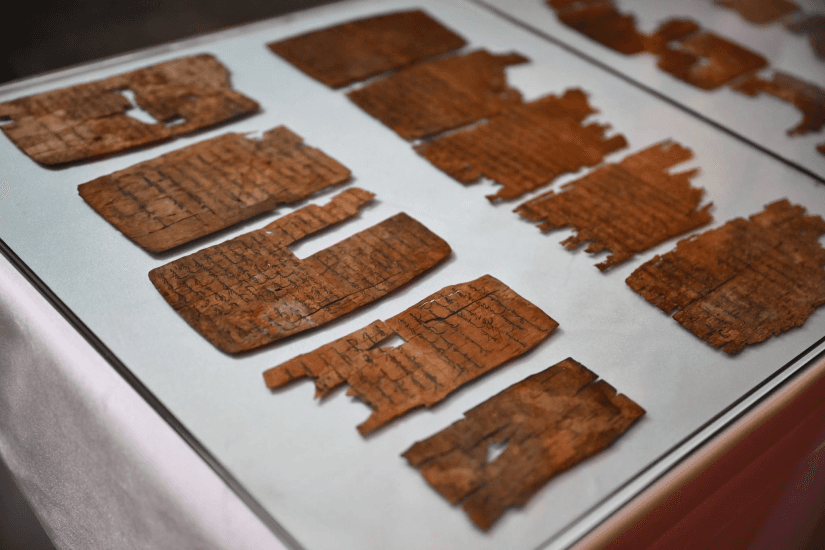
The most significant result of the 2026 research was the discovery of around 30 fragments of birch-bark manuscripts written in the traditional Mongol script from the two excavation areas. Conservators at the Chinggis Khaan National Museum have carried out initial restoration of the fragments.
An initial reading of the first fragments established that they contain religious texts, astrological material and teachings. Of particular interest, the manuscripts contain a set of teachings attributed to Chinggis Khaan and said to have been given to his sons and younger brothers. Researchers have so far determined that these teachings are identical to those recorded in the Lu. Altan Tobchi.
Further detailed study, restoration and conservation are underway, along with efforts to determine the exact date of the artifacts. Based on the artifacts discovered, the layout of the structures, murals, and birch-bark manuscripts, researchers said that Olon Sum appears to have been one of the earliest monasteries in Mongolia and a major center of architecture, religion, and written culture.