Loading…
Loading…

Ooluun Batbayar
ooluun@gmail.com
Ulaanbaatar, November 17, 2026 /MONTSAME/. A study examining the impact of climate change on human rights in Mongolia from legal and anthropological perspectives has found that its effects extend beyond the rights to life and to a healthy and safe environment.
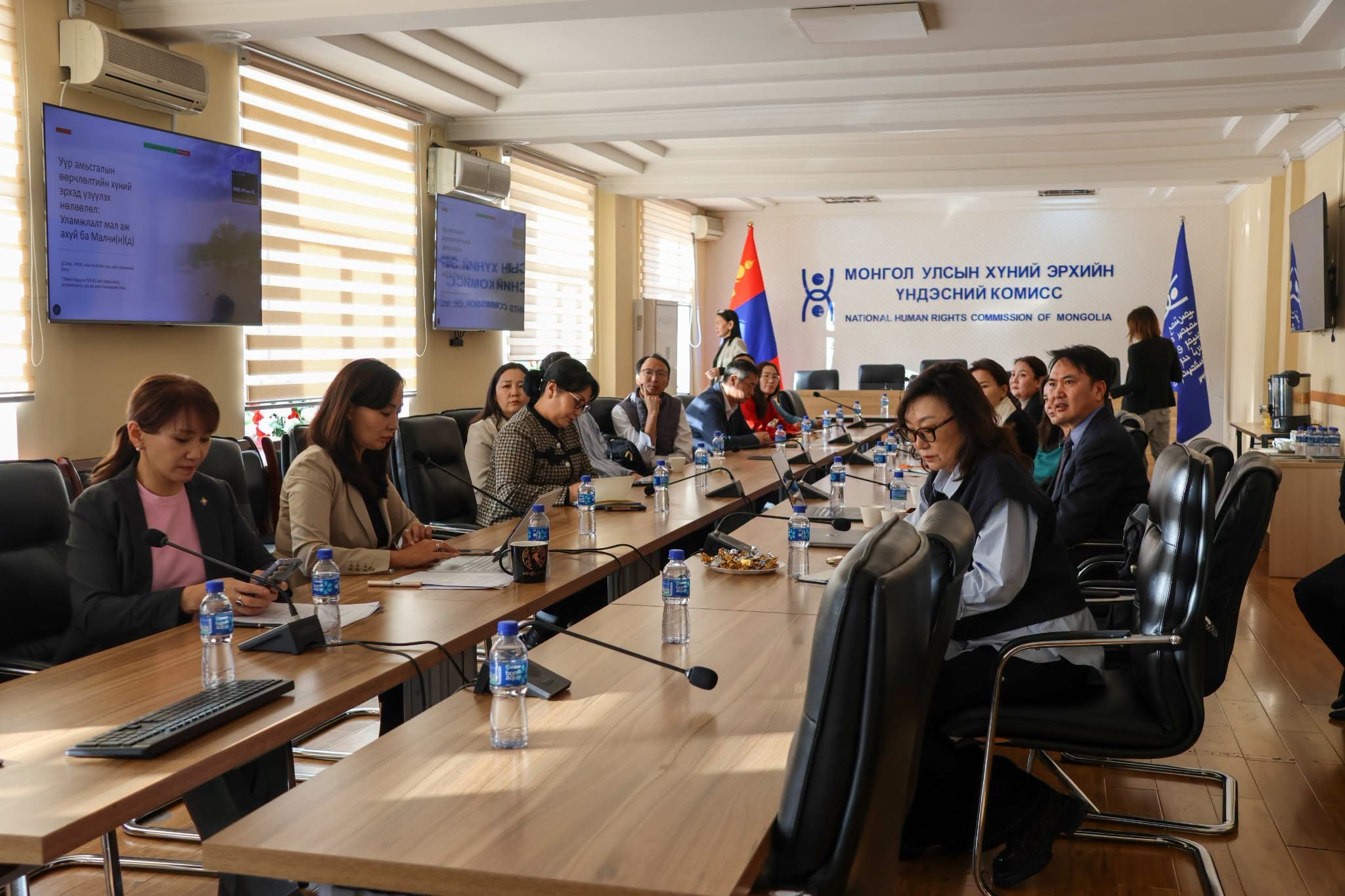
The preliminary findings show that climate change also directly and indirectly affects people’s rights to access safe drinking water and nutritious food, freedom of movement, and freedom to choose where to live. Its effects are already being felt in herders’ daily lives, livestock production, and livelihoods, according to a discussion presenting the preliminary findings of a study titled “The Impact of Climate Change on Human Rights and Its Consequences,” organized by the National Human Rights Commission of Mongolia (NHRC).
Representatives of government and non-governmental organizations, international organizations, and academic researchers attended the discussion. They reviewed the study’s findings and exchanged views on the challenges herders face in their daily lives and in exercising their human rights as a result of climate change, as well as the consequences of these impacts.
Based on participants’ feedback and the preliminary research findings, the research team will consolidate the issues requiring further attention and incorporate the recommendations into its final report.
The NHRC will include the findings in its 2027 report on the state of human rights and freedoms in Mongolia, with a view to promoting a human rights-based approach to climate change and improving the relevant policy and legal frameworks.