Loading…
Loading…

MONTSAME
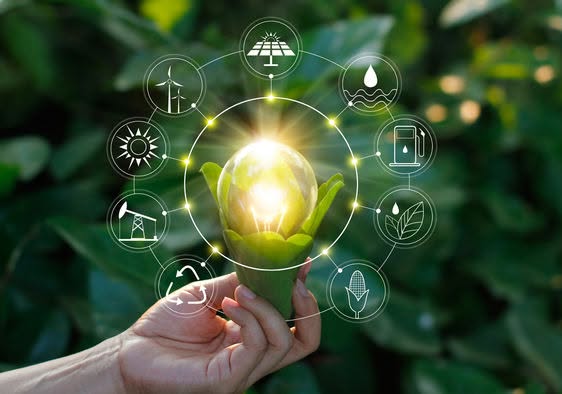
Ulaanbaatar, August 7, 2026 /MONTSAME/. The global economy is going green. Climate change and global warming confront humanity with an overwhelming number of challenges. By 2030, the world's population is expected to reach 9 billion, raising a host of concerns – food supply and security, protection against advancing aridity and desertification, and the preservation of the environment and its ecosystems.
Environmental degradation ultimately affects economic interests. Oil companies have degraded the environment for years through the byproducts of their operations. While they profit from selling petrol and oil, the production process contributes to worsening air pollution and rising respiratory illness. Similar patterns can be seen in international trade, where developing countries sacrifice their territory to meet the demands of wealthy nations. Consider the farming of premium, high-priced shrimp for export to developed countries: artificial ponds are built by stripping away native soil, water systems, and vegetation that took hundreds of years to form. Yet the companies barely bear the cost of destroying these ecosystems, and the consumer is none the wiser. Instead, it is the local communities who once lived off the land who suffer the consequences.
Such production is fundamentally at odds with the concept of a "green economy." So which matters more – economic efficiency or environmental protection? There is no simple answer, and a genuine conflict of interest exists between the two. There are many cases in which the environment and society at large suffer for the benefit of a few. Animals are exploited for their meat, hides, fur, and organs; plants for their nutrients and vitamins; and trees are felled for industrial and household use. By disrupting the ecological balance, humanity puts its own capacity to live sustainably at risk.
What, then, is the alternative? Cleaner production lines. But what does "cleaner production" mean? The concept of a green product is inseparable from it. At its core, cleaner production means using natural resources responsibly, prioritizing reusable materials, preventing the waste of solids and water, reducing soil and air pollution, and manufacturing products that are harmless to consumers. A "green product," in turn, is one that has the least possible environmental impact across every stage of its life cycle – raw-material extraction, production, transportation, trade, and consumption.
Consider another example. The United States has a history of rendering large areas of land unproductive through poor soil management, then spending heavily to restore them. Canada, by contrast, is a major wheat producer that has planted trees — including caragana — around its fields to form shelterbelts, one method of protecting soil from erosion and degradation. Through such measures, Canadians not only meet their own needs but also earn substantial revenue from wheat exports.
Germany, too, raises goats, but not for cashmere. A relatively small number of high-yielding dairy goats are used to produce high-quality cheese. Many Berliners know of two women on the city's outskirts who keep 80 goats; their cheese carries the "Bio" quality label and sells for EUR 34–40 per kilogram. The contrast with Mongolia is striking. According to last year's livestock census, the country's goat population exceeded 24 million. Since the 1990s, rising cashmere prices have driven extraordinarily rapid growth in goat numbers and the resulting overstocking, rangeland overuse, and degradation have become among the most pressing challenges Mongolia faces today.