Loading…
Loading…

MONTSAME
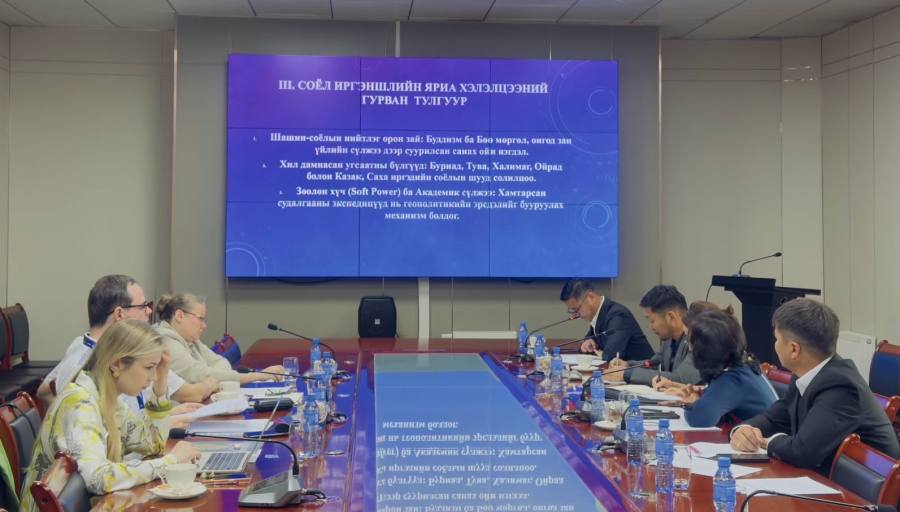
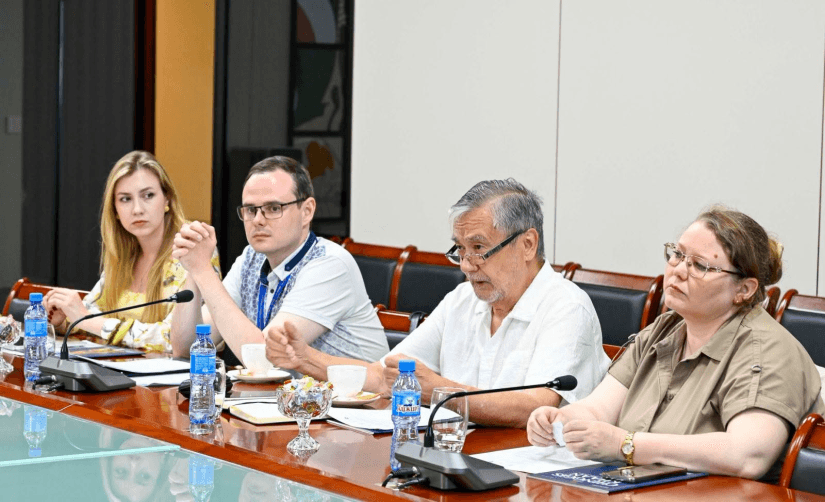
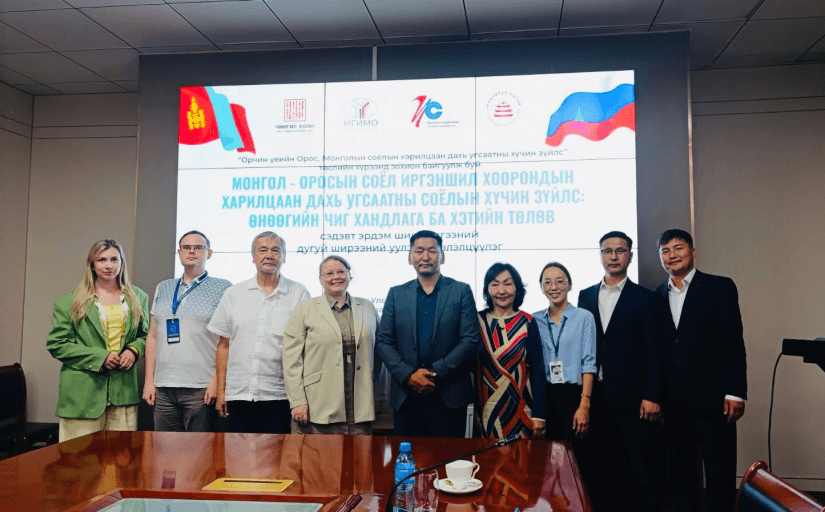
Ulaanbaatar, August 14, 2026 /MONTSAME/ The Chinggis Khaan National Museum hosted a scientific roundtable discussion on August 13 titled “Ethnocultural Factors in Relations Between Mongolian and Russian Civilizations: Current Trends and Prospects.”
During the meeting, Dr. Byambaragchaa G., Head of the Museum's Research and Collections Center, noted that joint Mongolian-Soviet research expeditions began in the 1960s and have continued uninterrupted to the present day.
In his presentation, Dr. Batdorj Ch., a researcher at the Chinggis Khaan National Museum, highlighted the research of Soviet scholar A. D. Simukov. He noted that Simukov's research focused primarily on the physical geography of Mongolia and classified the country's nomadic patterns into six types based on seasonal migration, distinguishing among the Khangai, steppe and eastern Gobi patterns.
Simukov produced a major work on the physical geography of the Mongolian People's Republic in 1934, which was later published in 2007. The work covered a wide range of subjects, including Mongolia's geography, climate, animal husbandry and demography.
The study also provided one of the earliest systematic examinations of the population of the Mongolian People's Republic, classifying ethnic groups into Mongolian, Tureg, Manchu-Tungusic and other groups, following the traditional classification used by Russian researchers.
Dr. Batdorj emphasized that Simukov's work represented a major ethnographic study addressing key aspects of Mongolian ethnic life, traditional culture, customs, family structure and population in the 20th century.
At the conclusion of the roundtable, the researchers agreed to publish their findings in academic journals in Mongolia and Russia and to further expand joint research activities.
The development of modern scientific institutions in Mongolia began with the establishment of the Institute of Sutras and Scripts in 1921, laying the foundation for the development of various fields of science. From that period, Soviet researchers working at the institute began conducting ethnographic studies of ethnic groups that were part of Mongolia, including research into their cultural and ethnographic characteristics.