Loading…
Loading…

Unubold B
unuboldbatsai@gmail.com
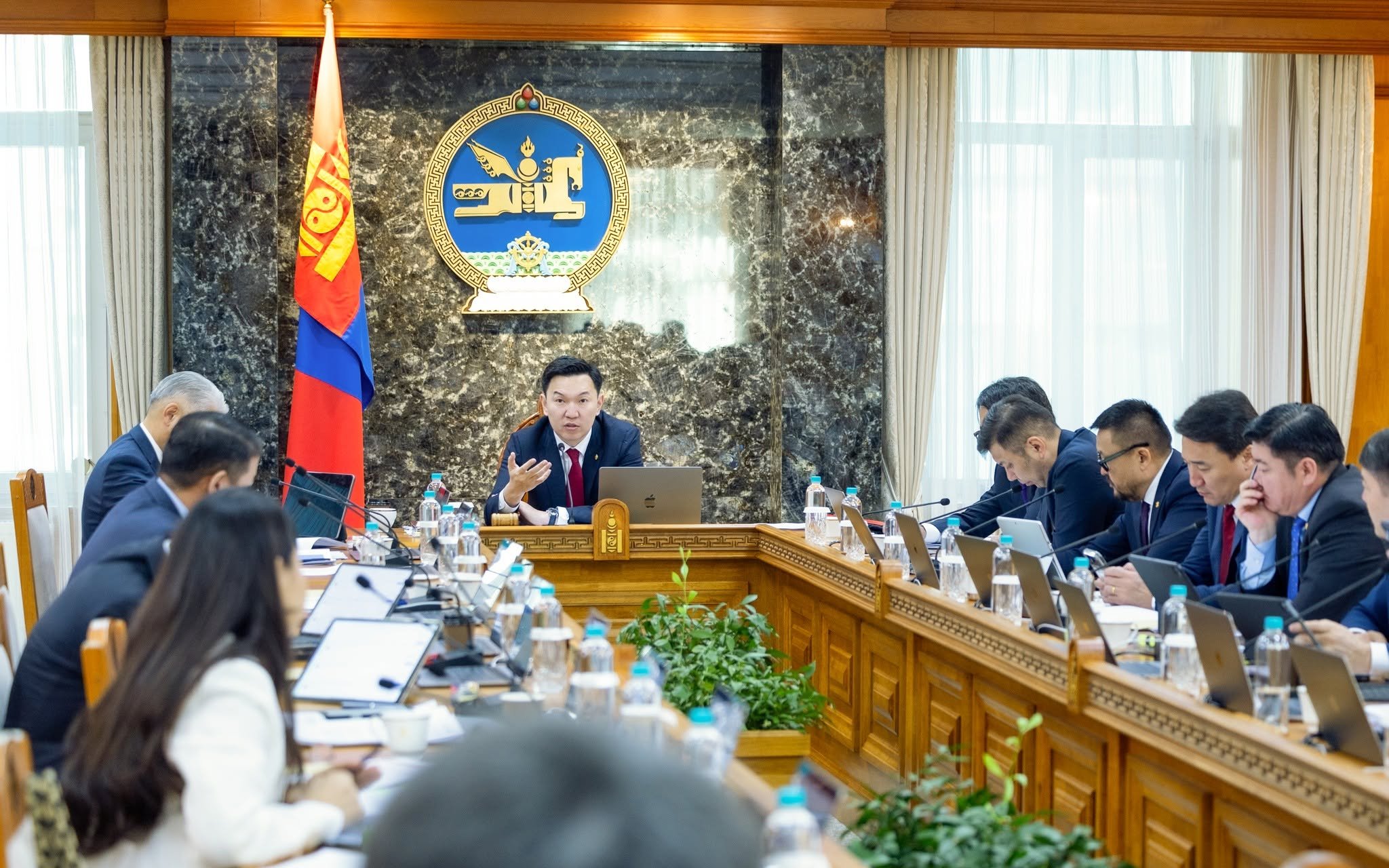
Ulaanbaatar, November 16, 2026 /MONTSAME/. The State Great Khural gave final approval to Mongolia’s 2027 State Budget at its plenary session on November 13. After adopting it, Prime Minister Uchral Nyam-Osor presented the following key measures.
1. Pensions for 562,000 people to increase by 10%
From January 1, 2027, pensions for 562,000 people will increase by 10%. The basic pension of MNT 100,000–300,000, introduced for 430,000 elderly people on November 1 this year, will continue to be paid. We will not leave elderly people whose only income is their pension to face rising prices without support. This marks the beginning of a new pension system that rewards longer contribution periods and fairly recognises the fruits of people’s labour.
2. Social welfare pensions to reach MNT 600,000
Pensions and benefits for persons with developmental challenges will increase by MNT 122,000 to MNT 600,000. Social welfare pensions for elderly people will rise by MNT 168,000 to MNT 600,000. The caregiving allowance will reach MNT 370,000, while the allowance for people caring for children with severe developmental challenges will reach MNT 524,000.
3. MNT 1.3 trillion in tax relief to support working citizens
The portion of your monthly salary up to MNT 792,000 will be exempt from income tax. This is the first step toward applying a tax rate of just one percent to salaries of up to MNT 2 million from 2028. A distinguishing feature of the budget is that taxes account for 79% of revenue, compared with 90% in previous years. For the first time in its history, the Government of Mongolia is providing MNT 1.3 trillion in tax relief to support working citizens.
4. Civil servants’ salaries to increase
The basic salaries of all public service employees, including doctors, teachers, and employees in agriculture, culture, sports, and meteorology, will increase by 10% from the second quarter of 2027. This will follow the 50% salary increase for public service employees introduced on November 1. Salaries of employees in the state administrative and special services will increase by 20% from April 1.
We are placing civil service remuneration, previously regulated by 33 separate laws, on a fair and sound footing, bringing an end to longstanding debate. More than 213,000 civil servants will benefit.
5. MNT 928 billion to be allocated to education
In 2027, projects involving 142 schools, 72 kindergartens and 39 dormitories will be implemented nationwide. These include the start of construction on 56 new schools, 28 kindergartens and 10 dormitories. Work will begin on specialised schools offering the Cambridge curriculum, green schools, Google laboratory schools and specialised upper secondary schools in rural regions. The budget for meals for children in schools, kindergartens and dormitories has been increased by MNT 194.4 billion. This will improve the quality and nutritional value of children’s meals. Sixth- and seventh-grade students will also be included in the school lunch programme.
6. MNT 264.6 billion to be allocated to healthcare
The State Budget will provide MNT 264.6 billion for 69 projects. Construction, expansion, and renovation work will be carried out at 44 hospitals nationwide. Major projects include the National Cardiovascular Centre, the Cell, Tissue and Organ Transplantation Hospital, the expansion of the maternal and child health hospital, and the modernisation of the Third State Central Hospital. Funding will cover equipment as well as buildings. From January 1 next year, elderly people will receive medicines for cardiovascular diseases, diabetes and high blood pressure free of charge, with the Health Insurance Fund covering their full cost.
7. Tax burden to be reduced by MNT 1.3 trillion
Companies with annual sales revenue of up to MNT 2.5 billion will be subject to a tax rate of one percent. Previously, this concession applied to companies with sales revenue of up to MNT 1.5 billion. The tax rate for enterprises with annual sales revenue of MNT 6–10 billion will be reduced from 25% to 15% in 2027. The VAT threshold will rise to MNT 400 million, exempting thousands of companies from filing monthly VAT returns. Tax payments may be deferred for up to two months. Start-ups will be exempt from employers’ social insurance contributions for their first three employees for three years.
An additional MNT 1.1 trillion in concessional loans will be made available to small and medium-sized businesses and middle-income citizens. More than 6,000 business owners will receive concessional loans at an annual interest rate of 10%. These measures form the core of a budget policy that supports working people. By channelling dividends from state-owned companies into the budget, we have reduced the tax burden on working citizens and increased salaries and pensions. I would also like to stress the importance of fair public scrutiny in putting the “Chuluulye” National Initiative into practice at the grassroots and middle administrative levels. The initiative seeks to remove bureaucratic constraints that hinder people’s desire to work and create. The saying that “the State has ten thousand eyes” underscores the importance of such public oversight. A budget that will translate the initiative into concrete action has now been approved.
8. Housing to be provided for 16,000 households
This marks the start of the 100,000-Household Housing Programme. Housing financing will increase by MNT 1.8 trillion. Up to 500 million in loan financing will be raised from domestic and foreign sources for mortgage lending. With private sector participation, a new loan product will be introduced at an annual interest rate of six percent for the first three years and 12% from the fourth year. The minimum down payment requirement will be lowered. More options, including rent-to-own and shared ownership arrangements, will become available. First-time sales of residential property will be fully exempt from the two percent tax.
9. MNT 11 trillion to be invested in infrastructure, industry and construction
Projects with a total investment of MNT 11 trillion will be implemented through state and local budgets, private investment and other sources. State Budget investment alone will provide MNT 4 trillion for 943 projects, comprising 435 new projects and 508 ongoing projects. Sixty percent of total investment will be directed towards continuing and completing projects already under way. In the road and transport sector, 36 projects worth MNT 910.7 billion will be implemented, adding 375 kilometres of roads. These include a 163-kilometre road connecting Uvs and Khovd aimags and a 198-kilometre road connecting Zavkhan and Gobi-Altai aimags. These roads will reduce freight costs, save time and money, and stimulate trade and business. Projects have been prioritised, with financing allocated through public and private sector support
10. Thirty major projects
Construction will be undertaken with the goal of increasing power generation capacity by 800 MW. Major work lies ahead on Thermal Power Plants No. 5 and No. 6 and on expanding the capacity of electricity transmission lines and networks. Construction of the Erdeneburen Hydropower Plant will continue. Work on the Egiin Gol Hydropower Plant will begin through a public-private partnership.
11. Projects to bring factories into operation
Work will continue at pace to move beyond the longstanding practice of exporting unprocessed raw materials and turn years of discussion into action. Construction of a leather processing plant will begin in the western region. Particular attention will be paid to bringing the oil refinery into operation and implementing projects to overcome shortages. By producing and processing wool, cashmere, meat, milk, hides and skins from livestock, we will create jobs, increase wages and generate greater added value and returns.
12. Export revenue targeted at USD 20 billion
We will work towards increasing export revenue to USD 20 billion. Mongolian-made products will be exported to the large markets of the five member states of the Eurasian Economic Union. Development will continue at border ports including Khavirga, Bichigt, Tsagaandel-Uul, Bulgan and Tsagaannuur, which serve as vital arteries of the national economy and gateways for exports. More than 3,000 companies will participate in these projects and programmes, working together to build and develop them. They will provide work, wages and income for more than 90,000 people.
13. The 1,072 shares to become fully functional assets
State property is your property. We will take phased steps to make the 1,072 shares in Erdenes Tavantolgoi fully functional assets. For shareholders, these shares are securities and valuable property, not worthless pieces of paper. As owners, you’ll be able to bequeath, gift, trade, hold, and purchase your shares, just as you would an apartment, a house and plot of land, a vehicle, or a mobile phone. There’s no doubt that your 1,072 shares, valued at MNT 1 million 15 years ago, are worth more today. The international audit firm BDO audited Erdenes Tavantolgoi and issued an unqualified opinion. We will now begin the valuation and the process of turning the company into a publicly traded one.
We will continue to make state-owned companies more transparent and open. Their boards and management will be selected through open competitive procedures, and their performance will be assessed annually. Independent governance mechanisms will be introduced. Public companies have begun allocating at least 30% of their net profits to dividends. Next year, MNT 3.5 trillion in net profits will again be channelled into the budget to support tax relief and job creation.
14. Local benefits to remain in local communities
Fifty percent of Local Development Fund resources will be spent solely in accordance with citizens’ proposals and choices. Local authorities will allocate the remaining 50 percent to their most pressing needs. Air pollution fees will be retained in local budgets, enabling the revenue to be used for pollution reduction measures. Efforts to combat desertification and land degradation, protect water resources, and improve the management of protected areas will be backed by concrete funding.