Loading…

MONTSAME
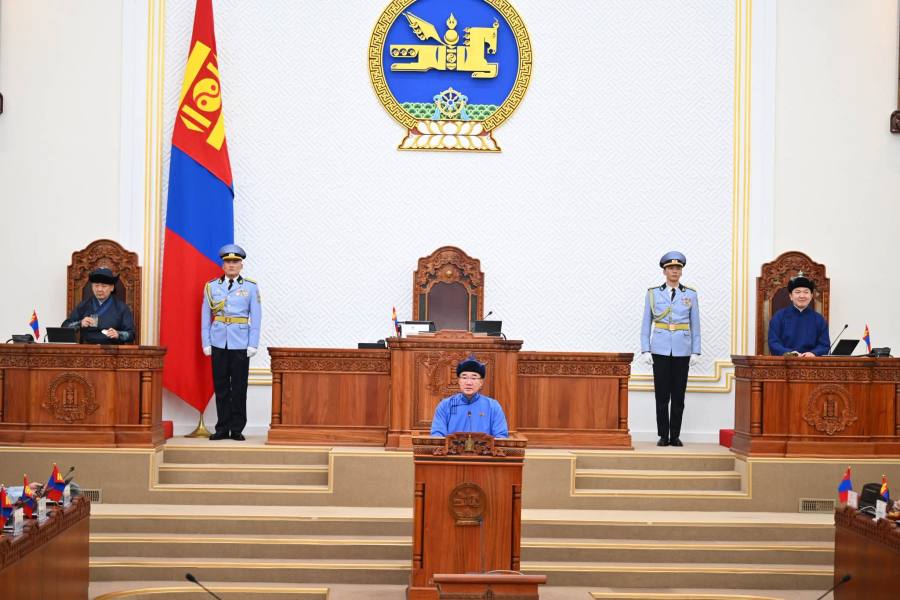
ULAANBAATAR, November 10, 2026 /MONTSAME/. The State Great Khural held a commemorative session to mark the 864th anniversary of the birth of Chinggis Khaan and Mongol Pride Day.
The session was held to honor the continuity of Mongol statehood from the Mongol Empire to present-day Mongolia and to celebrate national pride, history and cultural heritage, patriotism and unity.
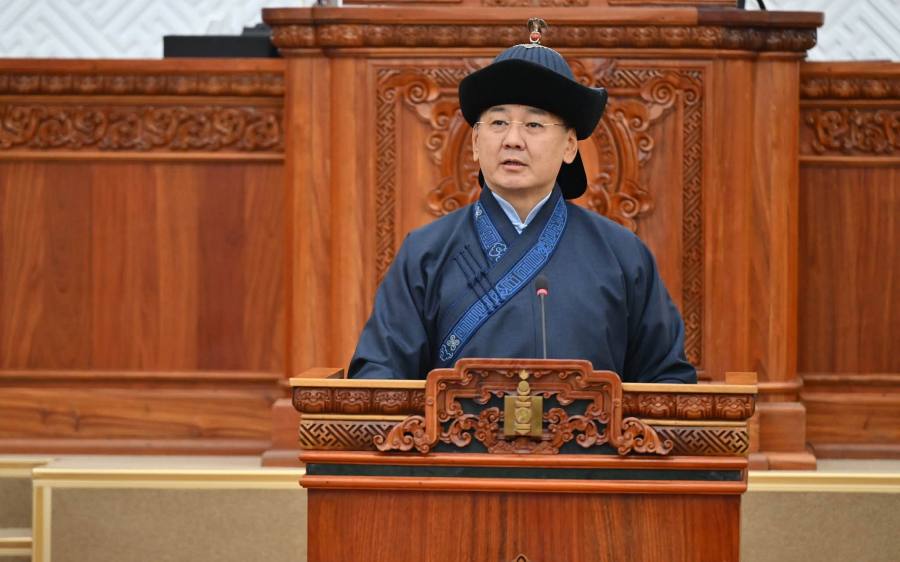
The following is the full text of the address delivered by Byambatsogt Sandag, Chairman of the State Great Khural, at the commemorative session in parliament:
Fellow Mongols, one in blood and spirit, descendants of Chinggis Khaan,
Esteemed President of Mongolia,
Prime Minister of Mongolia,
Esteemed Members of the State Great Khural and state officials,
Distinguished guests and delegates,
To all Mongols in our homeland and in every corner of the world, and to all the people of the felt tents, I extend my greetings on the 864th anniversary of the birth of our Great Lord Chinggis Khaan, the 820th anniversary of the founding of the Great Mongol Empire, and Mongol Pride Day.
Today is a symbolic day on which we take pride in the nation our ancestors founded and recognize our noble duty and historic responsibility to protect and strengthen the heritage they left us and to pass it on to our future generations.
Eight hundred and twenty years ago, Chinggis Khaan united a scattered group of tribes under a single rein, under the Eternal Blue Sky across the great mountain ranges of the Altai, Khangai, Khentii and Sayan and the vast expanse of the Gobi and the steppes. Chinggis Khaan carried forward a new history of Mongol statehood and founded the Great Mongol Empire.
That the round anniversary of this monumental deed falls this year raises the meaning and significance of Mongol Pride Day even higher.
The great Hunnu Empire, founded by Modun Shanyu, handed down a great heritage of statehood, military administration, and organization of the nomadic peoples, which reached its full glory in the Great Mongol Empire under Chinggis Khaan.
On this day of pride, from the honored rostrum of the State Great Khural, I wish to emphasize that the illustrious history of the Hunnu Empire, which dates back more than 200 years before the Common Era, is being confirmed and carried ever further by the achievements and discoveries of modern science, archaeology and anthropology.
The Great Mongol Empire, with the decrees of its Khaan and the resolutions of its Great Khuraldai, shaped a continental policy linking East and West across the vast lands of Eurasia. It led many nations through a policy of unified statehood, law, free trade and respect for diverse cultures and faiths, and built a world order on its profound principles of harmony, peace, and respect.
The Great Mongol Empire, founded by the Great Chinggis Khaan, cherished national unity, rallied around its sovereign hearth and its statehood, and laid a firm foundation for the empire’s existence. This is an achievement unmatched in the centuries since.
It is of the utmost importance that we learn from and carry forward our ancestors’ unity, discipline and responsibility, their reverence for the state, and their great wisdom in respecting not only their own faith and culture but also those of others.
Esteemed state officials,
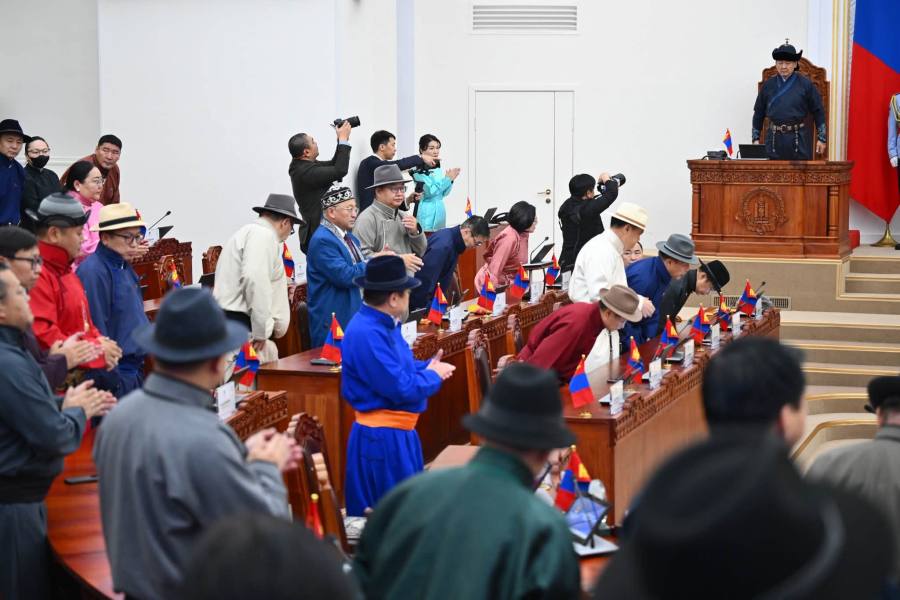
Alongside our ancient history of statehood, we Mongols have an age-old tradition of discussing important matters of state together and deciding them through consultation.
The Council of Sages of the Hunnu Empire and the Great Khuraldai of the Great Mongol Empire are clear expressions of this tradition.
Historical sources show that the Great Khuraldai was the supreme assembly of state, which enthroned the khaan, deliberated on state succession and on matters of war and peace, and decided the fate of the nation.
This is proof that the Mongols developed, many centuries ago, a culture of deliberating on and jointly approving important decisions of state.
Ensuring broad participation and reaching consensus through the discussion of views is both an ancient tradition of the Mongol state and a cherished principle of today’s parliamentarism.
In recent history, with the adoption of the 1992 Constitution, Mongolia secured a democratic system in which the people exercise state power through their representative body.
Today, the State Great Khural has 126 members. It serves, in the true sense, as the rostrum from which the people govern, and it has begun the work of strengthening pluralism, consensus and parliamentary democracy and of building an open parliament that is citizen-friendly, transparent, and open to citizens’ participation and oversight.
Eight centuries ago, Mongols discussed important matters of state at their Great Khuraldai. Today, the people of Mongolia take part, through their elected representatives, in deciding the fate of their country and its development policy. This is a great treasury of our history of statehood and a value to be handed down from generation to generation.
The State Great Khural of Mongolia has a duty to continue with pride this precious heritage of our ancestors and to work with a deep awareness of the responsibilities of our time.
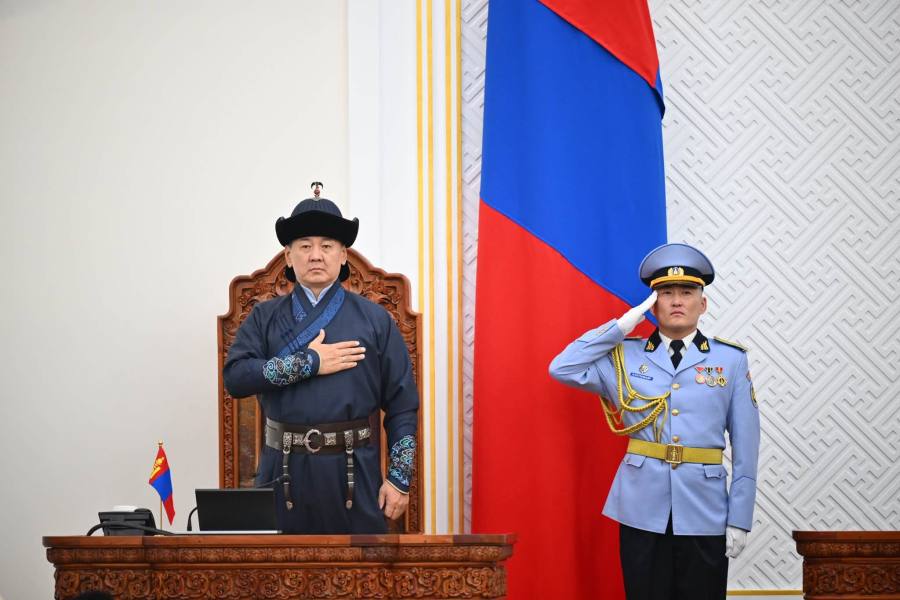
The essence of today’s parliament should be reflected in the trust of the people, the quality of legislation, the continuity of state policy, and the responsibility it bears before the country’s future.
We, as state officials, should adopt our ancestors’ foresight and wisdom in governing, uphold the interests of all citizens and of the nation, and make the rule of law, justice, discipline and responsibility the fundamental principles of state affairs.
Let me emphasize that strengthening our independence, advancing our country’s development and answering the people’s trust through deeds is our historic duty, and that passing on to future generations a whole nation, productive governance and a strong state is our noble responsibility.
Dear citizens, Mongol brothers and sisters,
Chinggis Khaan did not only shape an era of world history. He bequeathed to us the idea of uniting the Mongols, the firm resolve to defend our independence, and great pride in honoring our state.
The history of the Great Mongol Empire is not only a history of past victories and conquests. It is also a far-reaching history of the organization of the state, of law, state policy, trade, and the mutual influence of cultures and civilizations.
A people who know their history understand their national values. A people who understand their national values are more deeply aware of the worth of their independence and freedom. To that extent, national resilience is strengthened, and the trials and challenges of these geopolitically complex times can be overcome without risk.
While taking pride in our great history, our greatest goal today is to achieve development and progress worthy of that history.
The strength of Mongolia in the 21st century will be measured not only by the vastness of its territory and the extent of its natural resources, but by the knowledge and education of its citizens, its economic competitiveness, technological development, rule of law, the capacity of state institutions and national unity.
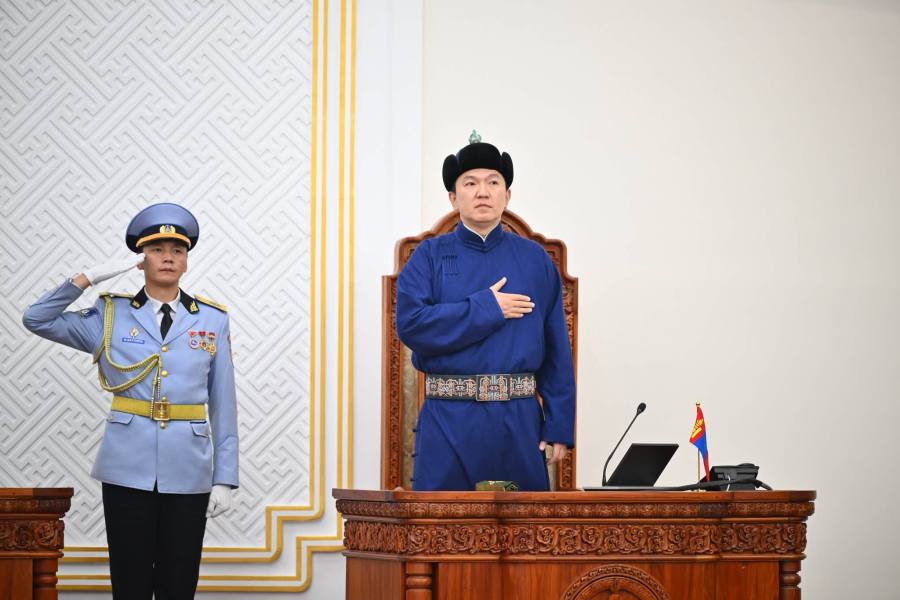
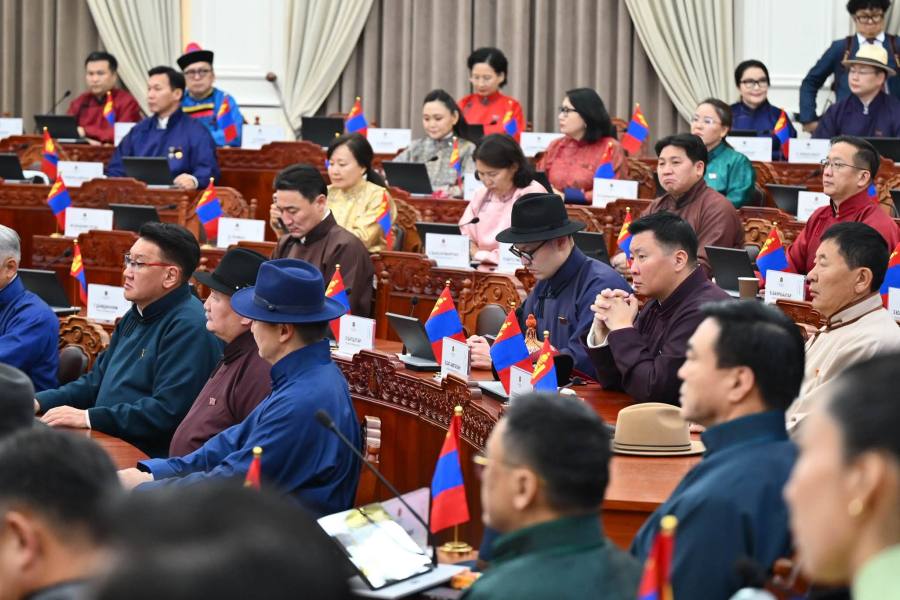
Our ancestors immortalized the name of a mighty Mongolia in world history. The duty of our generation is to contribute to the world’s development and to build a flourishing Mongolia whose citizens live well and where no individual rules and law and justice alone govern.
Therefore, on the occasion of the historic 820th anniversary of the founding of the Great Mongol Empire, the State Great Khural of Mongolia has discussed and adopted a resolution of profound meaning. It concerns studying the historical heritage of the Great Mongol Empire, instilling in the hearts of children and young people the knowledge of their history, patriotism and national pride, and having every Mongol honor, cherish and spread the history and glory of Chinggis Khaan.
An important part of this work should be to preserve, protect and digitize the cherished heritage of the Great Mongol Empire’s system of government and the historical sources, archival documents and research works on our forebears’ contribution to world history, to support Mongol studies, and to expand international scholarly cooperation.
A person who knows their history, culture, heritage, traditions and customs understands the value of their nation and will honor and defend their country, independence, democracy and freedom above their own life. A people who cherish their independence are united and more confident in their future.
The decision of the State Great Khural should therefore be seen not merely as a resolution dedicated to a historic anniversary, but more broadly, and implemented as the legal foundation for real work to awaken in every Mongol national consciousness, patriotism and reverence for our historical and cultural heritage, and to pass them on to future generations.
I have not the slightest doubt that this noble and auspicious 820th anniversary of the statehood of the Great Mongol Empire will light the torch of a patriotism that cherishes harmony and champions what is right. It will be the starting point of a historic turn that brings a revival to our nation’s development and progress and to the mind and wisdom of the Mongol people and the beginning of a prosperous era that kindles the will to build a strong Mongolia.
Let us cherish and honor the history of the Great Mongol Empire, the glory of Chinggis Khaan, and the heritage of our ancestors’ statehood. Let us consolidate our unity, live alongside the nations of the world in friendship and peace, and strive together to develop and strengthen our independent Mongolia.
May our Mongolia grow strong and flourish under the power of the Eternal Blue Sky!